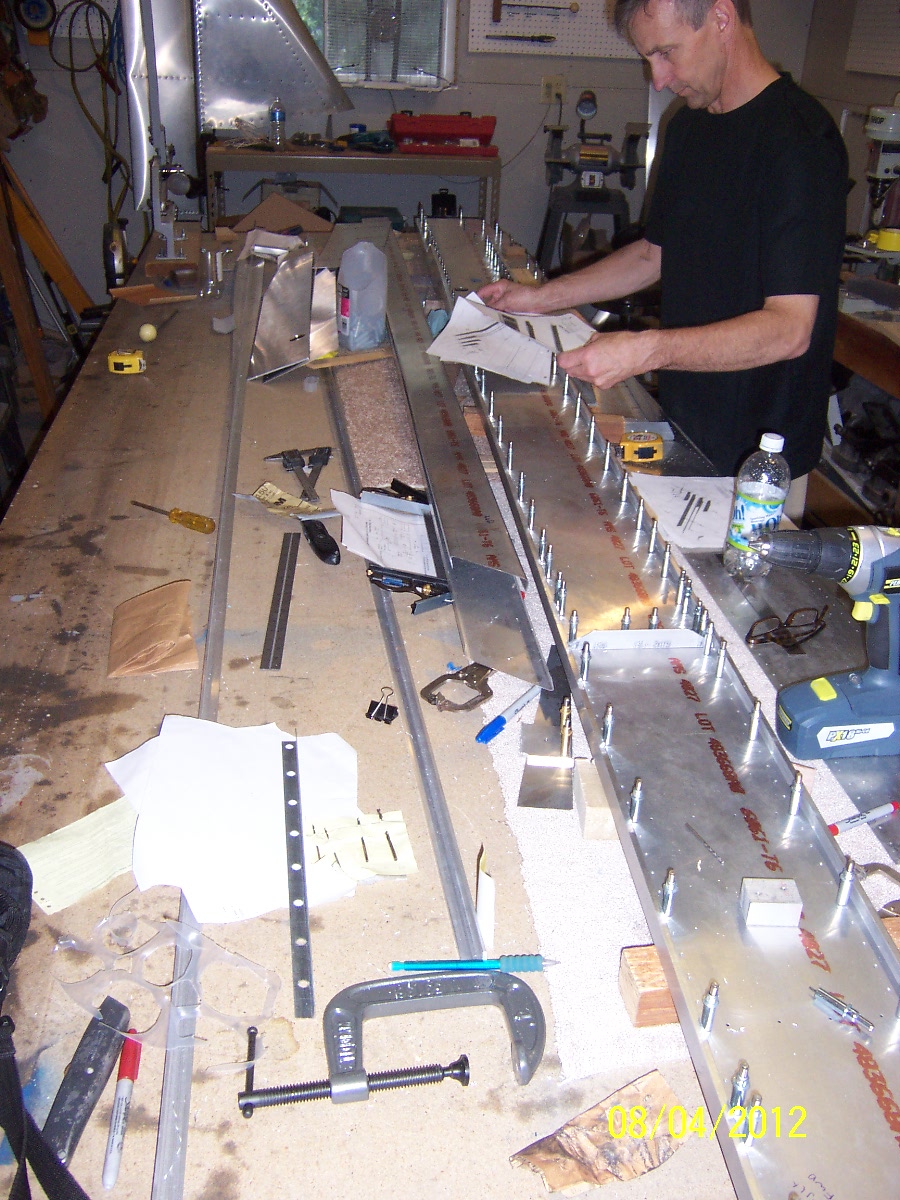
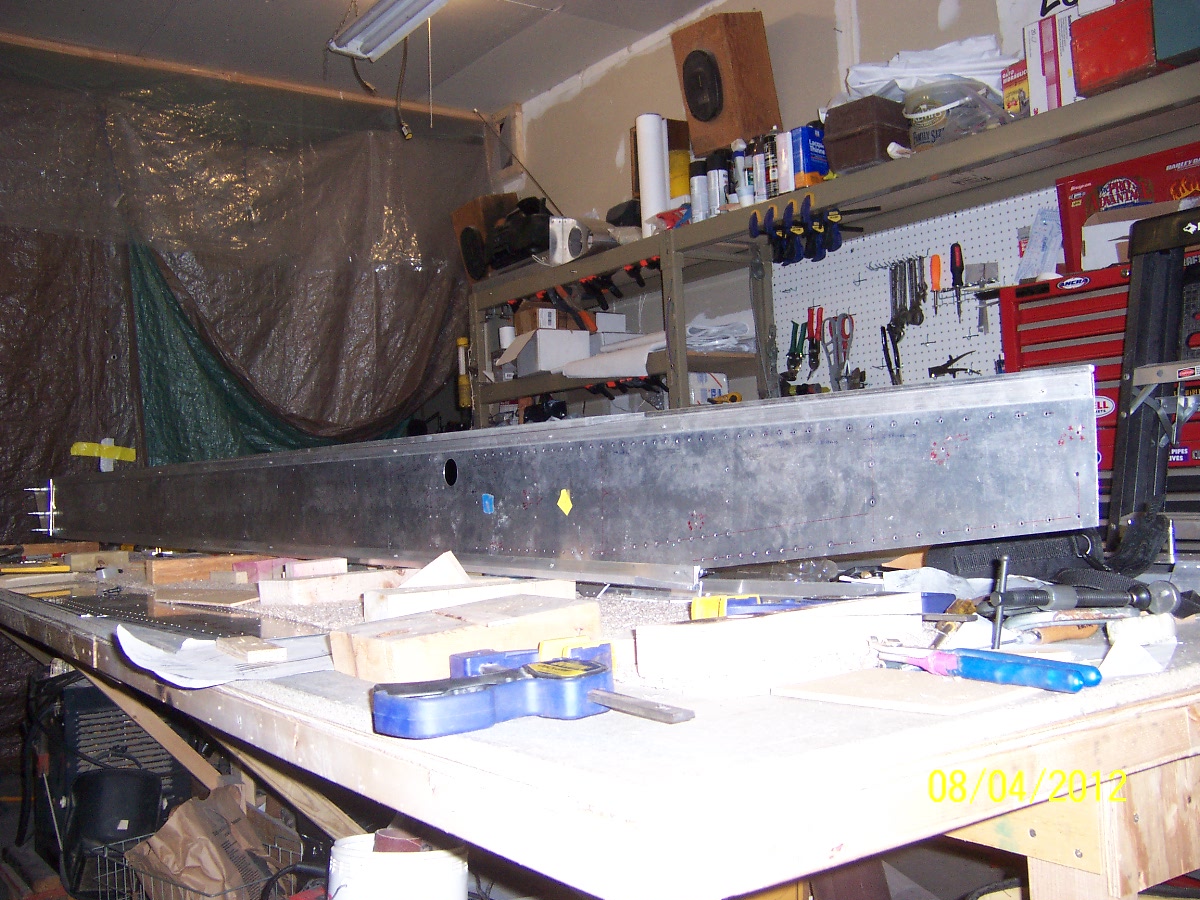
Dan and I discussed at length (remember we are engineers) how to mark all the holes on the 141″ long W10-01. We have a 12″ and 36″ steel rules supposably accurate rked to the 1/64 . So one could start at one end and make a make a mark near the end of the rule and move the rule down to that mark and keep going. Trouble with this method is “accumulation of error” or “error stack up”. Say you are off by 1/64 (.015″) on the first rule move, and then the second move is right on, but the third is another 1/64 (.015″), and the fourth is another 1/64 off. (Now before you repremand me to be more accurate, try to mark and then reposition to a 1/64, it’s take time and a good set of eyeballs.) Anyway the holes on your fourth ruler interval are off by the accumulated errors since they are all dependent on the previous set. So those holes are off by 3/64″ (.045″), hmmmmm. Does it matter? I don’t know, but would like to be as accurate as we can.
So when we thought about going 141″ we wanted to try something different. We decided to make a drill template and move the template along the spar (picking up the last hole drilled by the template.) We made the template the distance between the ribs which is 10″. Now the error will depend on the accuarcy of the template, but we have access to a Bridgeport mill at work so we used that for the hole accuracy. So basically the template had the rib holes 10″ apart and all the 1″ holes in between. We put flange on one side so it would mate against the spar top (or bottom) and the holes would be the the right distance. Here is a picture of the template:

We had marked the 10″ intervals with the rule also, but the template would be the guide. Now that we had the top and bottom holes of the ribs, we made another drill template for the rib holes in between. This template was cleco-ed to the top and bottom and provided the middle holes

We went back with the first template and drilled the holes between teh ribs:


Now that is a lot of holes.
We drilled the holes for the wing tip attachment, W10-04. Aligned the top edge and the right length.

We used the first template for the top holes:

Here is the angle, W10-06 on the wing tip attachment W10-07:

Return to Wings – Main Spar