Fit Rib Gussets and Ribs To Wing

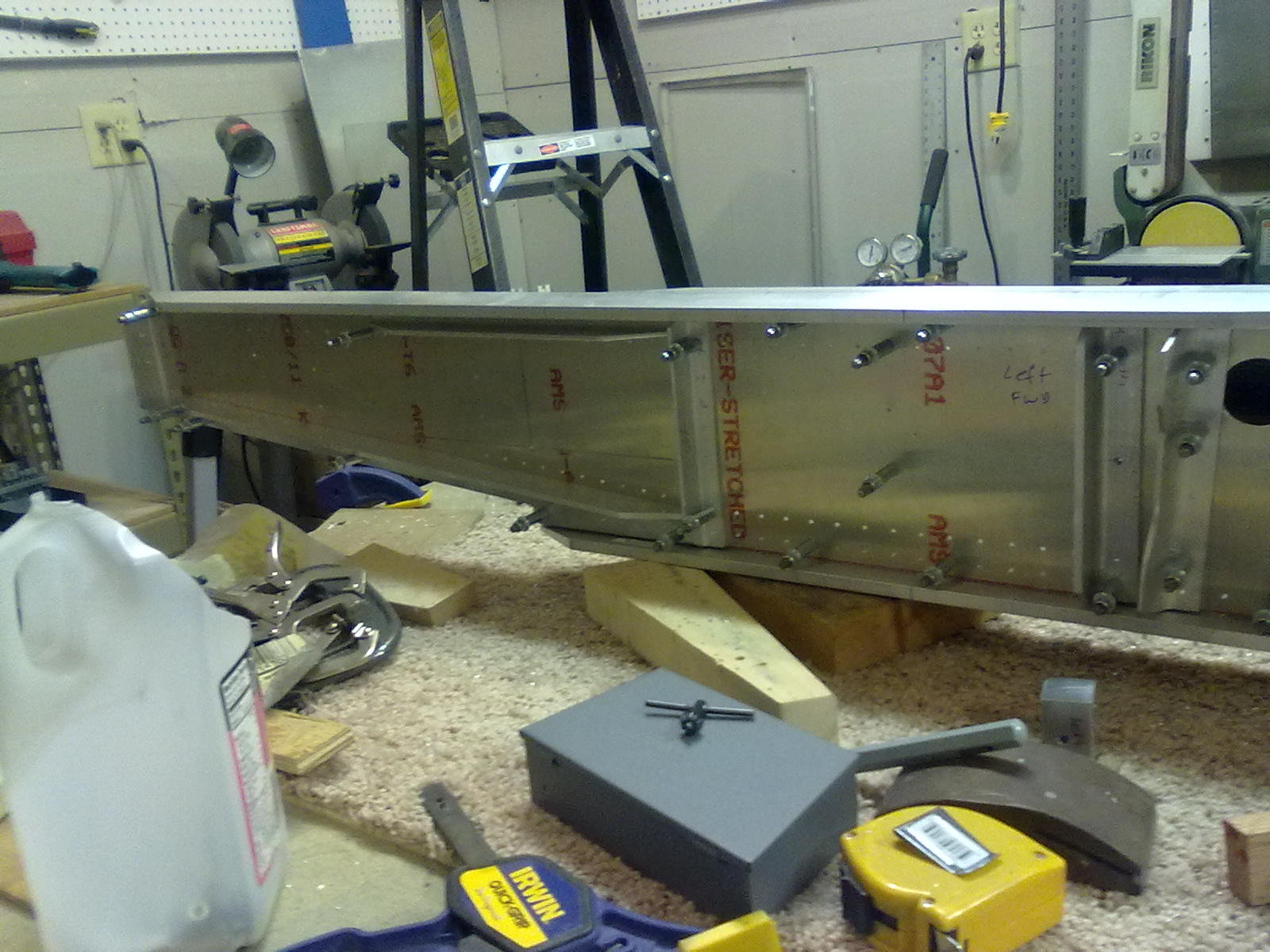
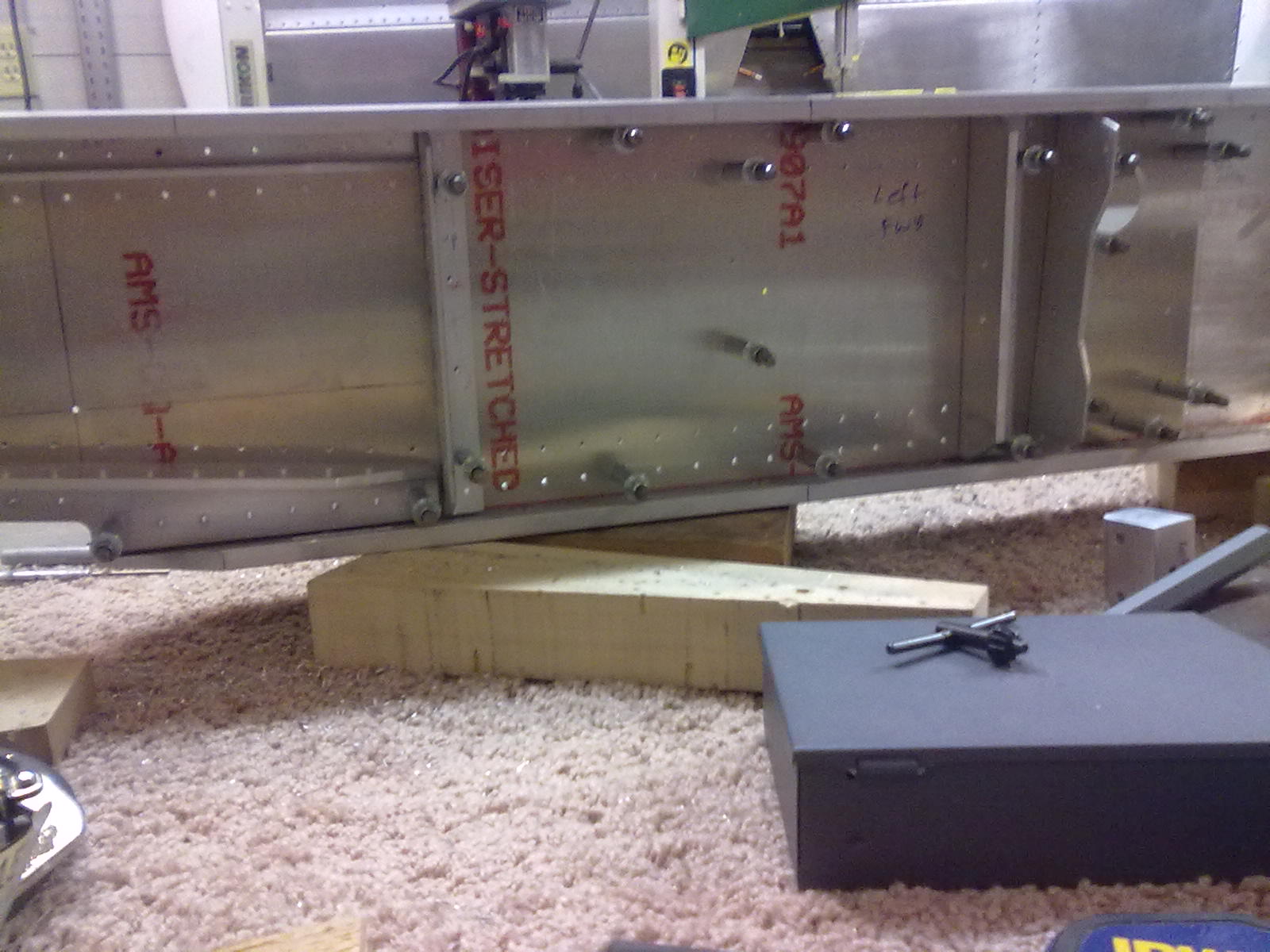
We located the gussets to the ribs.  There are a lot of holes on those parts

DSCN3307

DSCN3308

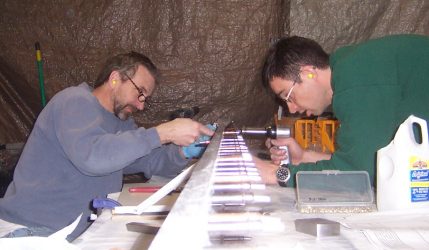
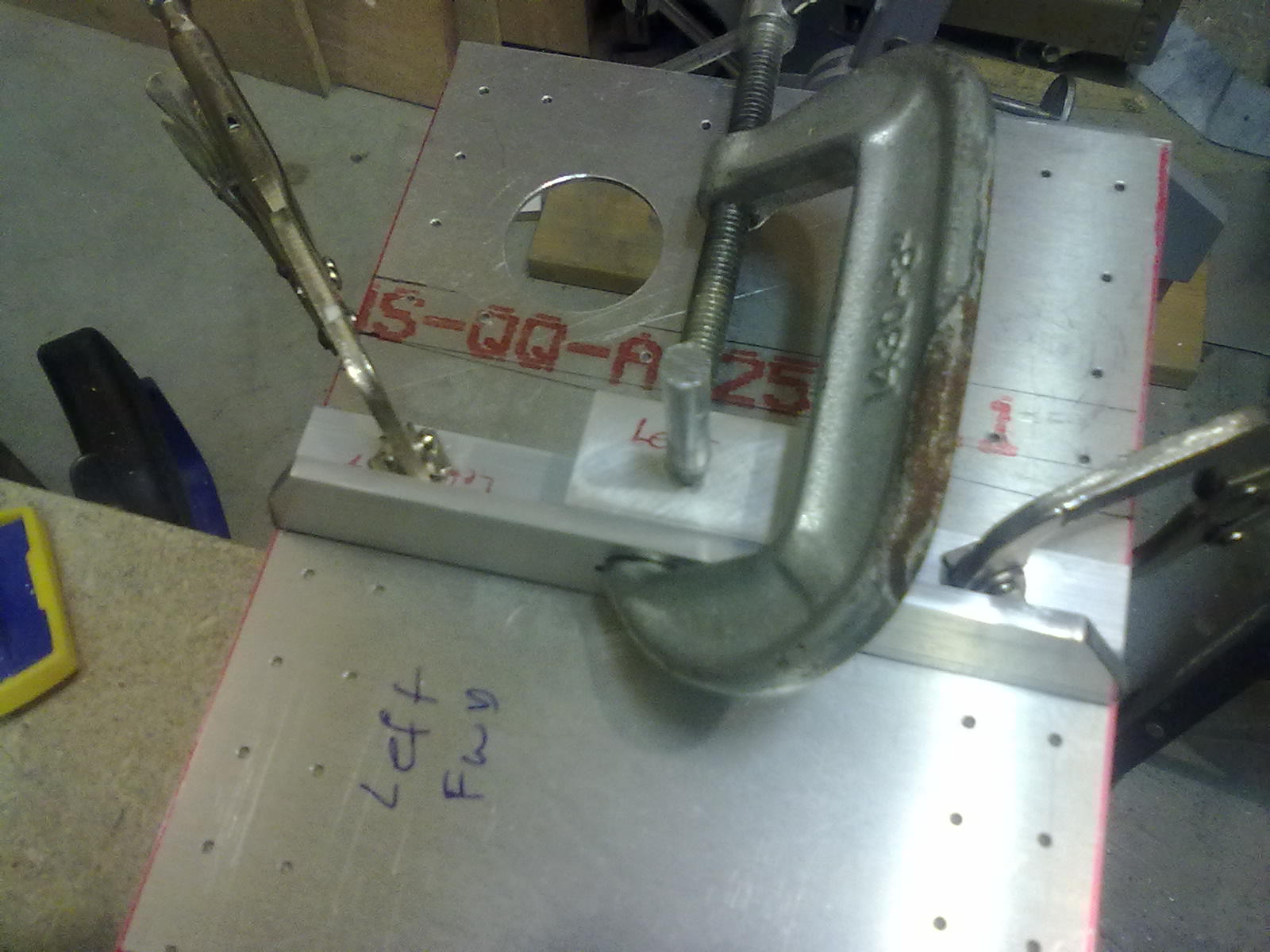
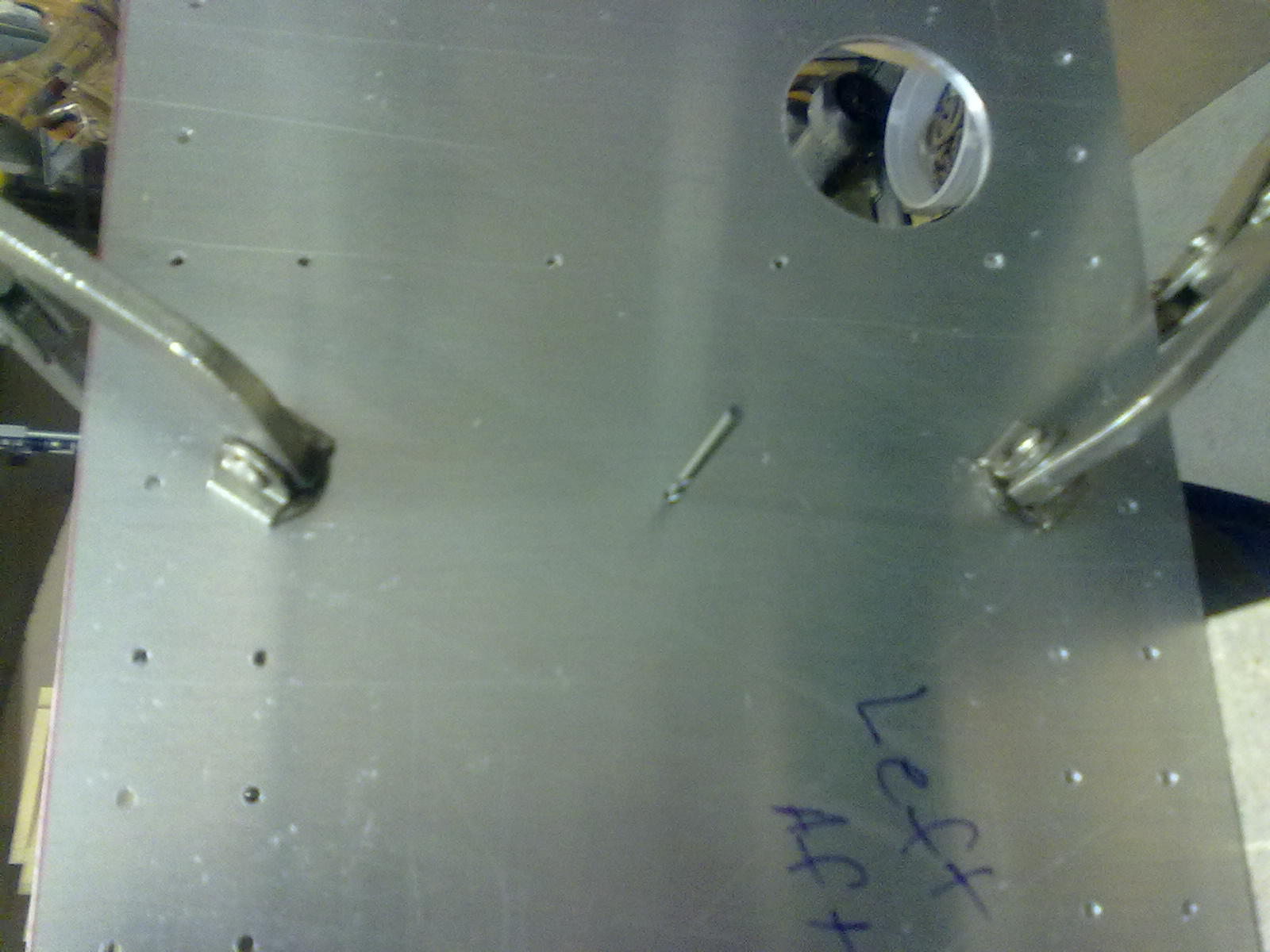
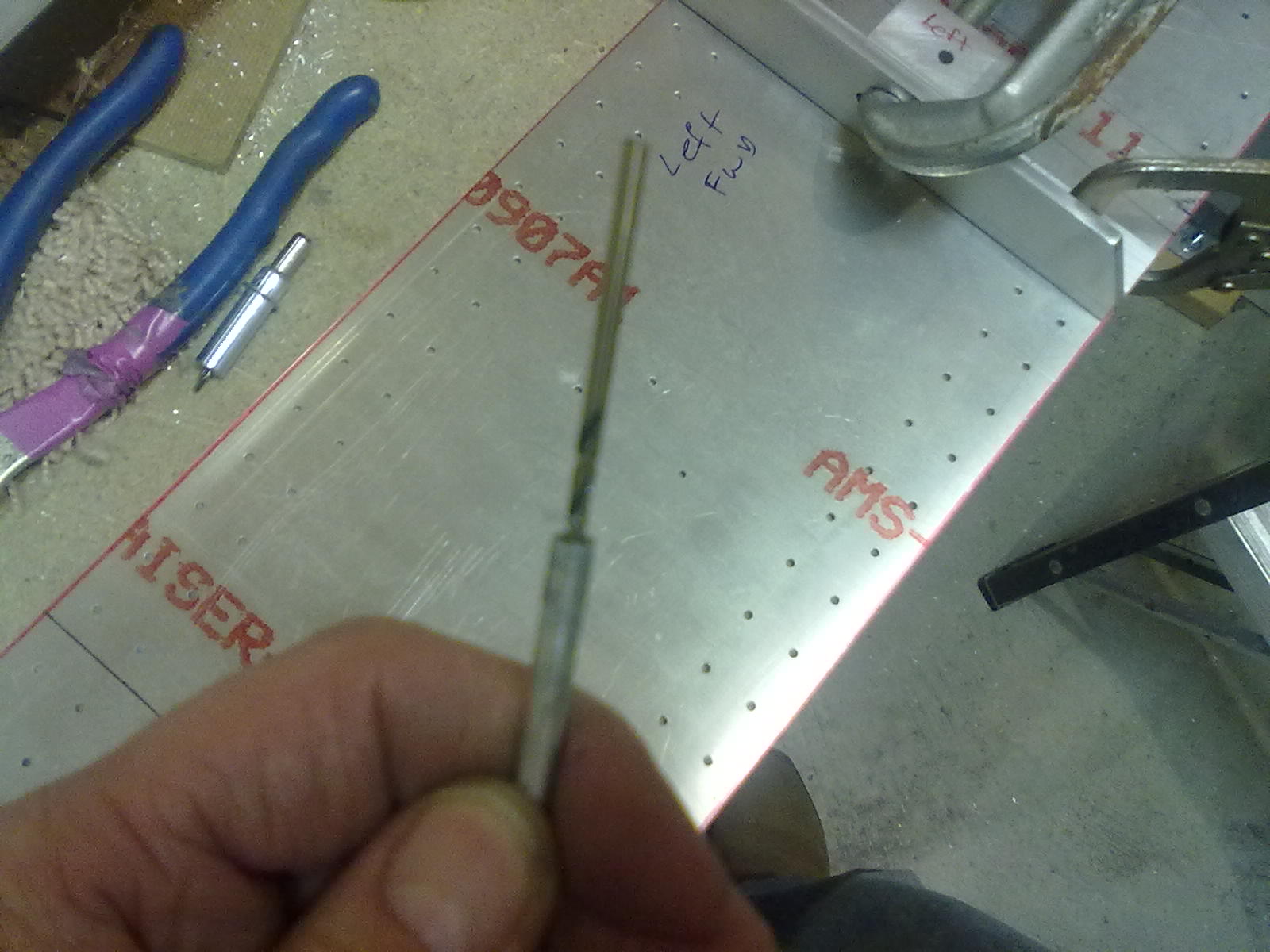
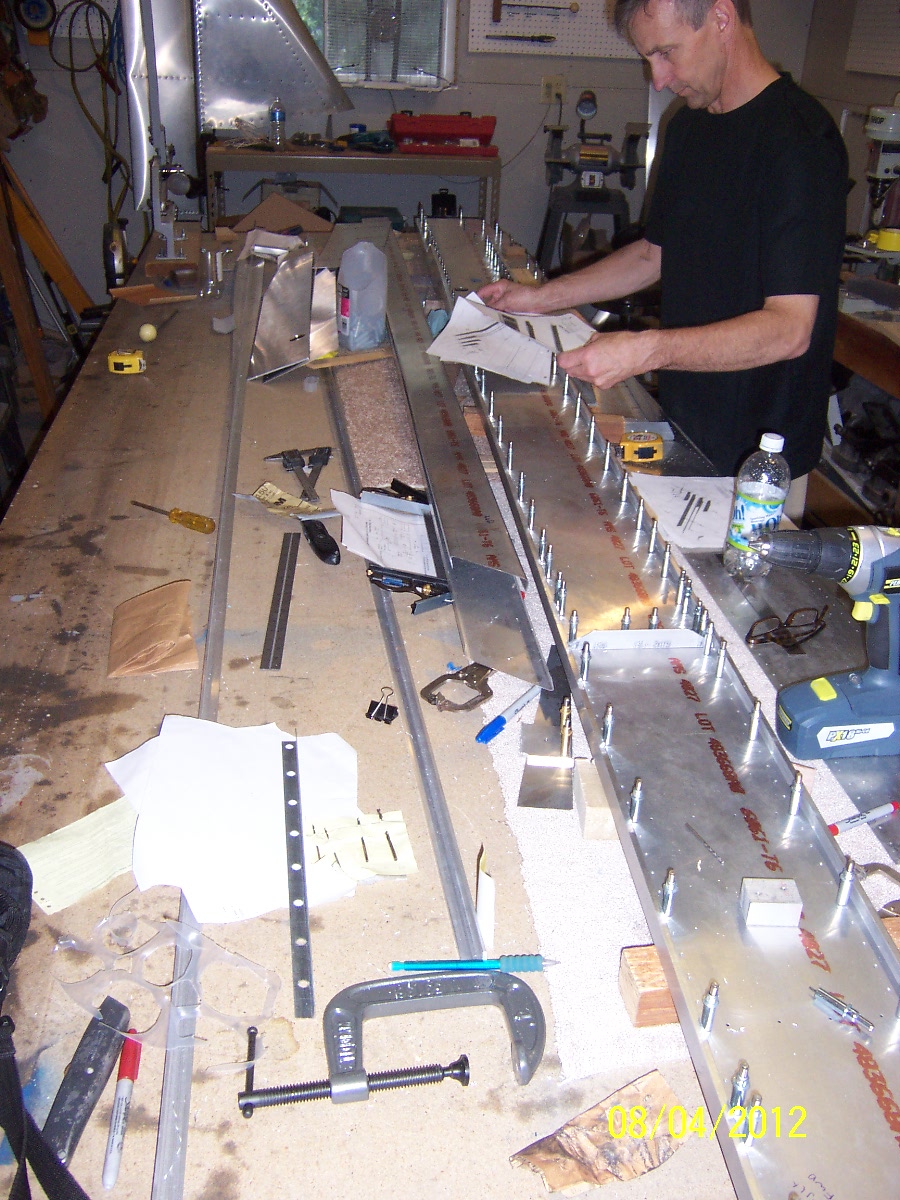
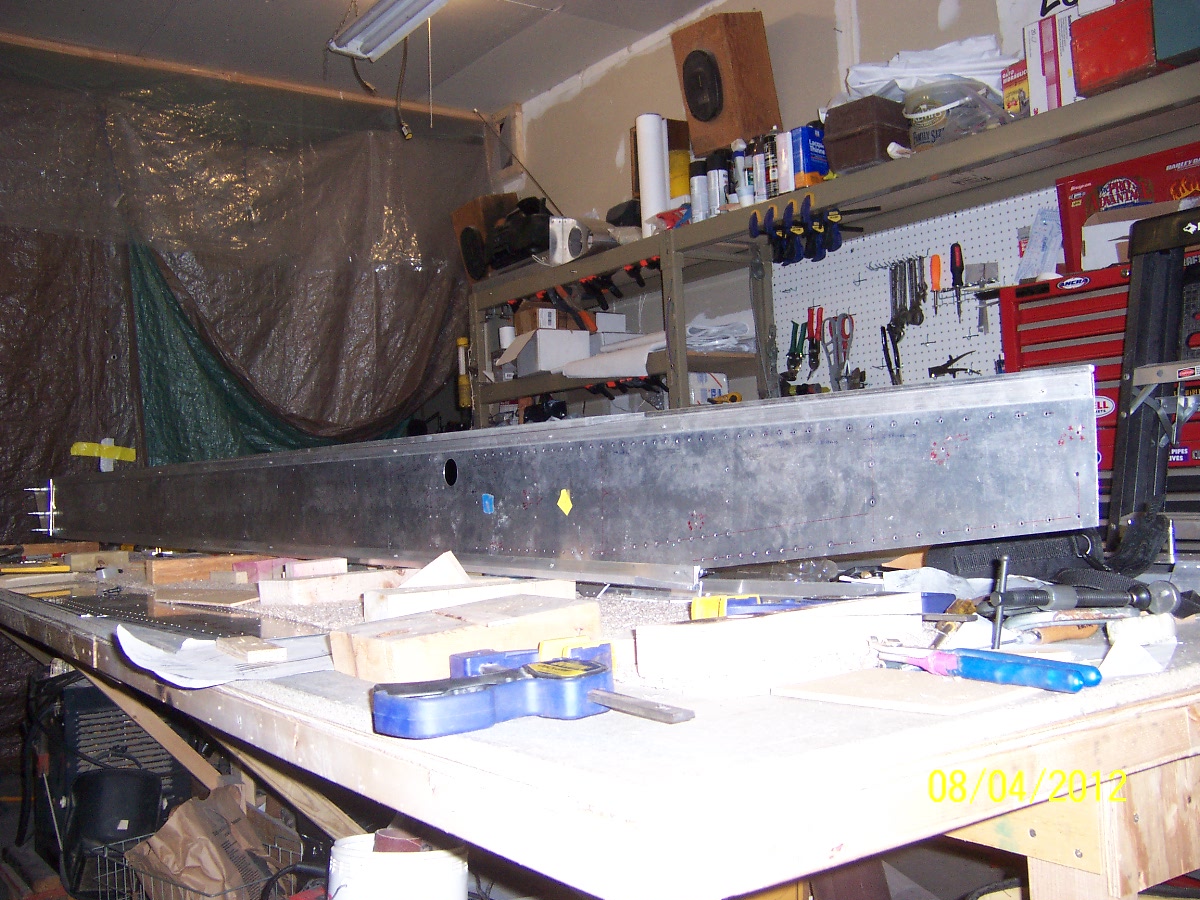
Match drilling the ribs to the spars took some thought.  Since we are scratch building, the pilot holes are located in the spar and the rib flanges are blank.  The basic process for the right wing was:

1) Lay out spar for wing station locations

2) Align and clamp the FWD ribs to align with the upper and lower spar caps using procedure described in plans for overlap of wing skin.

3) Match drill the FWD rib then remove.

4) After all FWD ribs have been matchdrilled, clamp spacers (Wxx-x and Wxx-x) in correct location at each wing station for AFT ribs and then match drill.

5) Tape spacers in place and then remove clecoes.

6) Clamp AFT ribs at proper alignment with top and bottom of spar cap and match drill.

DSCN3304

DSCN3306

DSCN3305

 DSCN3309

Ribs to rear spar

DSCN3310

Return To Wings – Ribs

Fitting Forward Ribs

Dan located the forward ribs for the right spar.  The method on the plans uses sheetmetal strips of the skin thickness to get the tangency between the spar cap and the ribs.  Sometimes the flange of the ribs were a tiny bit under bent  but we are sure the rivets will pull everything tight.  The ribs lined up really nice.

01102013062

01102013064

Return To Wings – Ribs

Updrilling RT Spar

Dan updrilled the right spar.  To do this we installed the bolts first.  We spent a lot of time getting a “tight fit” for the AN bolts as stated on the plans .  We bought a bunch of reamers to the right fit, sometimes we would need a .0005″ smaller reamer.  (I have to admit this was my, Tim’s, complusiveness but who doesn’t like a good fit.)  I will write up a summary on reamers and post it in the tools section.  The bolts really align the spar laminates and the clecos can hold it tight.  Dan decided to use the small drill press to get a perpendicular bore, he had to move it around on the workbench with the spar elevated and leveled.

01042013057

Notice all the 1/8″ copper clecos in the image below:

01052013058

01062013059

After up-drilling notice all the 5/32″ black clecos

01072013060

Return To Wings – Main Spar

Spar LH Caps

(Been a while since I have been at the workshop since learning and replacing a retaining wall in the spring/summer 2012 – Tim)

Having matched drilled  and clecoed most of the RH (Right Hand) spar we began work on the LH spar.

First order of business is laying out the correct order of all the spar layers.  The plans are a little tricky with the right & left sides so Sonex provides some 3D CAD exploded views (RH & LH) .  These still take a little head scratching since one does not want to mess up the expensive spar caps.

Dan came up with a good way to set the spar cap distance.  He placed two carpenter squares, face to face, on one ruler so we could set the outside spar cap distance.

 Sonex sells (or we could make) precision spacers that fit between the spar caps, but we would be depending on the precision of the spar cap “T” leg dimension.  Another side note is that the match drill holes are in the spar web, so they need to be on top.  This makes the spar caps’ “T” leg on the bottom underneath the spar web .

Our method measures the outside distance which is the dimension shown in the plans.  We double-check setting the gap between the squares with a precision ruler and with a 8″ digital mircrometer that I borrowed from work.  Since we are measuring an outside distance there is some feel to it.  There is some friction, or tightness, of our outside gauge against the spar caps.  We tried to be consistent with the same amount of drag feel of the gauge.  You can easily have the gauge not perpendicular to the caps.  To help this we would put pen marks on the caps with a square so we could line the gage up with them.

We would clamp the spar caps on the spar web and check the distance with the gage.  The next step is to make sure the spar web is centered with respect to both caps.  This took some iterations, but it got easier with two people.

Once the we felt the caps were clamped in the right place we drilled and clecoed one end , then the the end, then the middle.  We kept splitting the distance to be in the middle of the gap.  After about six times of this we just match drilled the rest.

To get a good perpendicular drilled hole we place a block of aluminum on the spar web next to the drill bit.  By using the two edges of the corner it helps us see if the bit is off in either angle.

Return To Wings – Main Spar

RH Spar Layout and Match Drilled

Summer Months, June – July      (More Info & Pictures Coming)

Dan got the all layers together for right hand spar and match drilled them.  Quite a bit of work and a little imtimidating to drill that first hole with the $$ spar caps and all the time put into the spar webs.  Great job.

We have the assembly cleco-ed together.  A couple of the angle parts still need to be added.

(These pictures were taken recently)

Return to Wings – Main Spar

End Trim of Aileron Skins

April 30, 2012

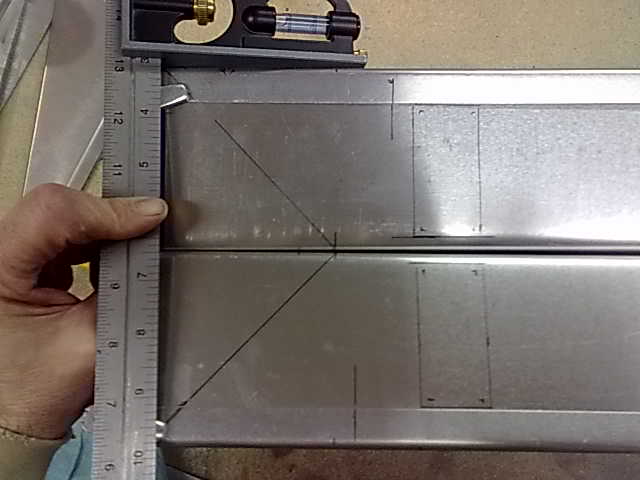
Dan marked and trimmed one edge of the ailerons skins.


Dan compared the markings on the two ailerons to make sure the measurments matched

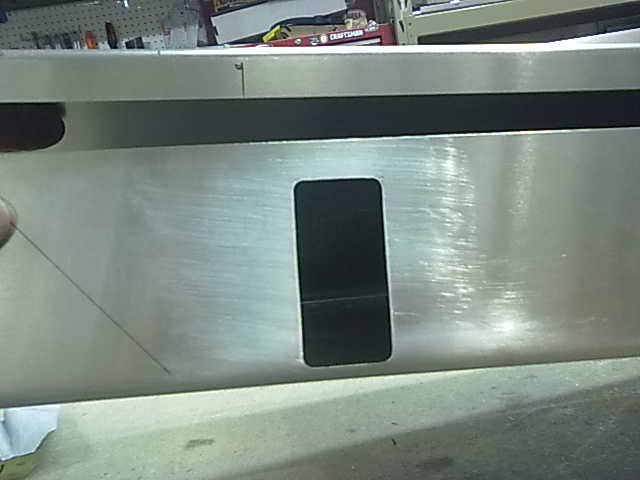
Here is the aileron counter weight arm hole

The plans show to cut out the slot all the way to the flange edge.  We are going to try to keep that connecting piece in and see if we can assemble the aileron.

Using the electric shears

Cutting outside the line and file it.

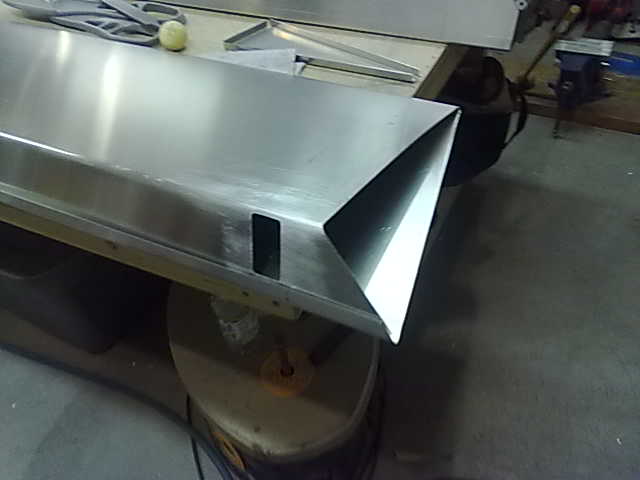
Trying to test fit the end rib.  The plan’s drawingg of this rib is really tricky.  Dan made a test run of this rib and that is what you see in the pictures.  It does not fit too well

Notice the corner sticking out.

The inside looks really nice.

Here’s that end rib again

We are going to check our pattern for the end rib and make another test end rib.

Return To Wings – Ailerons

Bending Flap and Aileron Skins

April 7, 2012

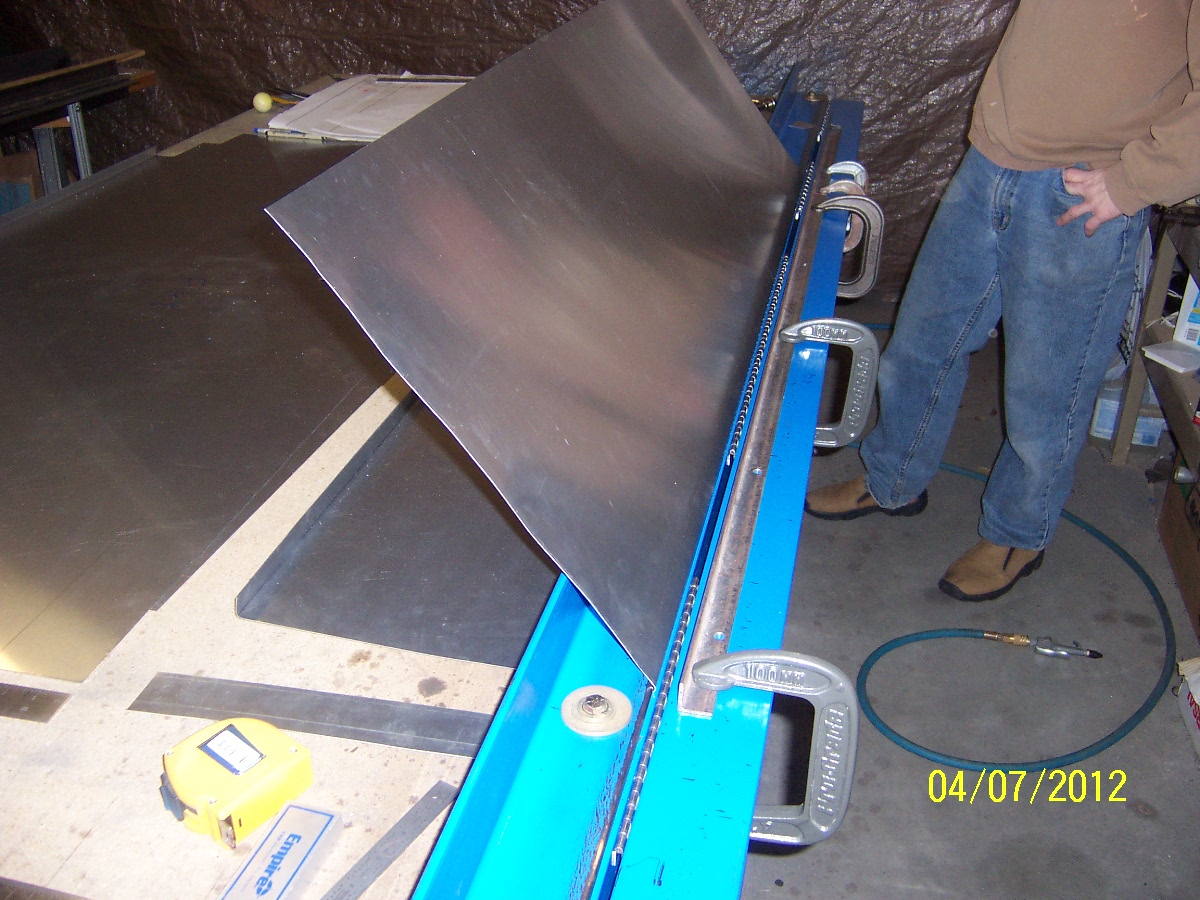
We recently bent the rear spars with “Big Bend” brake so we wanted to bend the aileron and flap skins.  We decided to build the aerobatic ailerons, they are a little wider and hence the flaps are a little shorter.  This makes the aileron and the flap close to the same length which is easier to make with the brake.

Using a CAD program at work I was able to generate the flat pattern of the aileron and flap.  We were able to dimension the tangent lines and the sight lines of the bends.  We made some test bends with narrow strips to check the dimensions.  The first ones may have slipped in the brake but the second try turned out great.
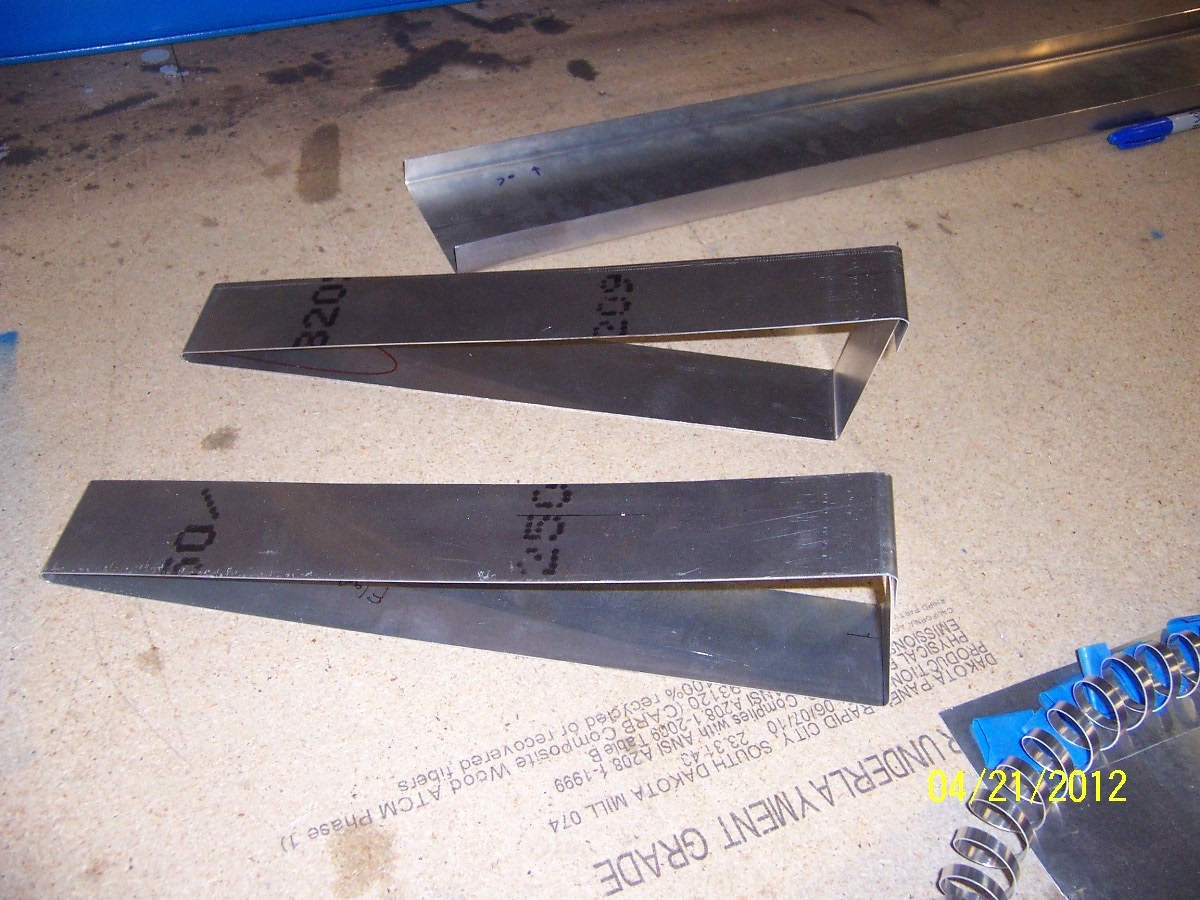
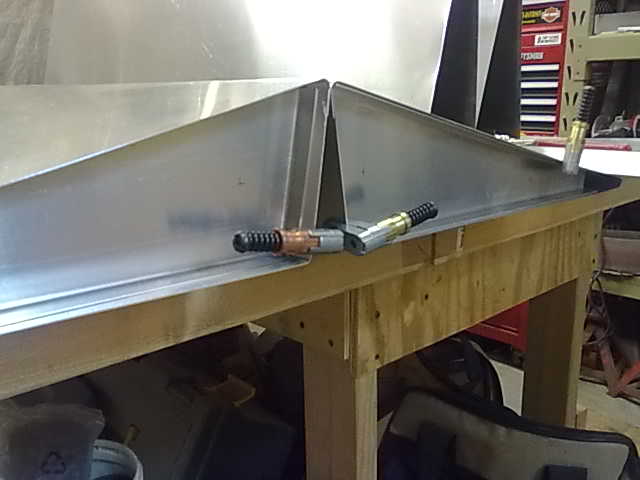
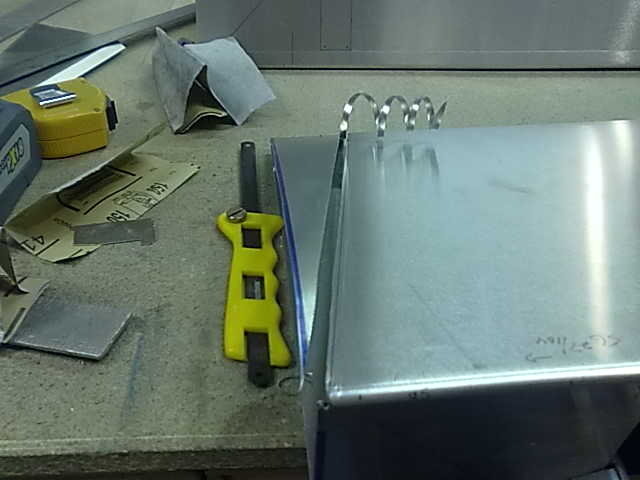
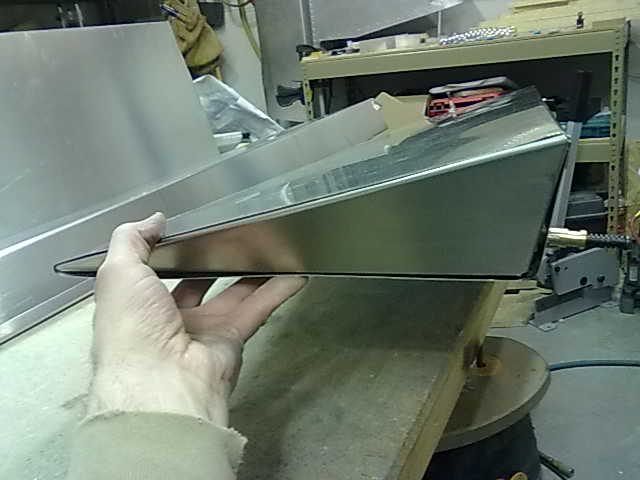
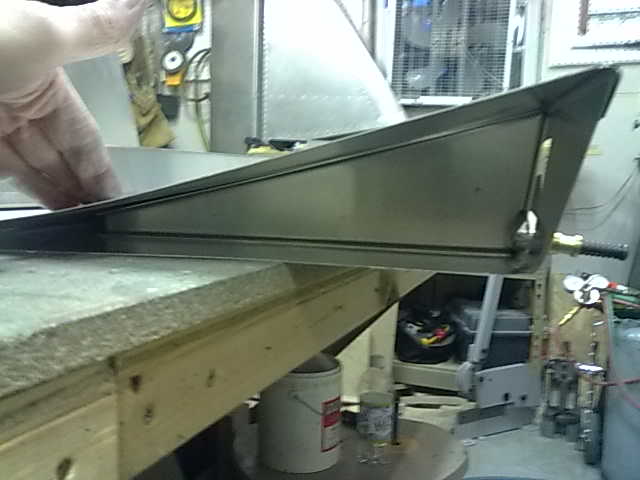
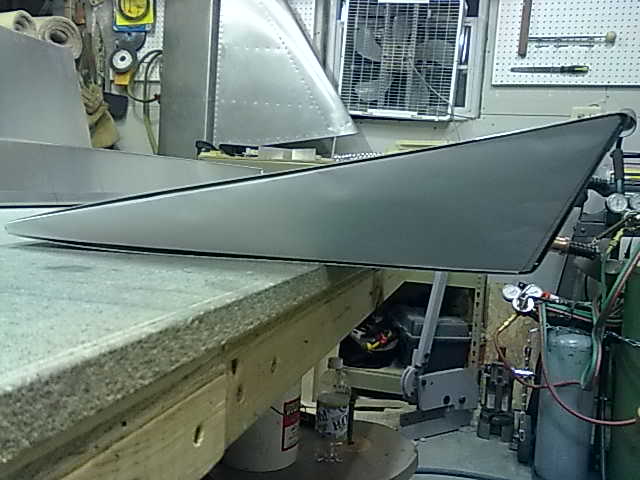
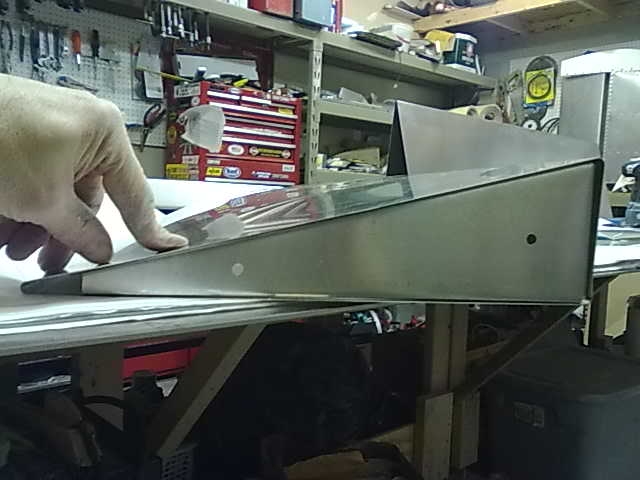
Since these parts have a 160~170 degree bend at the trailing edge, the sheet metal runs into the vertical leg of the top steel angle when using the brake as it is built.  See the picture below

We wanted a really good bend on the trailing edge, and from the rudder experience we would need to bend a full 180 degree with the sheet metal spring back.  We bought a 1/4″ thick plate of steel and grinded/filed a bull nose in it so we have our 1/8″ radius on the front.

We bought the steel from a local metal supplier and found it in their “drop” section.  These are pieces left over from other cuts and the price was really go.  I think the part is 1/4″ thick x 5 1/2″ wide x 55″? long.  When we replace the top angle on the bending brake with this flat part we can get a full 180 degree bend.  We had to match drill it to locate it to the existing brake assembly.

Using the sight lines we located the skin in the brake.

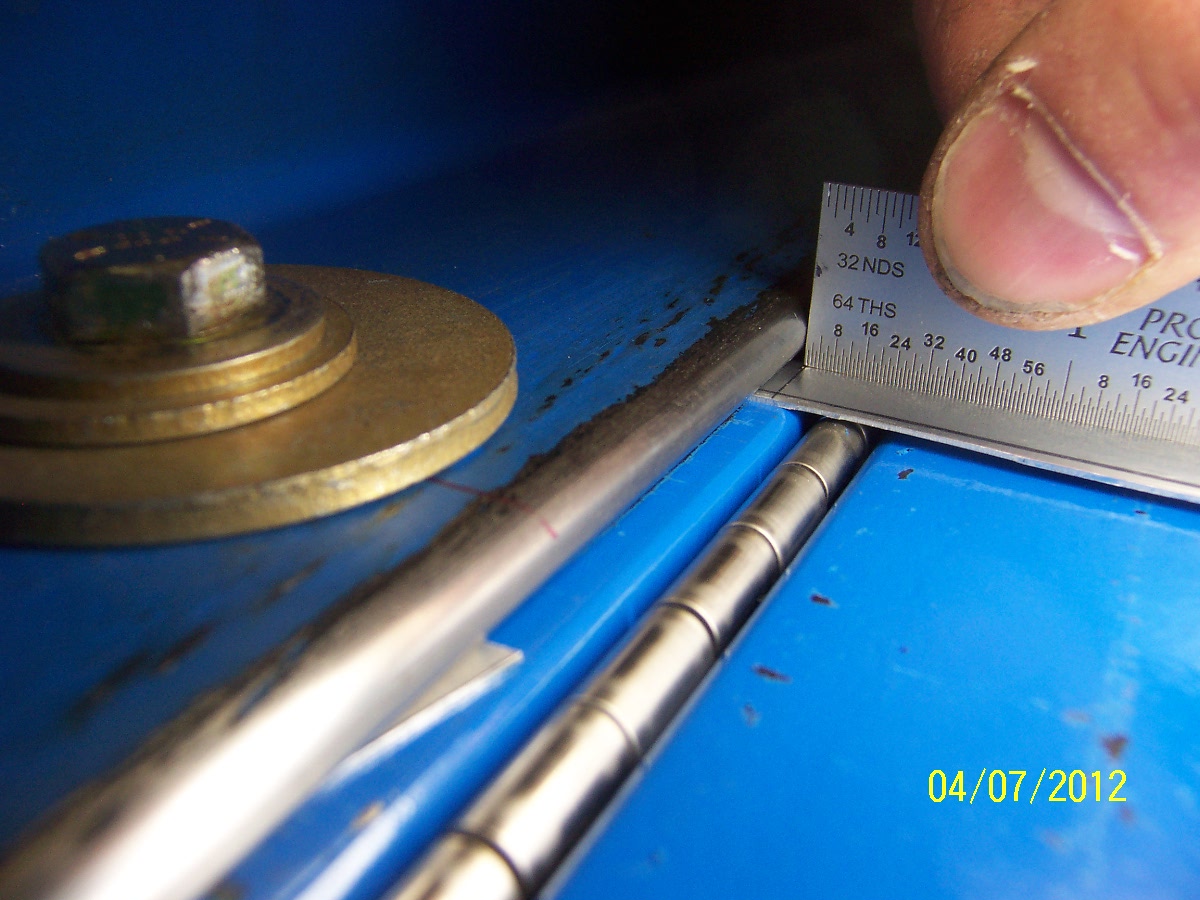
It is tricky to accurately locate the sight line looking straight down at the tangent point on the bull nose of the angle.

We use a steel rule against the tangent point to locate the sight line on the sheet metal.  (Notice the shim on the left side of the bolt, the shim is the same thickness as the sheet metal.)
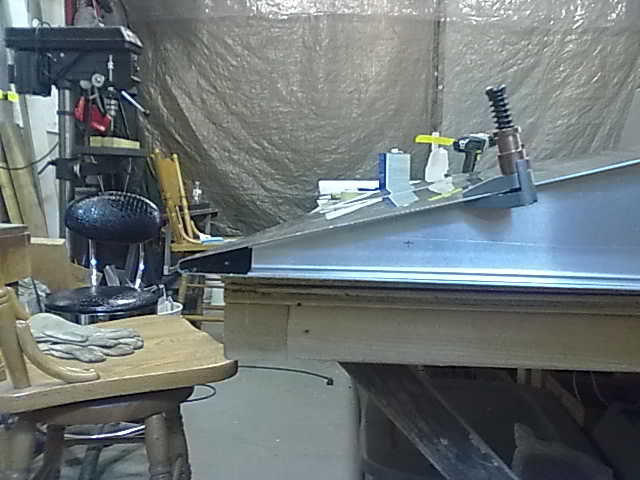
To get as much stiffness on the top angle of the brake (to prevent bending) we jammed a 2×4 between the angle and the ceiling.

For the trailing edge we would make the first bend to ~90 degrees with the standard brake design.  We clamped an angle to the brake to bend it until the skin hit the vertical leg of the top angle.

Now we switched the brake’s top angle for the flat plate with the bull nose.  We nested the partial bend into the bull nose, clamped it, and pushed it to the ~180 degree point.  With the spring back it came out really well.

Here is a picture of a rib sitting the formed skin

We are really happy with the results.

Return To Wings – Ailerons                     Return To Wings – Flaps

Cutting Out Flap and Aileron Skins

April 1, 2012

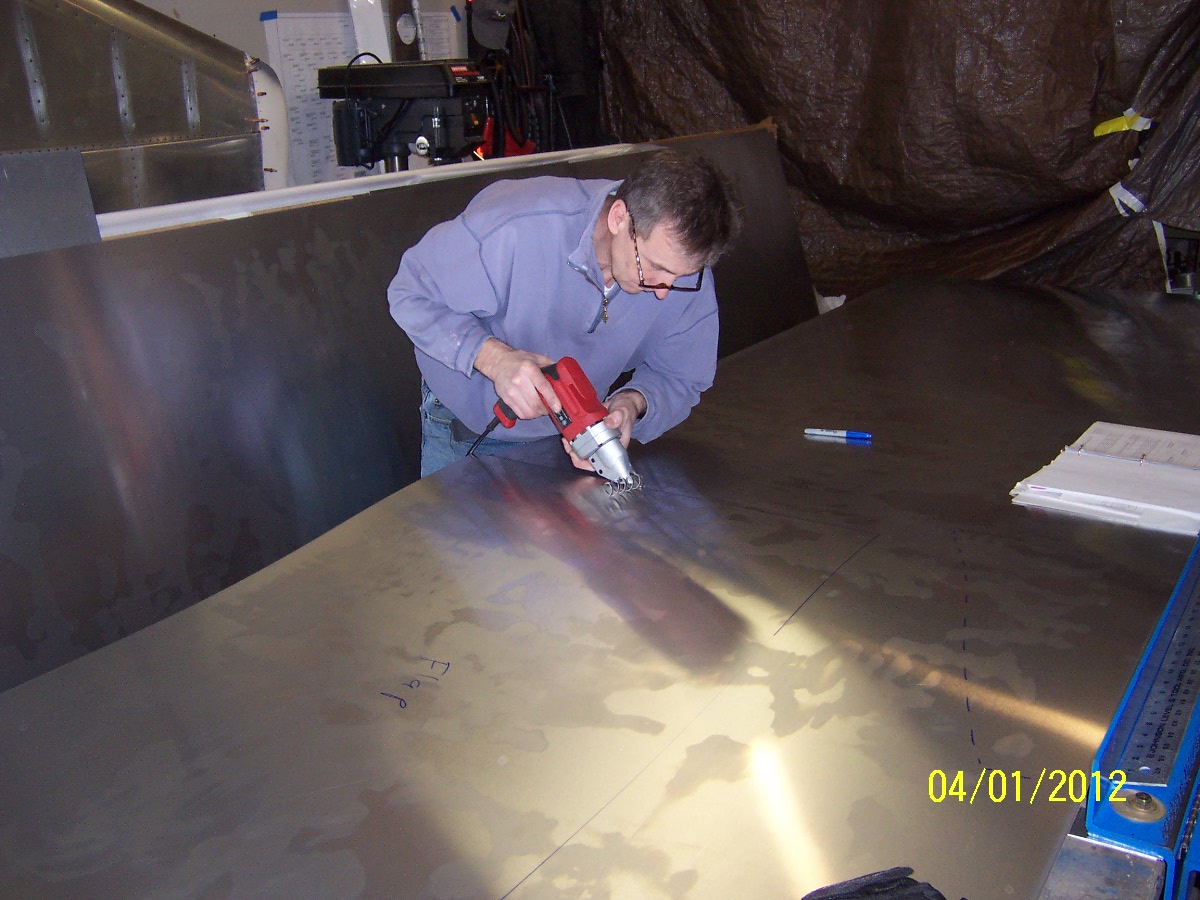
Having completed the rear spar bends we could now use the big brake for the aileron and flap skins.  Using a CAD program at work I was able to generate the flat pattern for both of the skins so we have the outside dimensions.  We marked the sheets being mindfull of how to best use the material given the parts we have left.

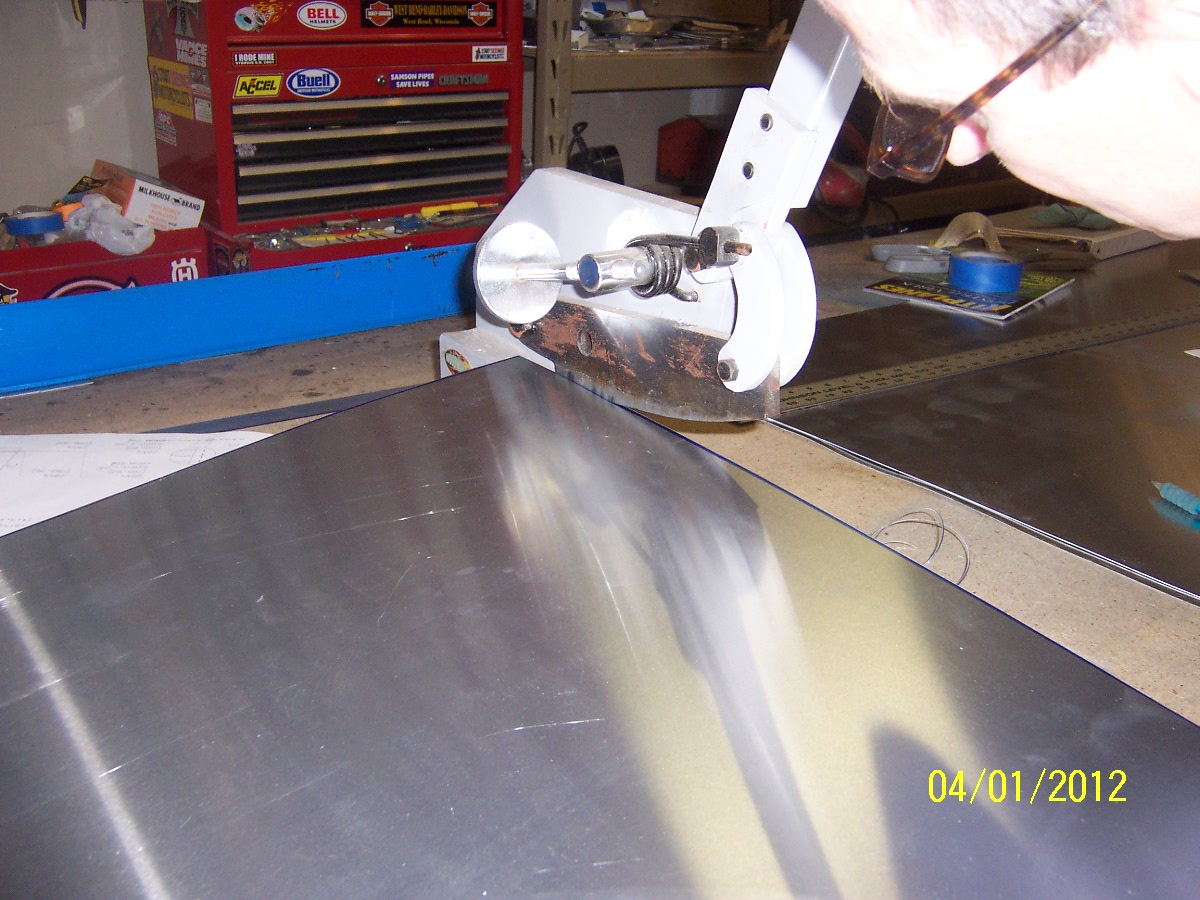
Dan used the electric hand shear to cut them out pretty close to the marks.

Even though we used two factory edges of the original aluminum sheets Dan wanted to make sure  they were perpendicular to each other.  If they are not then dimension errors will creep in and with skins one can get twist at final assembly.

Dan pulled out his trusty framing square that is pretty true.  We used the long “bottom” factory edge as the primary datum.  We marked the other factory edge with the sqaure and you can see on one side there is barely any pen:

But the other side has a thicker ine of pen as the perpendicular line.  To me this shows that you cannot rely on the sheet edges being perfectly square.

Dan saved us a lot of headaches by this check.  We trimmed and filed off the pen mark.

Now we have two perpendicular datum edges.  In theory the “top” long edge should be parallel with the “bottom” long edge since it was measured from it.  Here are the finished skins:

Return To Wings – Ailerons                         Return To Wings – Flaps