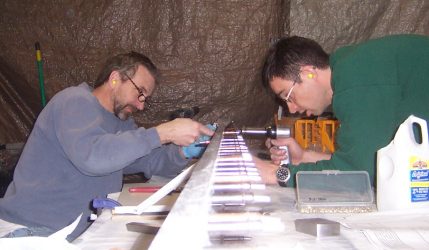
Complete the Bending of Rear Spars

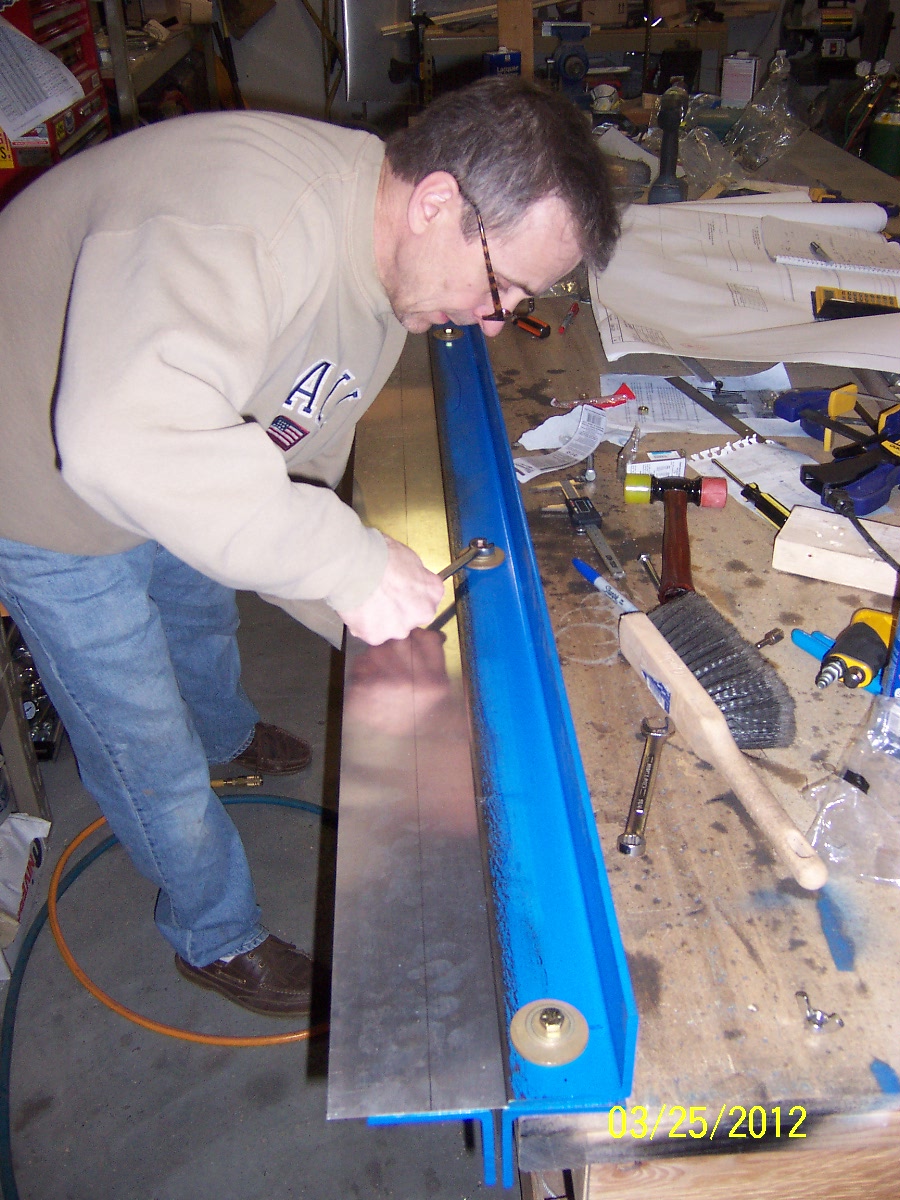
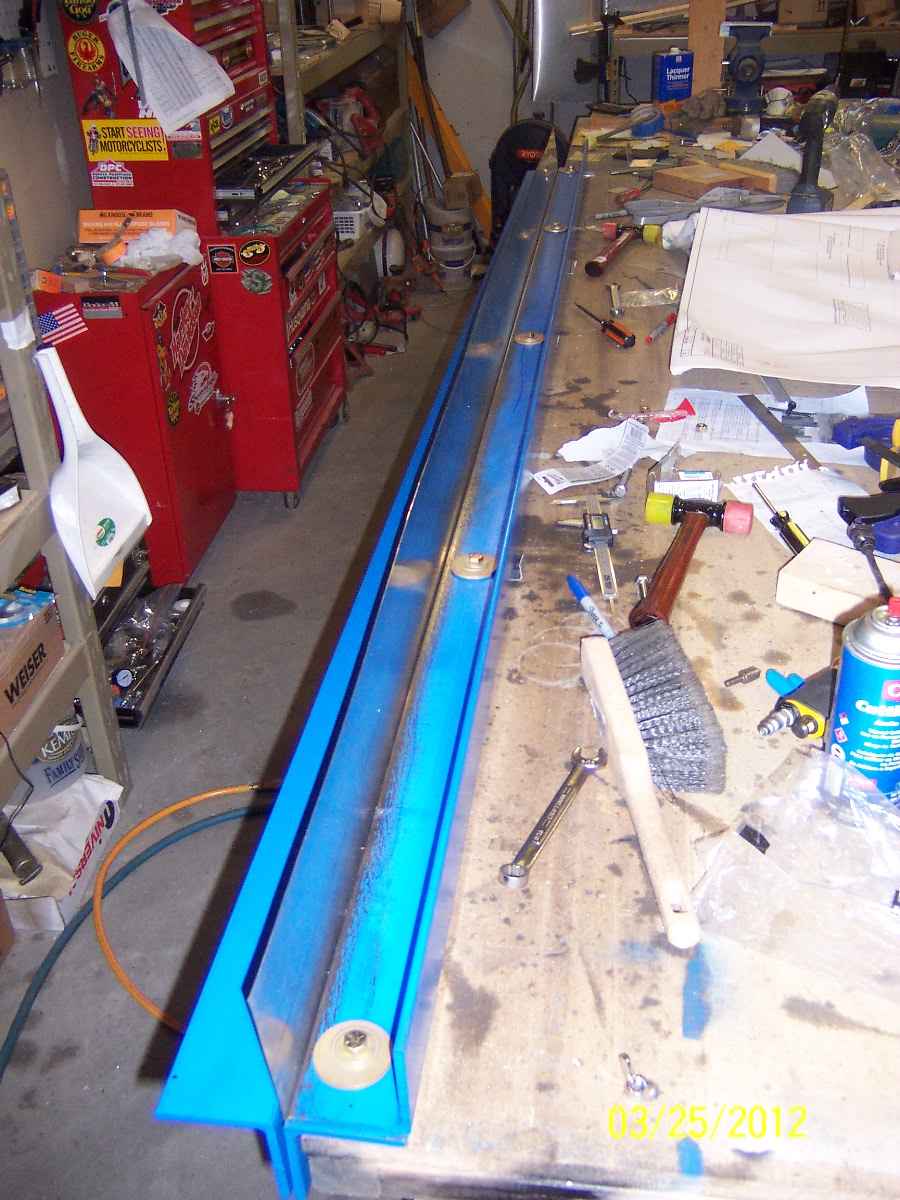
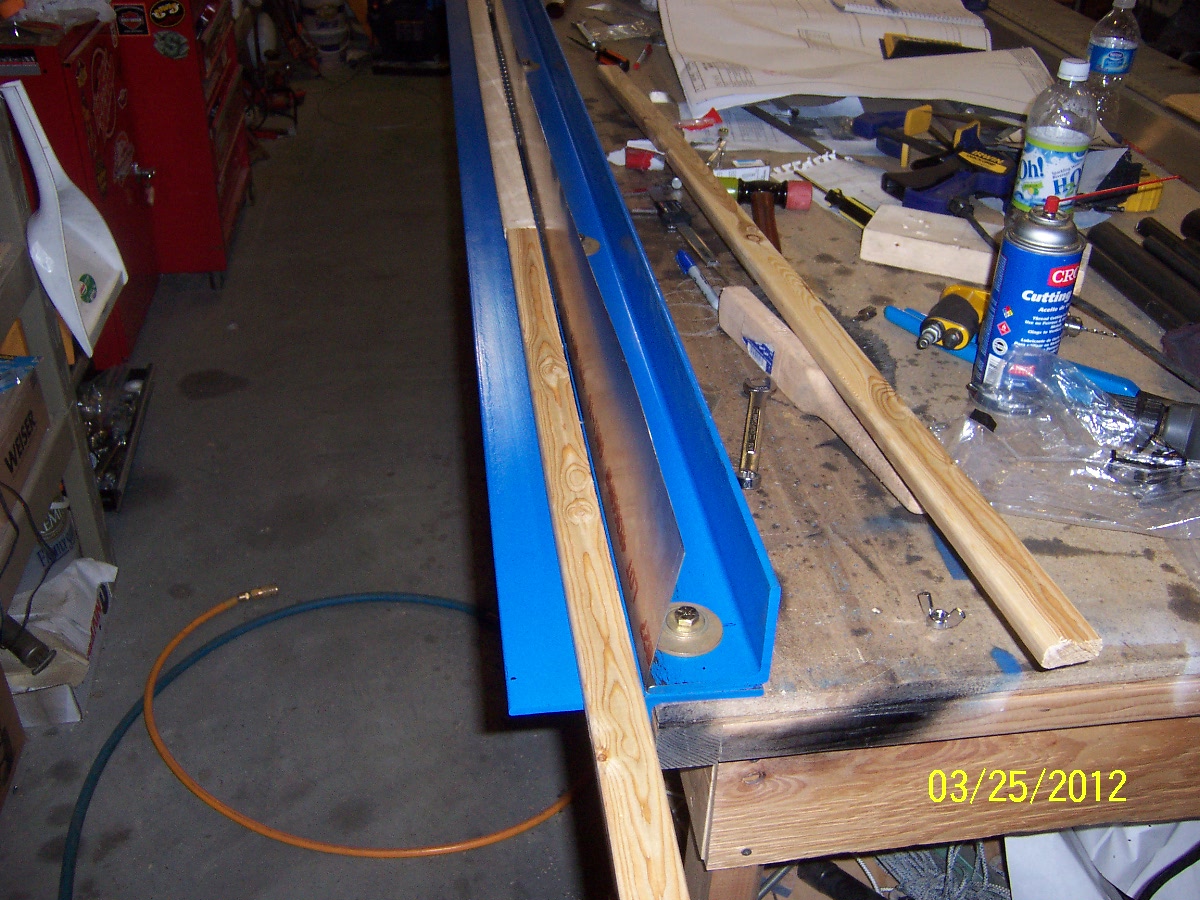
Here are some pictures of finishing the rear spar bends.  As usual the first time you try something new, like these really long bends, it takes a while and you learn the little subtleties.  For example we noticed that the ends of the bend would form much more than the center, slightly bowed, perhaps the center of the brake is bending a little.  Since we have to go past 90 degrees we have to bend it a second time since the brake can only rotate 90 degrees before it binds.  We have to bolt another flange (or a peice of wood) onto the brake.  Well if we don’t push at the ends for this second bend it all seems to average out.

Here we can see that we got the first flange angle but it looks pretty wavy along the length

When you bend the flange on the other side it all straightens out:

That looks awesome!!

Here are the two completed rear spars.  These are the long lengths (108 7/8″) so we don’t need the splice plate (snx w12-04).

During this process you can see we were using lots of C-Clamps.  Here’s what happens when Dan wants something tight:

Return To Wings – Rear Spar

Rear Spars First Bend

Since we finished “Big Bend” (the David Clay bending brake design) we were eager to try out the beast.  This is the method we have developed for accurate bends.

Here is the rear spar cut to shape and edges deburred and smooth.  One can calculate the width from the standard bending formula tables.  We mark the centerline of the spar blank

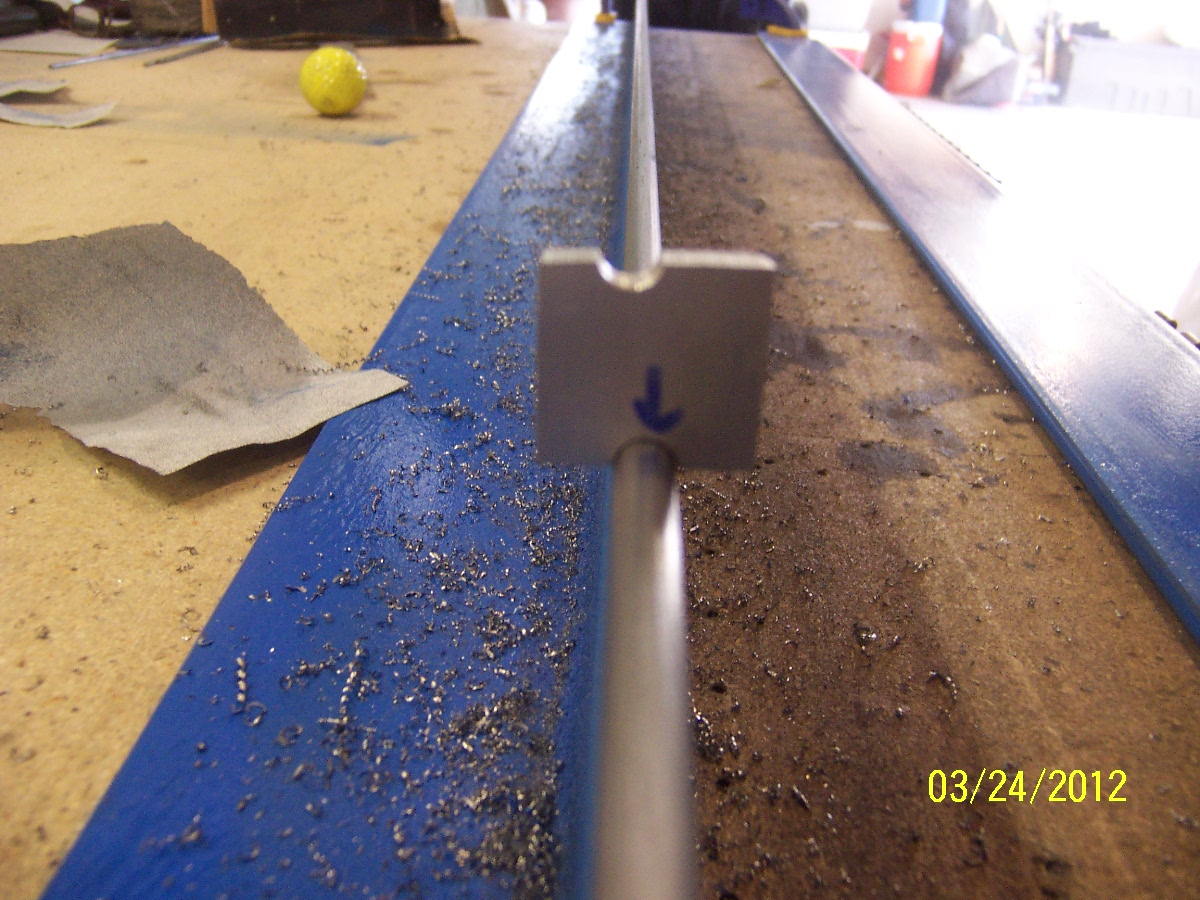
We clamp the flange side in the bending brake so we can push up against the larger center portion.  From the bend formulas you can calculate the tangent points of the bend.  Since the part will be formed around the radiused nose of the brake, we need to locate the part’s tangent line right on the tangent line of the nose of the brake.   How can you do this if the part’s tangent line is covered up?  What we need is called the “Sight Line”.  Looking straight down on the un-bent part this theoritical line should be located right at the nose of the profiled brake angle.  It happens to be the radius of the bend from the tangent line.  I will post a summary of this with lots of pictures.  It is tricky to get this line in the right position visually, so we use a caliper and measure from the center line out to the nose of the brake.  (In the picture below we are using the top fingers of the caliper.  The paint on brake nose was sanded off so it is a bit shiny.)

Tighten up the clamp bolts on the brake

** Important **  When we clamp on the narrow flange section we have less than .5″ of the sheetmetal clamped so the top angle will tilt back since it is 3″ long.  This reduces the clamping force and the little flange can slip during the bend.  We insert shims of the same thickness of the bend piece in the backside of the clamp to keep it level.

Here is the first bend, we can only get about a 90 degrees (with the spring back) since we can only rotate the brake up a little more than 90 degrees.

We put in a piece of wood to continue the bend.

Return To Wings – Rear Spar

Fabricating Big Bend Part 4

During the week Dan aligned the second hinge to the other angle and match drilled them.  While this sounds easy is involves having all five hinge sections joined with their hinge pins in supporting the angle in the right position wile match drilling.

This Brake design uses one of the angle pieces at the bending nose for the sheet metal.  That is why we bought 1/4″ thick angle, so we could get a 1/8″ radius bends.  Now standard angle does not have a full radius at the end of the legs.  We broke out the vixen files and filed until we got a nice bull nose.  Here is a little 1/8″ radius template from a piece of scrap.

Once we liked the bend radius we located this angle and drilled holes for the clamping bolts

Here is the completed Big Bend brake:

Return To Workshop – Tools  or  Return To Wings

Fabricating Big Bend Part 3

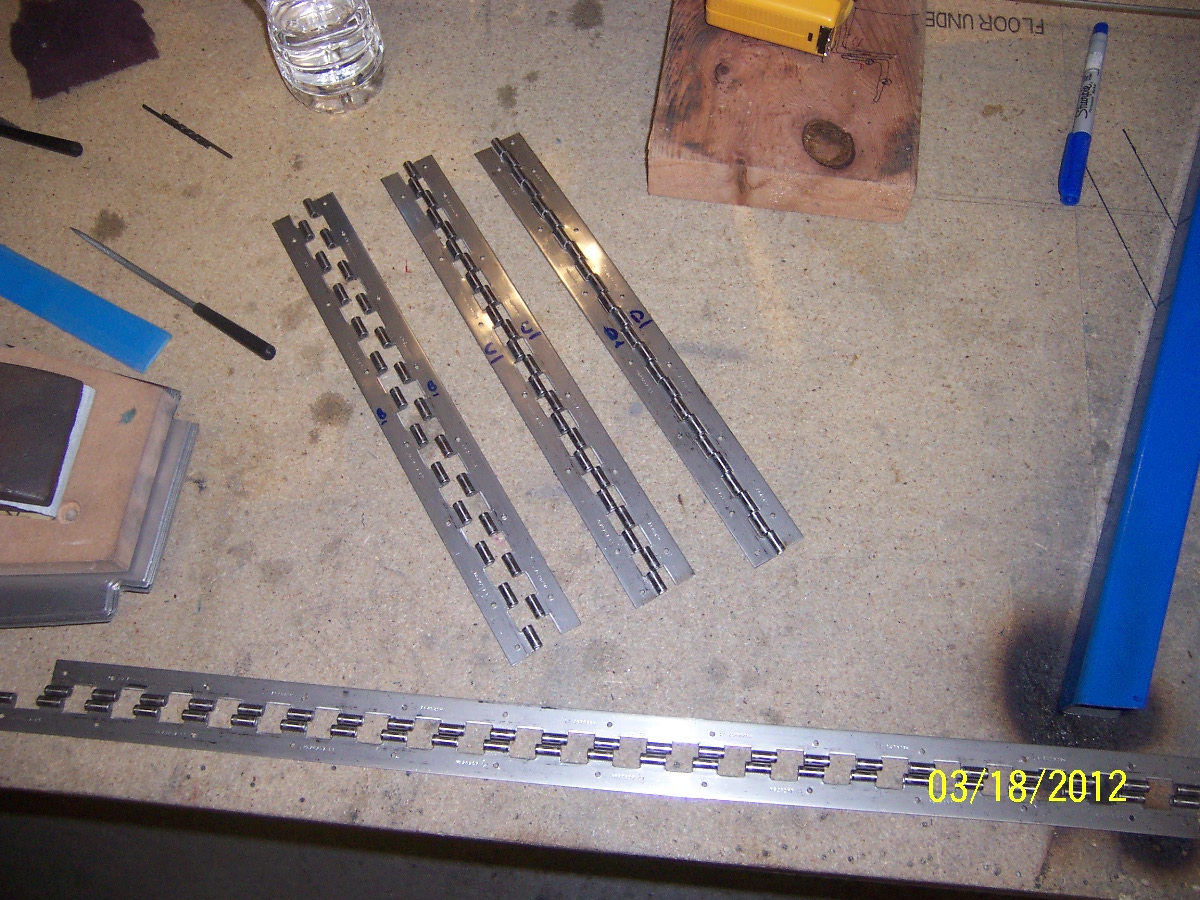
We had a six foot P3 stainless steel hinge to use on the 9′ brake.  From the small brake on can see the middle will bow during a bend for a thicker material.  We decided to place break the hinge up into sections.  We put 2′ in the middle and on each side we have a 9″ space then a 1′ hinge section, another 9″ space and another 1′ section of hinge.  This leave a 1″ gap from the outside edge to a hinge.

Here is Dan cutting the stainless hinge with a Dremel wheel (Always wear safety glasses when using a Dremel!! ask my Dad)

We used some stainless rivets to attach the hinges.  We used the “yardstick hinge hole template” to drill the pilot holes.  Stainless is a lot tougher to drill through than alumunim.  Dan would spot face the hinges with teh template and I used the drill press to finish the holes.  Here is four of the five hinge pieces:

Aligning the first hinge halfs with the fisrt angle wasn’t too hard.  Match drilling through the 1/4″ steel angle was a pain.  Dan used a older electric drill for this task.

Aligning the other angle with the hinge was more work.

Fabricating Big Bend Part 4

Return To Workshop – Tools     or     Return To Wings

Fabricating Big Bend Part 1

We decided to make a David Clay bending brake for the rear spars, the ailerons and the flaps.  The plans show the rear spars can be made in two peices, and joined together with a splice plate.  They did this to keep one of the parts at eight feet long, perhaps to help with a sheet size of the aluminum or shipping.  Anyways we decided to make a brake for the full 109″ long spars, that way we don’t have to have the splice plate.

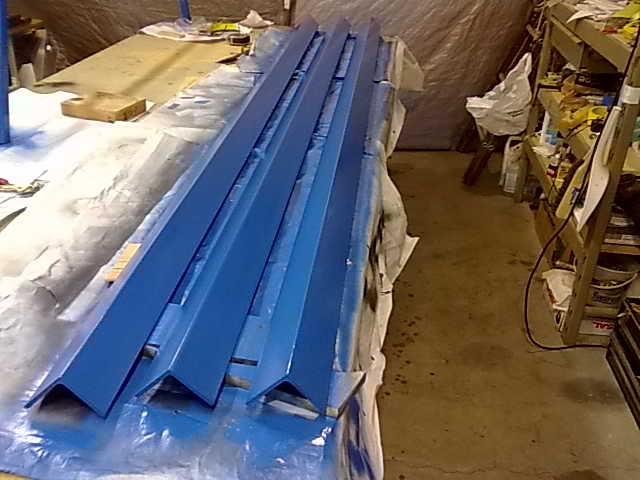
Dan purchased three 10′ lengths of 3″x3″x1/4″ thick steel angle from a local supplier called Discount Steel, really nice outfit.  We alos picked up some square tubing for the handle.  He cut it to length and cleaned them up.  Really dirty work.  He had to clean up the shop after this.  Dan primed them for painting.

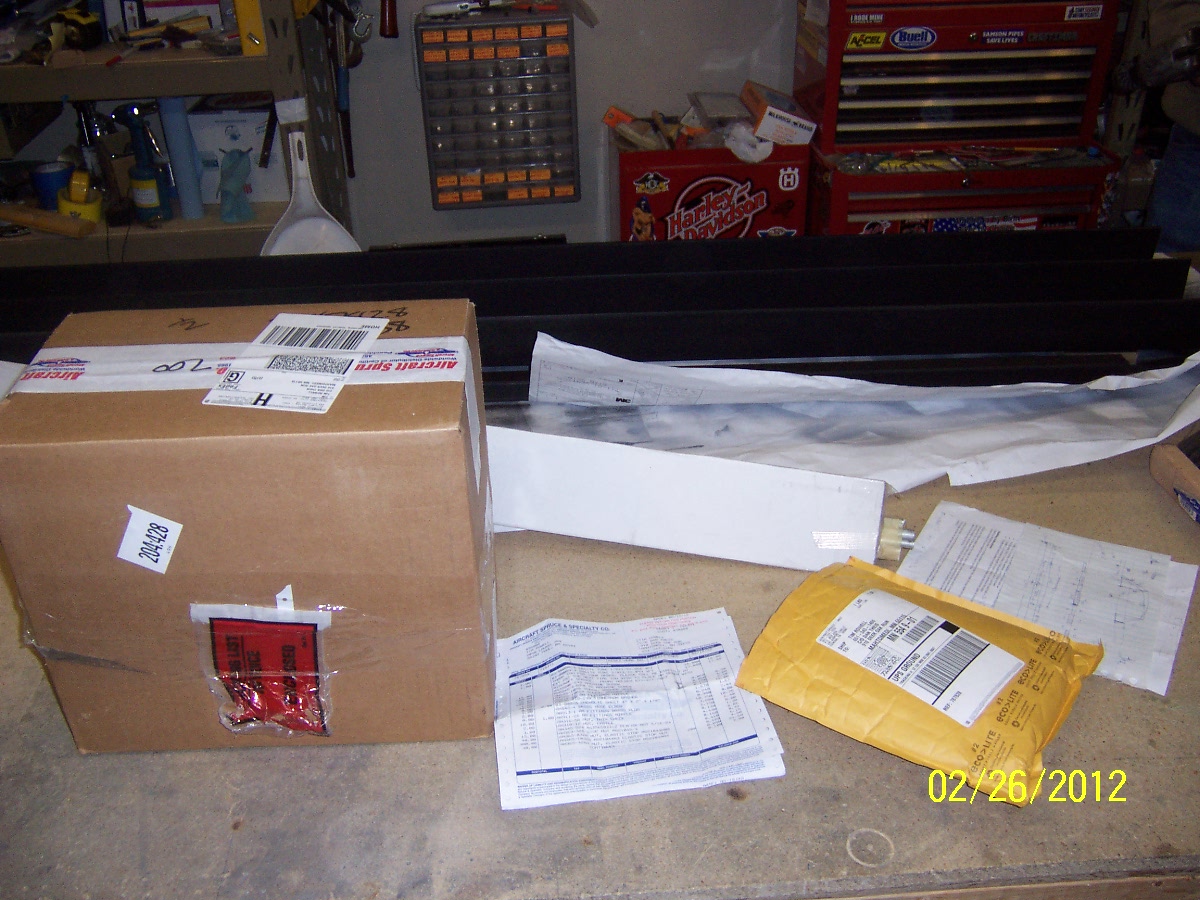
Notice the box of hardware from Aircraft Spruce on the workbench

Fabricating Big Bend Part 2

Return To Tools    or     Return To Wings

Hardware From Spruce

We have been working on a long list of hardware for the Sonex.  We had ordered the tail hardware when we built it but decided to order almost all the rest all at once.  We started with a list on the Yahoo Sonextalk fourm and double checked with the lists from Sonex.  We padded the bolts by adding a few extra and getting a some of the lengths around the specified ones.

I found that Aircraft Spruce had the lowest prices by a little bit.  A couple items were cheaper at Wicks.  We made a big order and was disappointed to not get the “free shipping for more orders than $500” because it weighed more than 25lbs,  bummer. 

Here is the box that arrived with the tube behind it for the longer parts

We check the order and it was spot on with the packing list, with a couple items back ordered.  Now where to store all this stuff.

Return Build Log

Cleaning Up Wing Ribs

Dan & I have been cleaning up the wing ribs.  Have been working on them on and off since mid January.  The outsides have a “ever so slight bumpy” (that’s a technical term) edge after the router.  The process we have been using is:

  1. Smooth the edge with the vixen file.  (Don’t have to worry about taking off too much material since we are on the outside of the pen line and this will end up being the outside edge of rib flange.)
  2. Go over the edges with a finishing file.  This is not a bastard file, it is a first or second cut file.
  3. 180 sand paper
  4. Final with 240 sand paper or Scotchbrite pad.

The real time sink is in the radiused corners  bewteen the flanges.  I want a nice transition for the straight edge of the flange to the radius.  Looking at the light reflection on the edge you can really see the quality of the surface.

The lightening holes also need to be de-burred and smoothed.

So all this take a bit of time.

Return To Wings – Ribs


Learning Solid Rivet Gun

We have a friend Gary in our flying club who is building an EVO Rocket.  Sweet plane, checkout the EVO website.  Gary’s fuselage is just out of the pictures.  It was motinating to see his plane.
The Rocket is a variation on the RV line which uses solid rivets.  The Sonex spar uses solid rivets and Sonex Company reccomends using a dished out bold and big hammer.  Lots of builders have done this with great results.  Gary graciously offered to lend us his rivet gun for our spar.  He gave us a lesson on riveting 101.

Gary the “Rivet Master” & Dan
Would you trust this guy with your spar?

One thing to note is that RVs use size 3 and 4 rivets.  The Sonex Spar uses size 5.  So you need a 3X or larger gun for the Sonex rivets.  If you use a smaller gun I’be been told the rivets will work harden before they are properly set.

Thanks  Gary.

Return To Workshop – Tools

Finishing Wing Rib Gussets

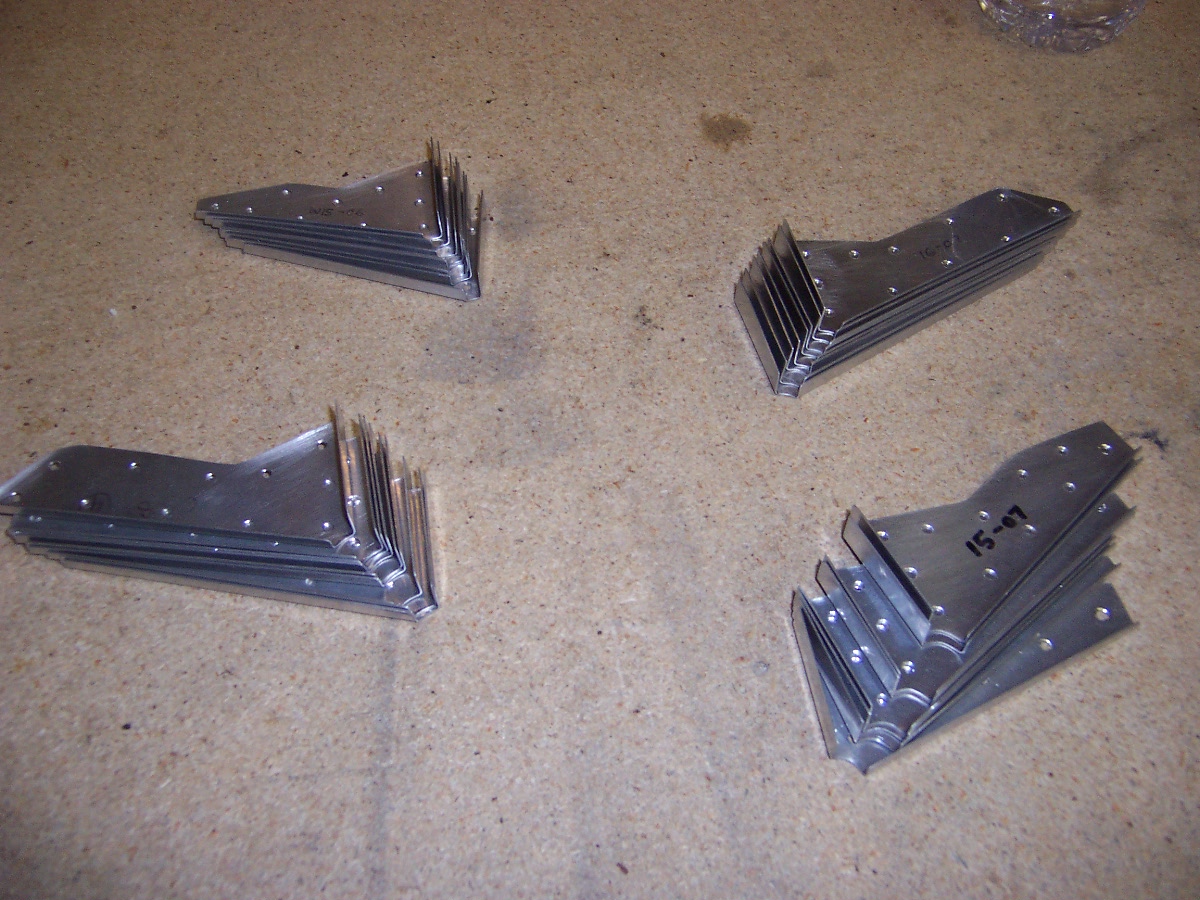
After cutting out the gussets had to clean them up.  This includes filing and sanding all the edges smooth especially in the radius between to flange bends.  This is a detail where one can be really picky since the radius should be tangent where it meets the straight edge of the flange.  Here is a picture of the completed parts:

With a stack of “identical” parts you can see how consistant your flange bending is.  There were a couple that were off just a little.  I think it happened becasue I had a really small height flange clamped in the bake while the main body was being bent.  There isn’t a lot od surface area for the clamping on the little flange.  After I added an additional clamp the bending brake it was a little better.  That’s my excuse and Dan seemed to buy it…

Return To Wings – Ribs