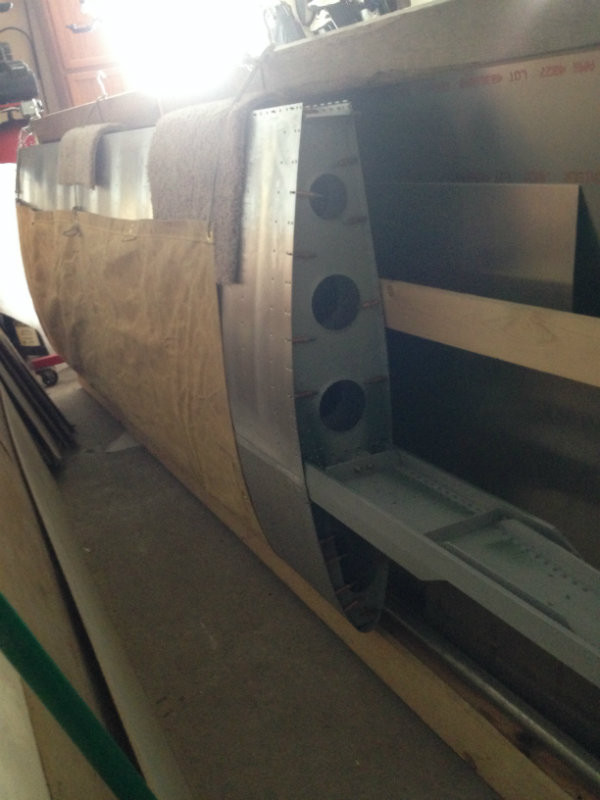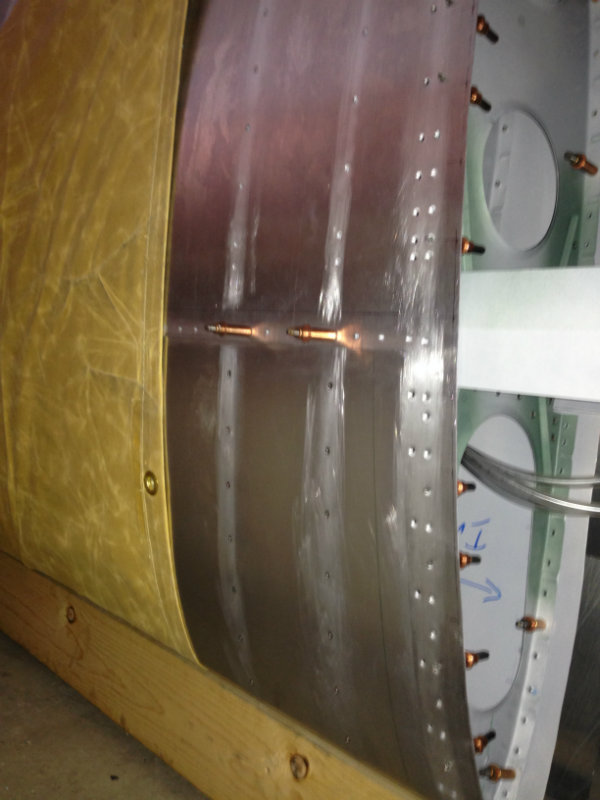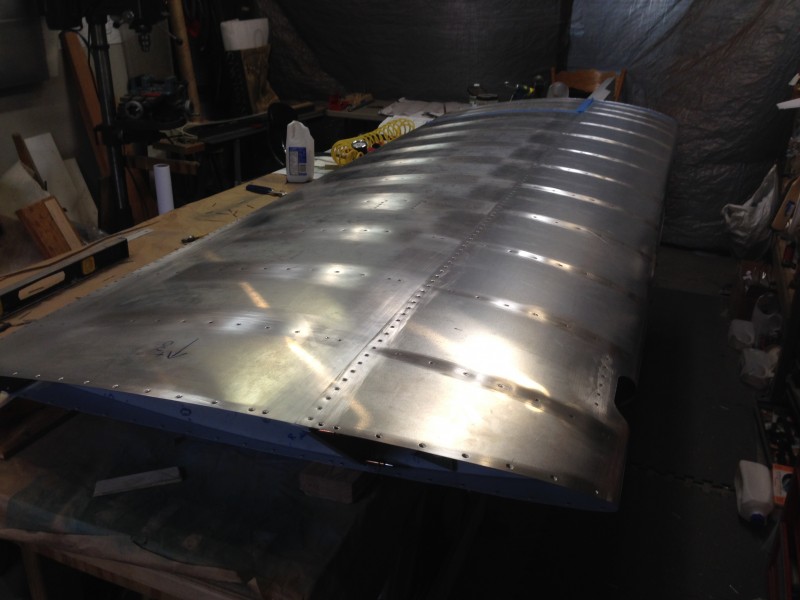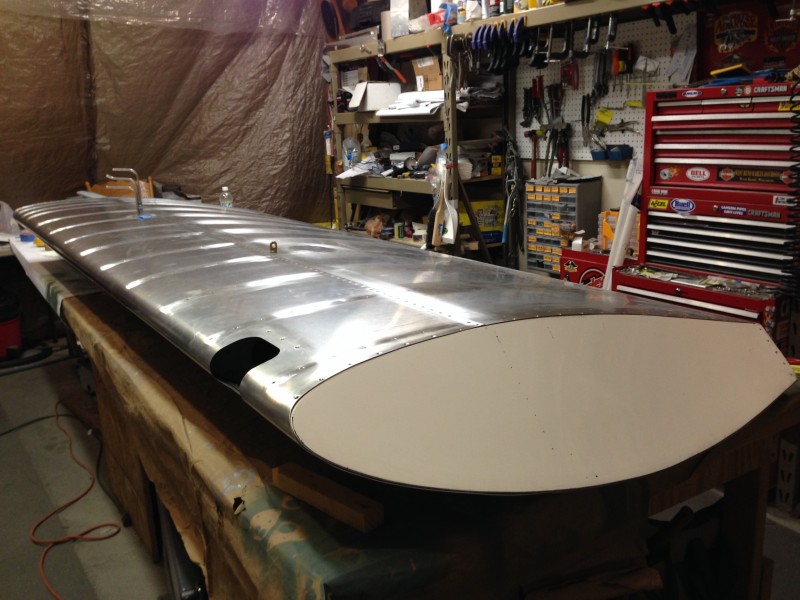
Left Wing Inspection Cover

So close to Christmas and it is clear that the left wing will not be done by the 25th.  Work is the main culprit as Tim tried a couple times to connect  with me but I was fighting against a shipment deadline for equipment on ‘critical” project.  I made my own bed and slept in it but I question if in 10 years that it will seem all that critical. Getting this plane in the air and spending time with my family and friends has to be a bigger priority. Something to work on.

Well, today and yesterday were pretty good as far as the getting things done on the plane.  I almost made a mistake today that would have set me back more than a few days.  I’ll get to that  but first the progress.

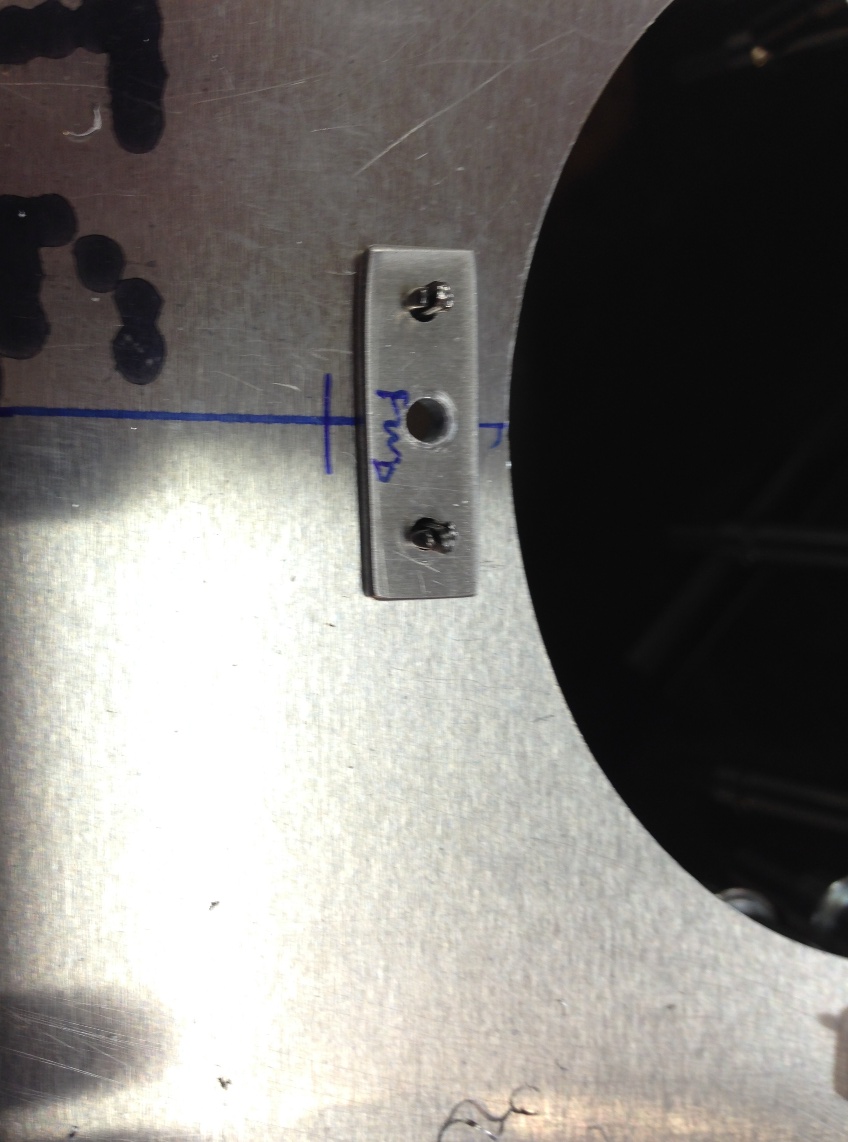
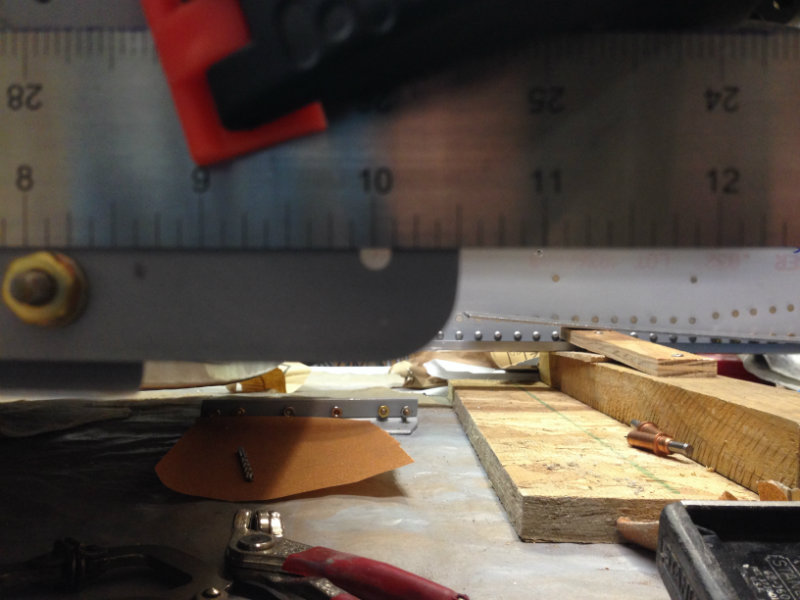
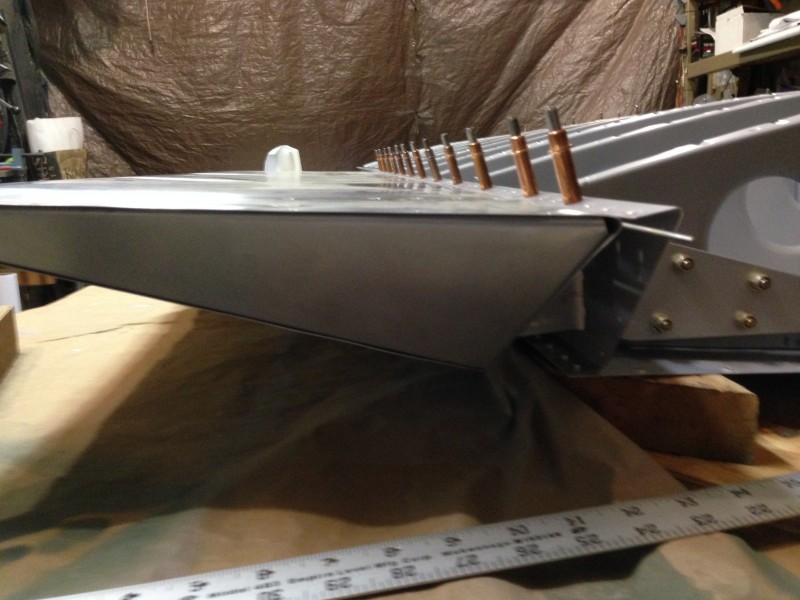
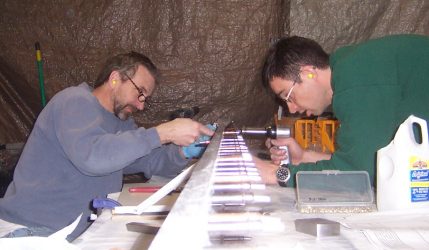
Yesterday, despite numerous interruptions with honey do list things, I was able to start and finish the inspection cover and the cut out for the tie down in the lower skin. I really like the squeezer that Gary Hall loaned us.  It is really the ticket for installing nut plates.  Tim and I decided to  use nut plates to mount the inspection covers.  While I am behind the decision it turns a 3 minute drill and screw into 3 hours when you want to have the screws countersunk (self tapping screws are what are called out on the plans).  I have a few pictures  but to make sense of what is going on I should explain that buying countersunk nut plates would be faster (and probably smarter) but what we had were a large collection of flat nut plates.  I don’t know the MS number for the nut plates we have but I thought it would be easy enough to just add a small piece of aluminum behind the skin to provide the depth to counter sink for flush mounting rivets and mounting screws.

The procedure is pretty straight forward but it is important to keep track of what holes should be drill first and at what diameter in order to best keep everything aligned.  The procedure I followed was this:

1) drill major inspection hole and make a cover

2) Mark the center line and cross  line for screw holes in cover and skin

3) Drill screw holes with #40 bit in cover

4) Align and match drill screw holes to align cover to skin

5) Cleco nut plate to skin and drill mounting holes with #40 bit.

6) Cleco cover to skin and updrill to #30.
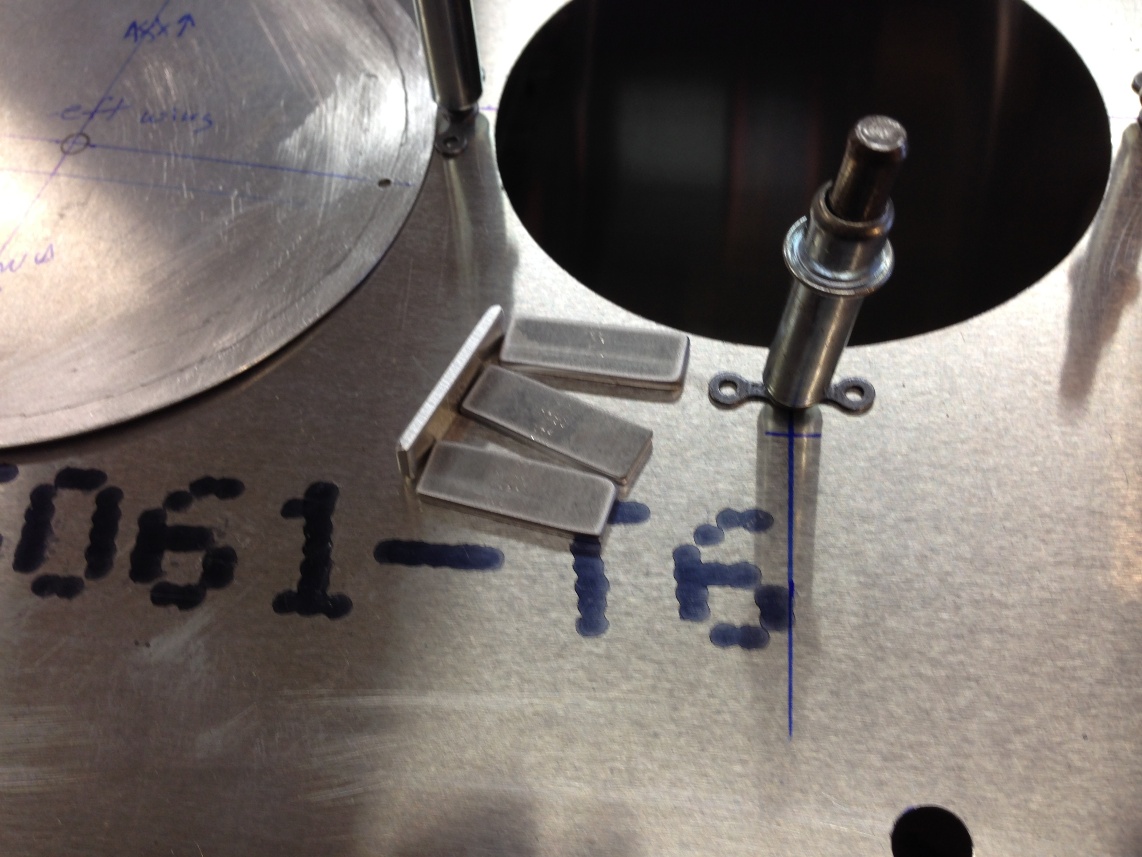
7) dimple cover and skin for screw (this will likely be a #6 dimple die

8) updrill (match drill) previously dimpled holes to #21 (for ample clearance for screws)
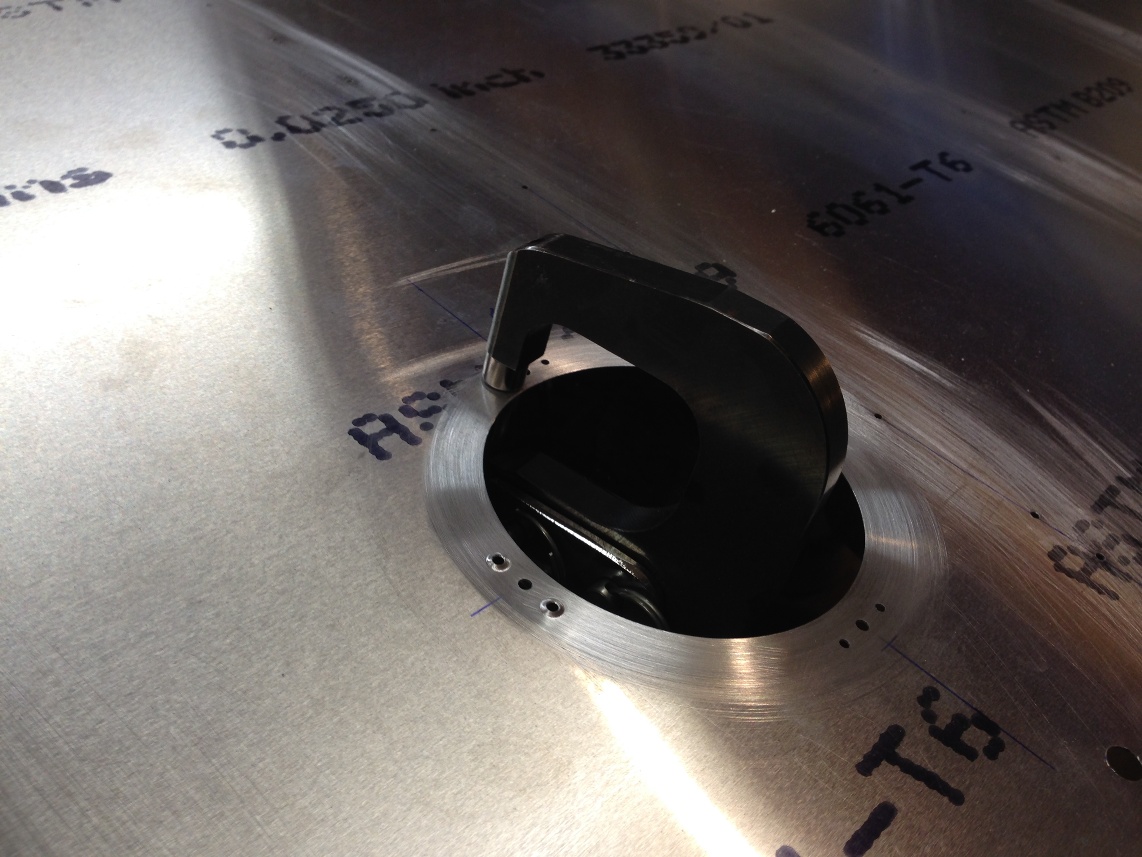
9) dimple mounting holes on skin

10) cut small blocks of 0.060″ to mount nut plates.

11) match drill aluminum blocks to nut plates.

12) counter sink aluminum blocks for counter sink depths on skin for mounting rivets and screws.

13) debur and prime mounting blocks and skin.
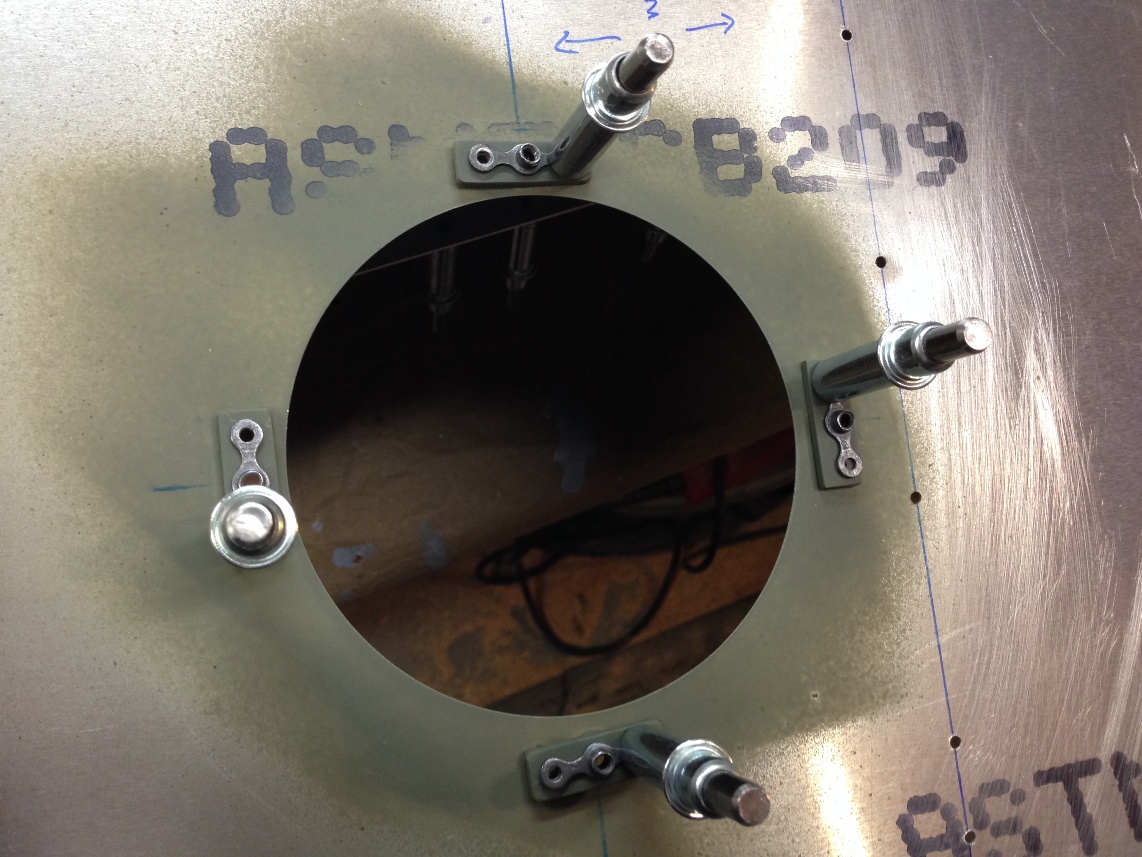
14) rivet aluminum and nut plates to skin (this is where the squeezer works so well.  Just by measuring the stack up of parts the rivets can be cut to length and the rivet squeezer can be set to the proper compression and it works like a champ)


Only 14 simple steps and you’re done.

Return To Left Wing Assembly

Left Wing Bottom Skin Level And Match Drill

Today was perhaps a good example of how quickly things can move along in the assembly process if all the parts are made (like a kit, instead of scratch building as we are) and if we don’t mess around thinking too hard about stuff.

Tim was busy until around 1:30 and I had a load of issues to attend to with regard to work (I so much for vacation but at least I could take care of it without leaving home).   The morning was spent catching up on email and getting things prepped for dinner (gotta keep the “sweetie” happy).  After all that it was almost 12:30 before I got into the garage to even turn on the heat.  I was in the garage actually doing something by time Tim arrive.  I had been on a conference call and simple kept my headset on while on mute and listening in as i drilled holes in the skin to finish the top side match drilling.

When Tim arrived i had the match drilling pretty much done and while I pulled out the bottom skin Tim cleaned up the rear spar trailing edge to file off any alignment error between the skin and the spar.

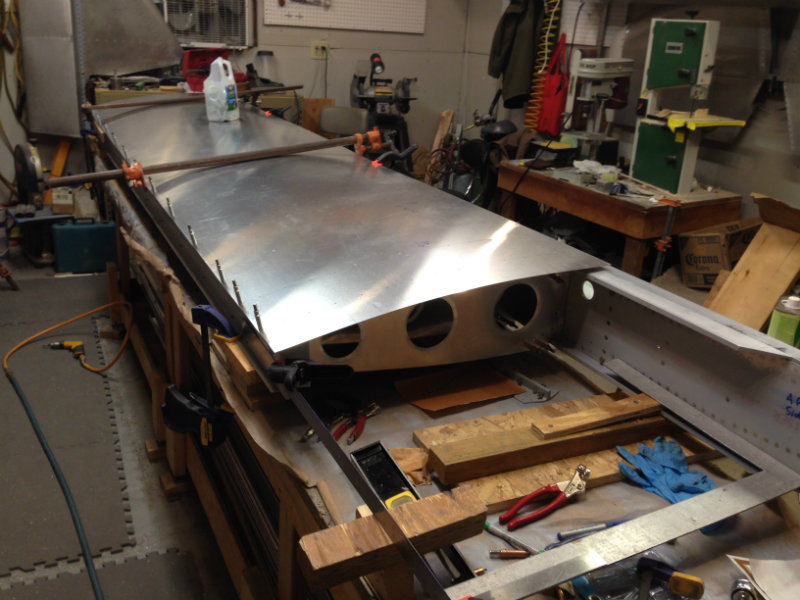
We flipped the wing over and Tim aligned the bell crank brackets to the upper skin while I worked to level the then skin by supporting each of the four corners with blocks and shims to insure the wing was flat (not having any wash out or pitch variation from root to tip.  

Left Wing Level Bottom Side Up

The process of squaring and leveling the wing (as mentioned earlier) can be done a couple different ways but the bottom line is that (in my view) you need to have an image in your mind of the process you are involved in.  I spent a good part of my youth working for my “old man” building houses and even did it for a few years before and during my college years.  The process of squaring a wall so that when you stand it up it will be plump is very similar to assembling a wing to be square and not have any wash out. For me it is almost an intuitive process that I know most framing carpenters would find easy.

The process can be broken down into two primary steps.  The first skin must set the wing with regard to square (which is not terribly hard but a bit of a challenge to find a reference).  The second step, once the wing is held square by the first skin, is to insure it is flat (no wash out).

To square the wing it is also a good idea to have it close to level, although not necessary to be exact, it will be needed on the second side skinning so the procedure is good practice.  Once level it is easiest to find four points that define a parallelogram. The first two points on the skin are the wing station 22-3/4″ center line at the center of the main spar and the trailing edge of rear spare at the same 22-3/4″.  These two points will be  marked on the upper and lower skin as the intersection of the center line (where the holes are drilled) and the edge of the skin.  If you cut our skin carefully (as you should) the final width should match the plans and the skin should be square (don’t trust factory cut sheets of aluminum to be square).  Even though the root and the wing tip have very irregular contours, the center line of the first rib in from each end (rib #1 and rib #12) should form a perfect rectangle on the wing skin.  The second two points are the same position on theT #12 rib. The key characteristics of a rectangle is that each of the opposite sides is the same length and the angles where the adjacent sides intersect should form 90 degree angles. The wing skin when laying flat provides a perfect pattern to align the wing box.  The only task that remains is to identify the reference point that make a rectangle on the skin, and mark them on the wing box.

To really describe the above process i need to generate a picture or some sort of graphical layout.  maybe that will be a task for later.

Once the wing is held square by the skin on one side of the wing, attaching the second side will give the wing 3 dimensional rigidity.  Holding the wing flat, or vertical and planar, when skinning the second side will insure that there is no wash out in the final wing structure.

If all of the wording above is confusing, I hope it is because of my poor explanation and not the readers inability to understand the concept of square and flat.  Otherwise, you are doomed.

Wing Skin Drill Jig For Between Ribs

The bottom line for the  night.  The bottom skin is fully match drilled and the inspection hole is cut.  Tomorrow I need to determine if I want to add the fwd ribs and skin or updrill the aft ribs.  it probably does not matter but immediately after the leading edge is skinned I will proceed to cutting in the landing light for the left wing. That could happen tomorrow…

 Return To Left Wing Assembly

Left Wing Skinning Top

Left wing skinning

December 15, 2013

The left wing is expected to go much faster than the right as all the parts have been pretty much completed and the right wing assembly included welding the control rods.  In a sense, the left wing assembly should go at least as easy as building from a kit, maybe even easier since the right wing had just been completed so the assembly procedures were well understood.

The left wing box had also been assembled and updrilled to #30 (1/8″) as well but none of the gussets had been riveted and the majority of the ribs were not deburred.  Although the ribs needed to be deburred again after being match drilled to the skins, I was thinking of riveting the gussets to the ribs before assembling the wing.  Plans changed and I ended up working the last two days of the week, contrary to my original plans.  This led to not having all the ribs ready to prime and rivet the gussets so I chose to begin assembling the wing box on Saturday morning.

Tim and I got together on Sunday afternoon and while he finished deburring the missing aft ribs I finished deburring the fwd ribs.  After the aft ribs were deburred and clecoed in place the wing box was leveled, squared and clamped to the bench top.  

Tim and I discussed how many builders skin the wing vertically while I was proceeding as I did on the right wing by leveling and squaring it while flat on the table.  I am confident either would work and any discussion on which might be better might be a waste of time.  I feel it is easier to constrain the wing when it is flat on the table, which is my primary reason for why I would rather have it horizontal on the table.

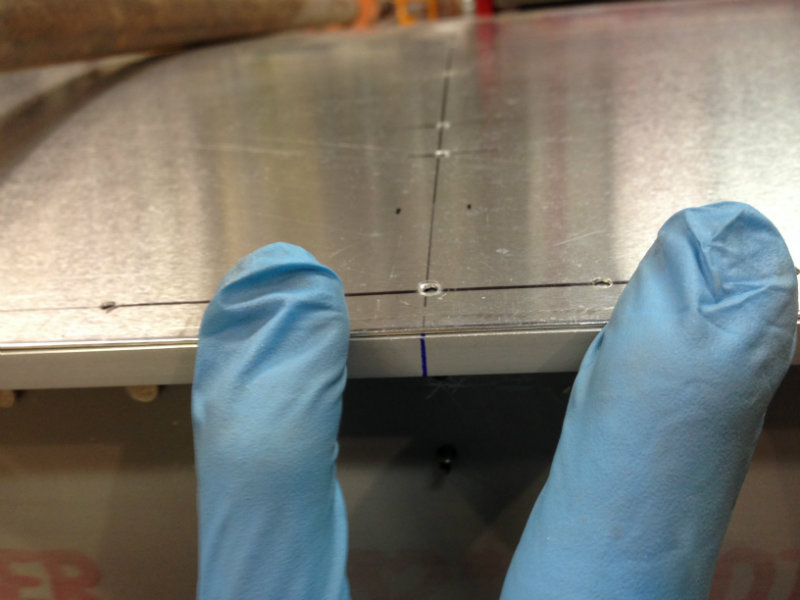
Anyway, once Tim was comfortable with what I was doing (or tired of going over the procedure verbally) we moved forward and found a location that was as level and square.   We then laid the pre-marked top skin on the box and checked the alignment of the marked hole center lines that were yet to be drilled, with the centers of the ribs.

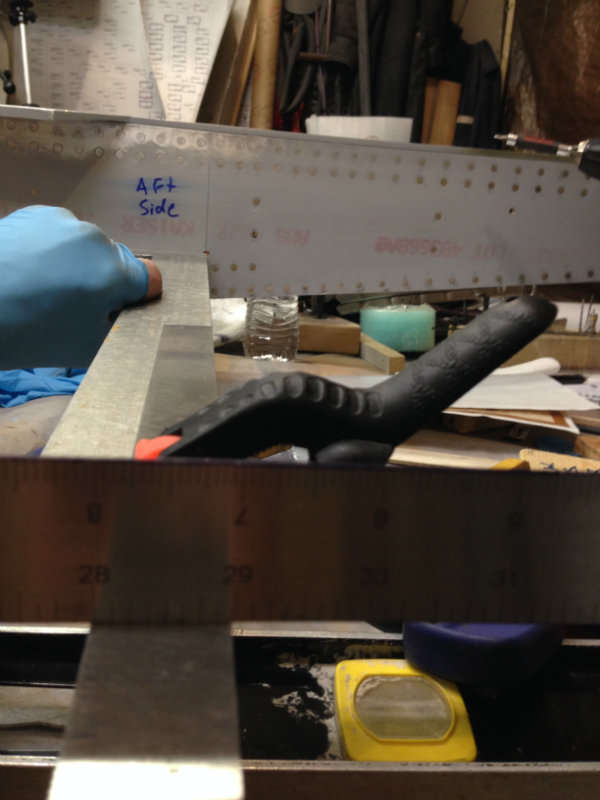
We then checked the only reference dimension on the prints that provided an alignment for square.  This was the wing station zero point (also the center of the wing span) to the rear spar attached hole.  This measurement was supposed to be 19.0″  The original measurement we checked did not come up to 19 inches  but after a little review it was apparent that there was a bend in both thee main and rear spar that was distorting the measurement.

Tim had to leave and so I had time to drill the top skin and mount it on the wing box.  Mounting the skin provides an easy method to straighten the spar out by match drilling the rear spar, beginning from one end and making sure the trailing edge of the spar was flush with the wing skin.  After this is done the wing can be squared by checking that the centers of the drill holes aligns with the rib centers at the ends (the middle of the ribs are unreliable as they tend to wander a bit until match drilled to the skins).  It is the rib centers marked on the spars that make the best reference for the skin hole centers.

With the aft spar match drilled to the skin the wing box can be clamped at the main spar and the 19″ reference dimension can be checked.  This time the measurement came out to as close to precisely 19.0″ as I can measure.

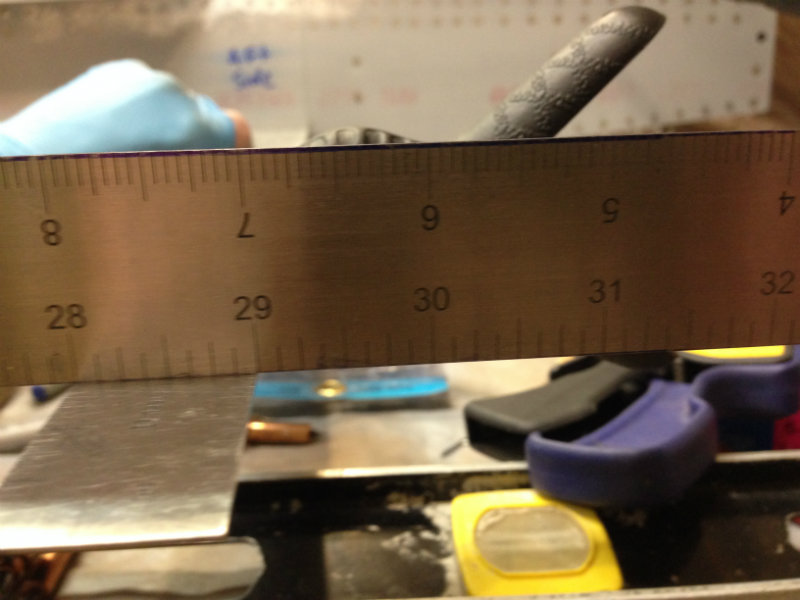
Left Wing Station Zero
Left Wing Station Zero Ruler Value
Rear Spar Bolt Hole For Measuring Wing Square-ness

I have pictures of the 19″ reference measurement as well as the alignment of the skin center lines with the rib center lines.

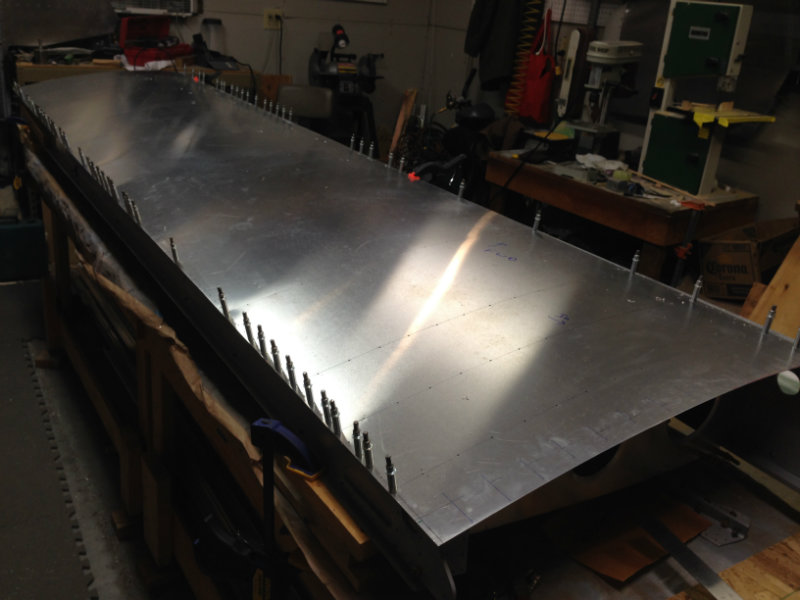
A few pictures of the semi finished match drilled skin and wing box and that is about as far as i am going to get tonight.  Tomorrow Tim and I expect to both be able to work on the plane during the day as we both have “vacation to take up” as my friends if Singapore say before it evaporates at the end of the calendar year.

Return To Left Wing Assembly

Right Wing Sling

Right Wing Sling

December 14, 2013

The right wing was done almost a week ago and I have done little on  the plane since then.  Mostly  because work  has really  been taxing at the end of the year and I need to take my remaining vacation or lose it by December 31st.

I am off until the end of the year (at which point I will likely be traveling for the first three weeks of the year for work so whatever I don’t get done through the rest of December will sit until February.

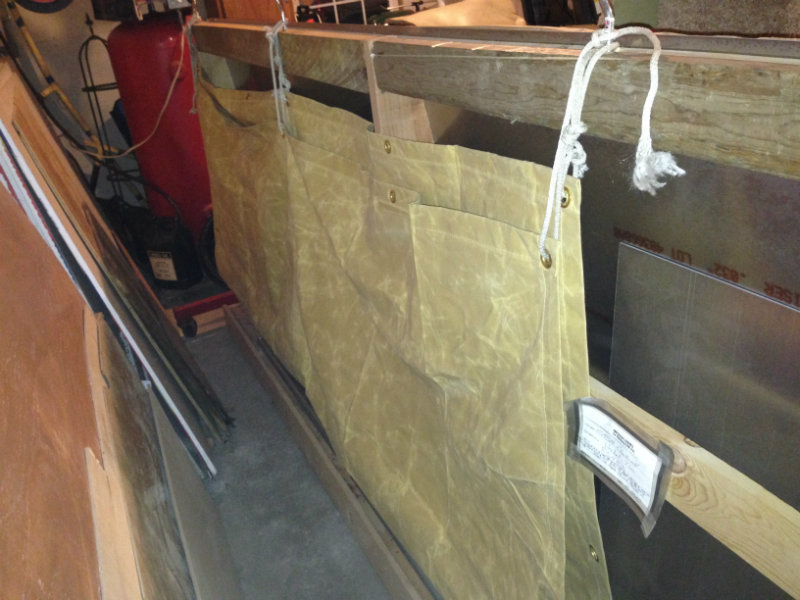
A few small things did get done during the week.  I cleaned out the lower section of my work bench (all 12 feet of it) and moved the aluminum angles off the 12′ rolling material rack. This left room on the rack to hang the complete right wing.  I struggled for a few days after the wing was completed trying to come up with an elegant method to store the wing.  I wanted it secure and safe but still be relatively easy to get at for reference while completing the left wing.  I came up with using a canvas tarp and with a few simple ropes making a sling that I could either hang on the wall or as I alluded to above, hang on the back of my material cart.

Slipping the wing into the sling was a two man job and Tim was able to stop over Wednesday night after work to lend a hand.  I have a few shots of the tarp with and without the wing on and I think it worked out pretty  well.  I have a better idea for the next wing, which is to buy another tarp and secure the tarp around the wing while the wing is on the bench and provide a rope handle to simple pick up the wing near the center of gravity.  I could then just carry it over to where I want to  hang it and hook the handle on whatever I have decided will work best (a set of hooks on the wall or off the material rack).

So, my goal for the next two weeks is to see if I can assemble the left wing and get it hanging on the wall before I have to return to work.  Tim had a couple days off last week where I was stuck finishing things up for the year end and i know he was dying to come over (while his kids were still in school and he had time off).  Hopefully this coming week will work out better and we can make some real progress with two of us in the shop.

Left Leading Edge
Left Wing Walk

We might add a wing walk to both sides if we modify how the canopy opens.

Return To Right Wing Assembly

Right Wing Finish

Dan
Dec. 8, 2013    Last day for major work on right wing
There were plenty of interruptions yesterday and today but the right wing is finally closed in and riveted with not much but a few small items to do before wing installation on the fuselage.

Right Wing – Tip Side
Tie Down Ring & Inspection Plate
Right Wing Tip Installed (Wing Upside down)
Right Wing Tip Installed (Wing Upside down, Note Landing Light Pocket)
Right Wing – Note Pitot, Static, & AOA tubes
Right Wing – Inside view of wing tip through the landing light cut out (wing is upside down)

Left To Do:
Paint control rods
Add nut plates for surface screws on wing tip
Trim pitot, static and AOA tubes and connect to lines.
Attach and trim wing doubler skin after wing is fitted to fuselage

A few things to note.

The rivets in the bags need to be watched carefully because they are not perfectly sorted. Either we inadvertently dropped a few CCP rivets in the CCC bag or they came that way. in either case, I caught them before pulling the rivets but it is a lesson to not be too casual or in too much of a hurry when putting in large numbers of rivets like those in the wing assembly.

Using the flat piece of 3/16″ aluminum between the rivet gun and the rivets was a big improvement over just using the rivet gun tip. This was particularly true when riveting the leading edge skin to push with heavy and even pressure to keep the skin tight to the ribs. It probably helped a lot to have the skin well formed with the vacuum method but even so, I think it helps to be able to press hard on when riveting the leading edge.

I was planning on hanging the wings up on the wall in the garage but I think I can rearrange the material in the rolling rack and put the wings on the rack.

Modifying the rack with have to be the next thing to do so I can clear off the bench to assemble the left wing.

Return To Right Wing Assembly

Right Wing Assembly Internal 1

Dan Dec. 6, 2013   –   Right wing internal checks before final rivet closure.

So last night I expected tonight would be a lost night due to other commitments. As it turns out, everything opened up and my evening was open. Being below zero F there are few that want to go out so I turned on the heat in my garage and went to work. During the day Tim and I had talked over the alternatives. Rivet the skins as they are without opening it up to tighten down the tie down eye bolt (I had neglected to do this before closing it all up but it was possible to get at it from the inspection hole. On my way home I decided to try and get to the tie down bolt through the access hole by hanging the wing over the edge of the bench. I figured that if it seemed reasonable to torque the bolt down from there I would just either torque it then and there of else if it appeared too awkward I would pull the clecos off the top aft skin and torque the bolt. I messed with the bolt for about a half hour and thought I would try to tighten it from the inspection cover but while I think it was possible, I though it would be much easier (and in the end faster) to pull the top aft skin off. It only took a few minutes to do and once I was ready to begin torquing the nut, I realized that while I had 3 torque wrenches in my shop, only one was well suited for the 200 or so inch lbs for the 3/8 x 24 bolt. Problem was that the 9/16 hex socket required a 3/8″ drive. The only torque wrench I had that would work with any reliability at this setting was (Tim’s) 1/4″ drive torque wrench. I have no 1/4″ drive sockets that go above 1/2″. So, off to the store (Fleet Farm) I went to either get a socket at 9/16″ with 1/4″ drive, an adapter for a 1/4″ socket drive to a 3/8″ ratchet or a new torque wrench. I was not in the mood to go running around town at 8:30 on a cold as heck Friday night looking for wrenches and when the only option available at Fleet Farm was a new torque wrench, I bought it. Back at home it took little time to torque the nut on the eye bolt.

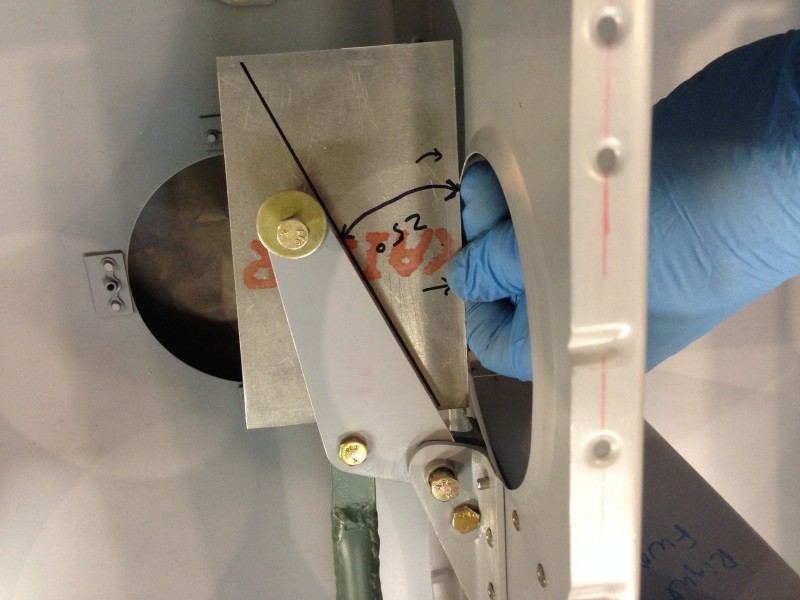
After the bolt I started looking at the bell crank and the control rods and thought about the rigging for the aileron. It would be possible to do when everything was closed but I could do it much faster with everything open as it was. So, I set up the bell crank by adjusting the short control rod to the aileron length as shown in the drawings at 25 degrees with the aileron at a neutral position.

Setting Aileron Bell Crank

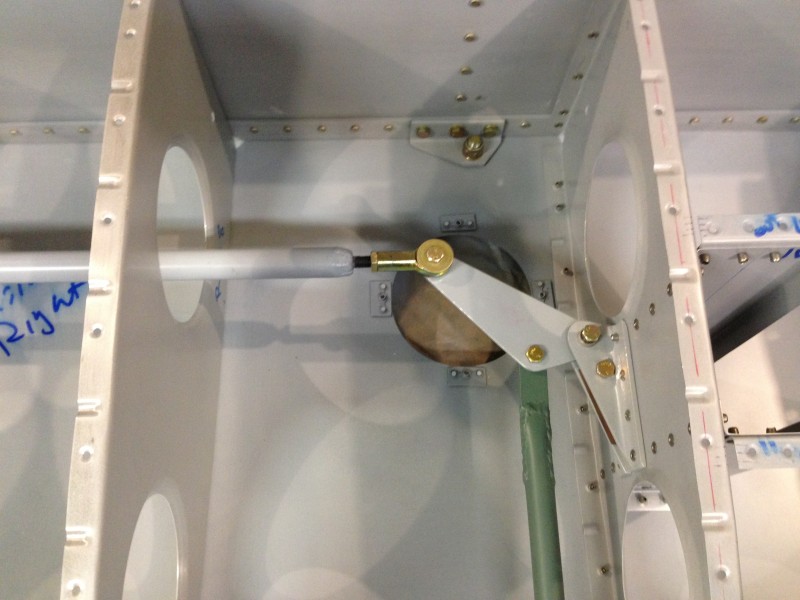
With this done I decided to connect the long control rod and make sure there were no surprises with interference over the expected motion of the aileron.

Aileron Control Rods

As far as I could tell, this all looked good and the pictures show the aileron at full deflection points,

either when the bell crank is at its end of travel of the aileron counter weight stops the aileron from further deflection.

Once again, I ready for final assembly of the wing and this time I think its real. Tomorrow i will close the wing up and then will have to deal with where will put the wing. I am thinking of building a rack on one of the few remaining open walls. We will see how it goes.

Return To Right Wing Assembly

Bending Forward Wing Skins

(Been a while since I have updated the website)

Dan cut out the top and bottom skins.  Now it was time for the dreaded forward skin with the leading edge bend.    The factory suggested a U shaped wooden channel and a guillitine type press that pivots on one end.  Think of a paper cutter at the office.  This seems kinda drastic but it must work.  We had looked on the internet about the different ways people do this.  Some have used the same wodden U channel but the center piece is actuated down level by two threaded rod jack screws.  Finally there is the vacuum method that uses a pipe at the inside of the leading edge and you wrap the sink in some polymer sheeting and suck the air out with a shop vac.  The pressure drop on the large sides of the skin pulls the metal in.  There are several YouTube videos on this and we liked the result.  So we tried it.  The following pictures on the second side.  We already had the experience of the first.

First we need to mark the sheet.  Sonex provides a set of X-Y points for both ends since these are interesting curves as they wrap around the leadign edge.  I used CAD to make a spline fo the curves and plotted it out.  We aligned the plot with the bearest row of rib rivets and traced the line.  We movd the plot over so we have an offset to cut on.  We can file down to the line later.

Traced Skin Edge

Now marking and double checking the center line of the skin

Marked end with offset:

Cutting out the skin with the electric shears (they are great)


There is some technique to the electric shearsyou have to tilt is at the right angle and feed at the right rate, Dan has the golden touch (I think he pratices every morning before breakfast):

Now we lay the skin on top of the poly sheeting:

Since the pipe will lay directly on the centerline we made a mark on either side of the center line of radius of the pipe.  We used 1.5 inch diameter black (gas) pipe schedule (? thick).  We double checked these marks and used a square on the edge of the pipe to line up with the mark:

Dan had tried pipe flange clamp but didn’t like the results so we used muffler clamps.  They seemed really stiff.

Double checking the pipe location by a measurement from the pipe to the outer edge:

Next step is to bring the two long edges together.  This is accomplish slowly using tape by working your way down one side and back again, down and back…  Takes a while but you need to be gentle so the skin doesn’t bend.  Two people makes it go quicker.

Got the top edges touching:

  As you do this you are moving from tape piece to piece.  With hindsight you really want to make sure the two sides are lined up precisely at the top.  Now we folded the poly over and tucked it under, folded the other side over, twisted the ends and tied with wire:

We put the shop vac hose in one end:

We used a smaller shop vac but it worked just fine.  (I wanted to borrow a 3/4 hp industrial blower from work but Dan veto-ed that.)

After taking a deep breath we pulsed the shop vac on and sure enough the poly collapsed and made a beautiful teardrop shape of the skin.  We let the vac run for a little but all the bending was done.   All that prep work for 26 seconds of vacuum forming, (I have a movie of it but need to upgrade this blog to show it).  Here is our unwrapped result (still taped at the top)

Now you have to un-tape it slowly maybe .5 inch a time at each tape strip and work back and forth:

Finally you have a leading edge skin, we are really happy with the process, the relaxed bend is close to the assembled leading edge Dan made in the Sonex workshop.  We didn’t get any wrinkles or kinks which was a huge relief.

Thanks to those that pioneered this method.

Return To Wing Skins

Cutting Out Wing Skins

The wings structures are all together and ribs up drilled to the front and rear spars.

Next step is the wing skins.  We thought we had been pretty clever in our 4′ x 12′ aluminum sheet planning but we discovered once we laid out the wing skins on what is left we will need to buy another sheet for a fuselage skin.  With hindsight we should have cut out the wing and fuselage skins and put them aside.  No biggie.

Dan had cut out the top and bottom skins.  Note that the aluminum sheets are not perfectly square from the mill.  A good framing square will show it.

Return To Wing Skins

Spar Rivet Replace

Dan and I were looking over the rivets and Dan spotted a couple that were just OK.  One in particular had a little angle on it, so after a short discussion we decided to give it a couple hits from the rivet gun and bucking bar to flatten it out.  As you are probably thinking, we should have left it alone.  The bucking bar tilted in my hands and the shop head looked horrible, we were so annoyed.  One more to drill out.  This row is the -12 lengths which is the longest and you really don’t want to enlarge the hole.  Dan drilled it out really well, I’ll have to call him the surgeon.  Here is a couple pictures of the new rivet before and after.  Notice we put tape on the angles around the bucking bar to prevent scratches.

Return to Main Spar