Spar Rivet Replace

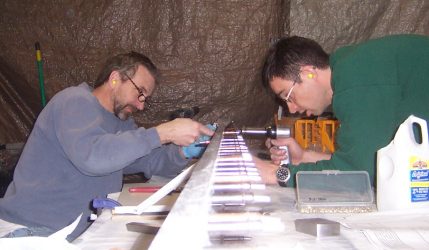
Dan and I were looking over the rivets and Dan spotted a couple that were just OK.  One in particular had a little angle on it, so after a short discussion we decided to give it a couple hits from the rivet gun and bucking bar to flatten it out.  As you are probably thinking, we should have left it alone.  The bucking bar tilted in my hands and the shop head looked horrible, we were so annoyed.  One more to drill out.  This row is the -12 lengths which is the longest and you really don’t want to enlarge the hole.  Dan drilled it out really well, I’ll have to call him the surgeon.  Here is a couple pictures of the new rivet before and after.  Notice we put tape on the angles around the bucking bar to prevent scratches.

Return to Main Spar

Finish Riveting Left Hand Spar

Dan & I worked on the inboard rivets.  In this area the spar caps are the widest so one needs to pay more attention to the rivet gun and bucking bar.  This is also where the flush rivets are.  In addition there are angles on the spar web that make it thicker.  This means longer rivets and for some reason they are harder to set perfectly, especially the long flush ones.  Here is our progress for the day:

Dan is really good using the rivet gun with the flush set.  But I had “issues” with the bucking bar on these rivets in the top row of the picture. (by the way the spar is mounted upside down).

The plans call out for -12 lengths but our rivet gauge shows they were a tad too long.  We had trouble on the Right Spar in this spot but we thought we had more experience now so we tried it.  The first was OK but the second and third collapsed to one side, its like they form the head offset from the main stem.  These were a pain to drill out due to their length.  We decided to heed the rivet gauge and sand down the rivets a 1/16 or so so they fit the gauge.  I still had trouble and a few collapsed off-center.  What a pain.  Dan was not having fun drilling these out.  It was a long frustrating session.  I was probably tilting the bucking bar as it collapsed but the process happens so fast I am not sure what happens.   In the photo below you can see a row of holes that you need a special bucking bar to access  due to distance between the angle and the spar cap (see this post):

Our tool from the Right Hand Spar did not fit, so after I left, Dan ground a new bolt to fit there.  Dan talked his wife into bucking those really hard to reach rivets.  Thank You Thank You.  Those are hard to do since you cannot see the rivet so its hard to tell of you are the right angle.  They got them all done, awesome.

Return to Main Spar

Priming Assembly Start Riveting Left Hand Spar

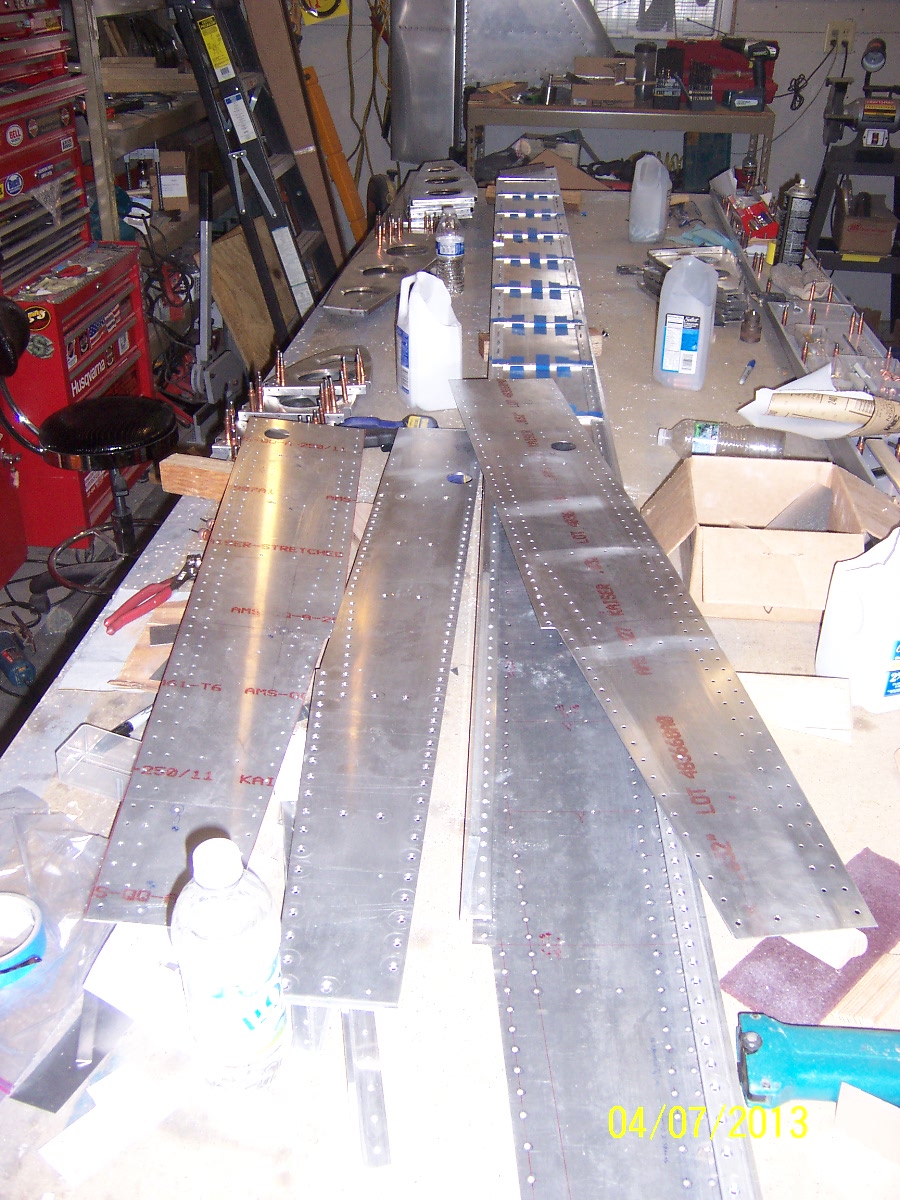
During the week Dan finished up the spar cap preparation.  Dan mixed up some Har-Hyde self etching primer and sprayed the left spar parts.  I arrived just as they were finished drying, what great timing.  Dan put a really nice thin coat on, notice how you can still read the red printing on the parts.

We assembled the left spar by first putting in the AN bolts and screws.  Due to our “bolt-fit-obsession” you cannot cleco the parts first and expect the multiple bolts to go through all the layers in the assembly.

Bolts & Screws In Spar First


Added some black clecos and ready to rivet.

We borrowed a 3X rivet gun from a friend who is building a Rocket.  Our EAA Tech Counselor suggest to start in the middle and work out to both sides.

We got about 5 rib bay sections done when I had to leave.  Dan was able to finish most of the dome head rivets to the tip.  Here are some of the rivets:

Return to Main Spar

Cleaning LH Spar Parts For Priming

Dan & I took apart the left hand spar and prepped the parts from priming.  Our method starts with deburring, then 3M (of course) 120 grit aluminum oxide sand paper, then 240 grit and a final pass with red Scotchbrite hand pads.  It is amazing how many little scratches happen when you handle these parts so much.  The long web parts took a while.  The spar caps needed a lot of work with all the drilled holes for the webs.  I was using the sand paper and it went pretty slow to get the dings out.  Later on Dan tried light pases with the vixen file and it worked great, still needs to be cleaned up with the sandpaper but really fast.  Oh by the way we use gloves when we sand because the  aluminum dust will make you hands really dirty.

100_5764

100_5763


Return To Wings

Aileron Bell Crank Rib Brackets

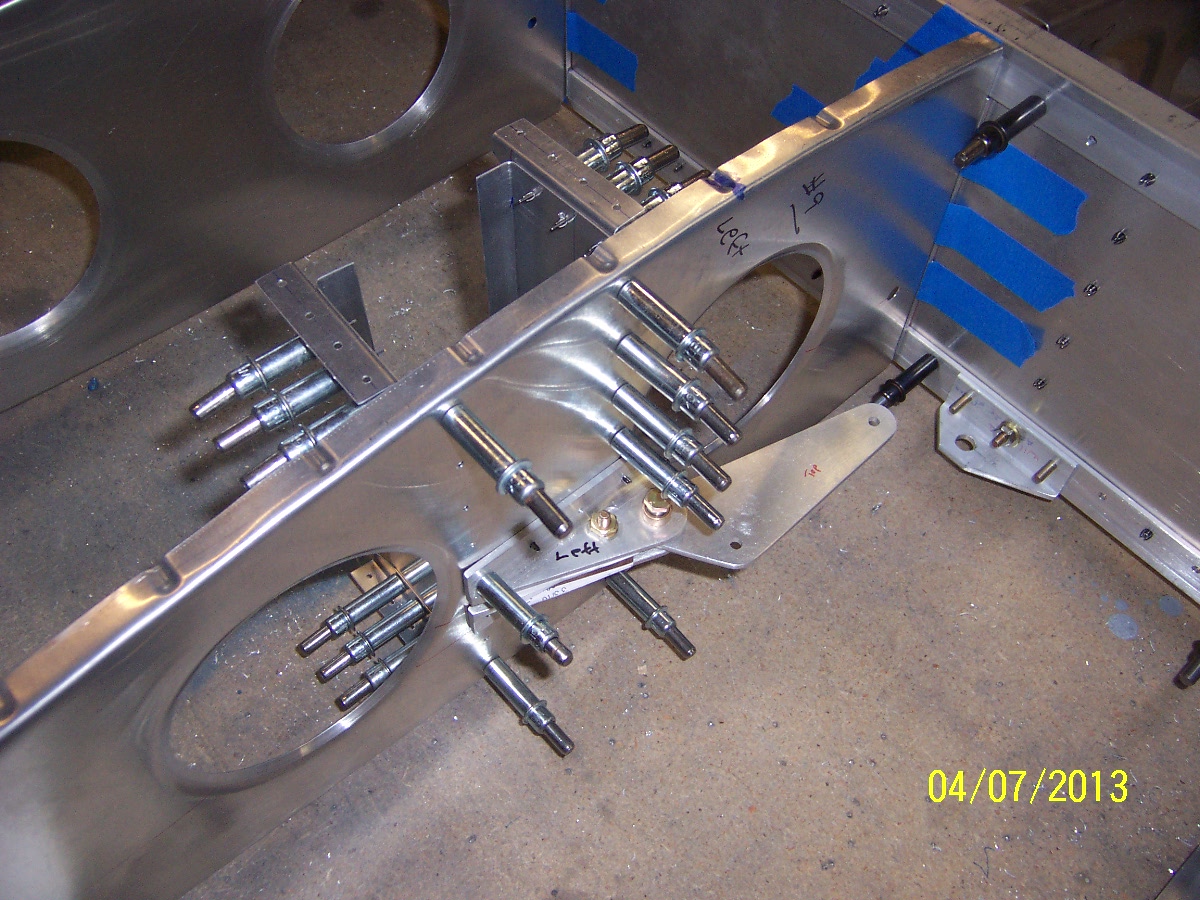
We mounted the two vertical C shaped channels behind the aileron bell crank assembly.  There are little right angle peices that connect these channels to the skin.  All this extra structure is to stiffen the rib where the bell crank is.  The plans show to make the top face of the angle peices flush with the curvature of the rib flange, since both are riveted tot eh skin.  This took me more time than I thought it might because the rib flanges are not perfectly square, some are a little over bent, so it is hard to tell where to mount this angle bracket vertically.  Dan had a good solution to clamp a long piece of aluminum angle extrusion to several ribs on  either side of the bell crank rib.  The angle extrusion is stiff enough that it won’t bend so it will lay like the final skin on the ribs.  With the extrusion on the ribs, I could see the gap of the over bent rib flange, and mate the angle bracket to the under side of the extursion.  We think when the skin is riveted on it will pull the rib flange up a little.  Once we had the top ones done we moved the extrusion to the bottom as can be seen here :

Locating Bottom Skin Bracket For Aileron Bell Crank

Celco-ed Bell Crank Brackets:

100_5760

Top Skin Brakets Mounted

We took the wing structure apart do deburr the parts for priming.

Ready For Deburr-ing

Return To Ailerons – Wings