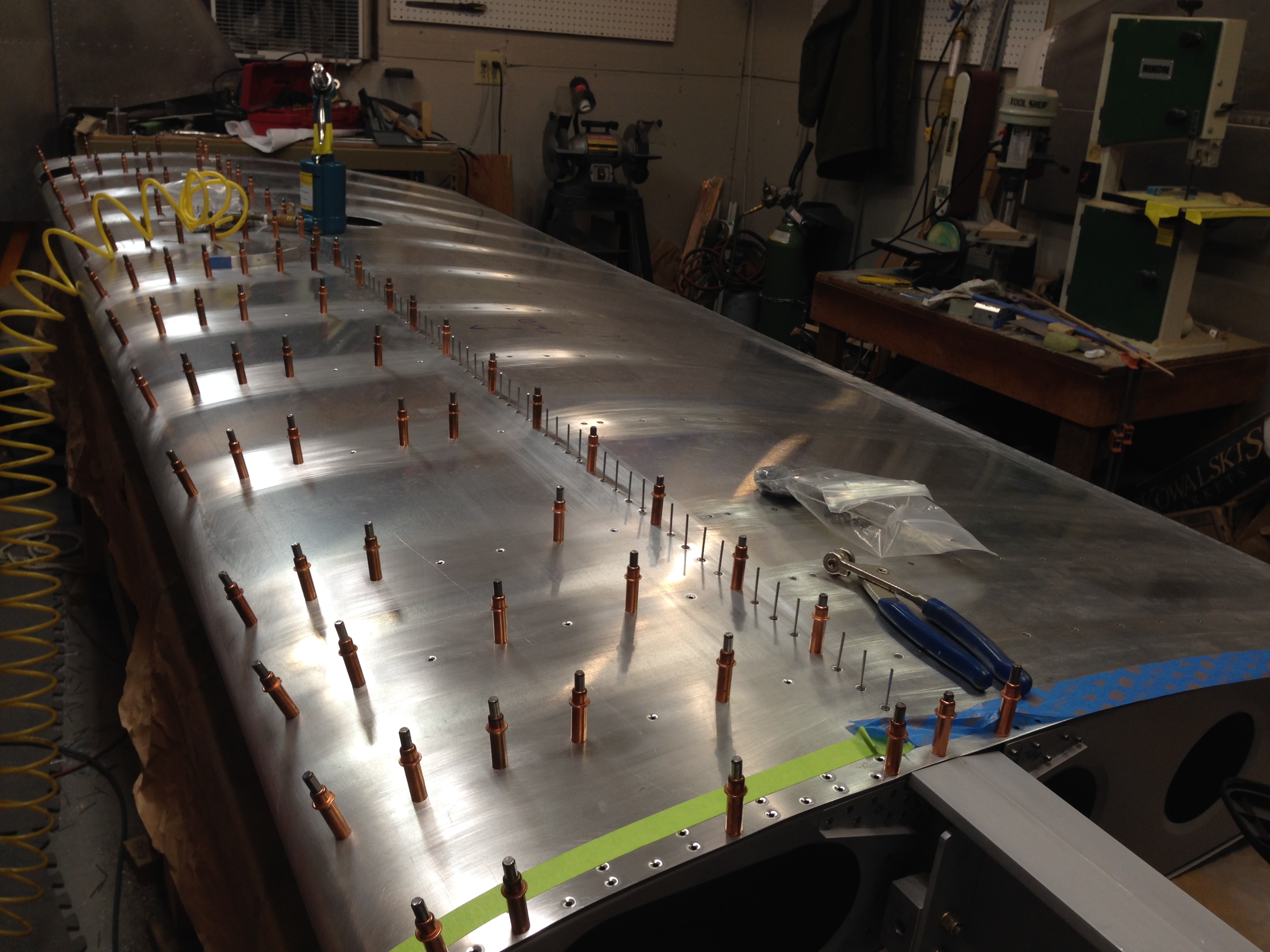
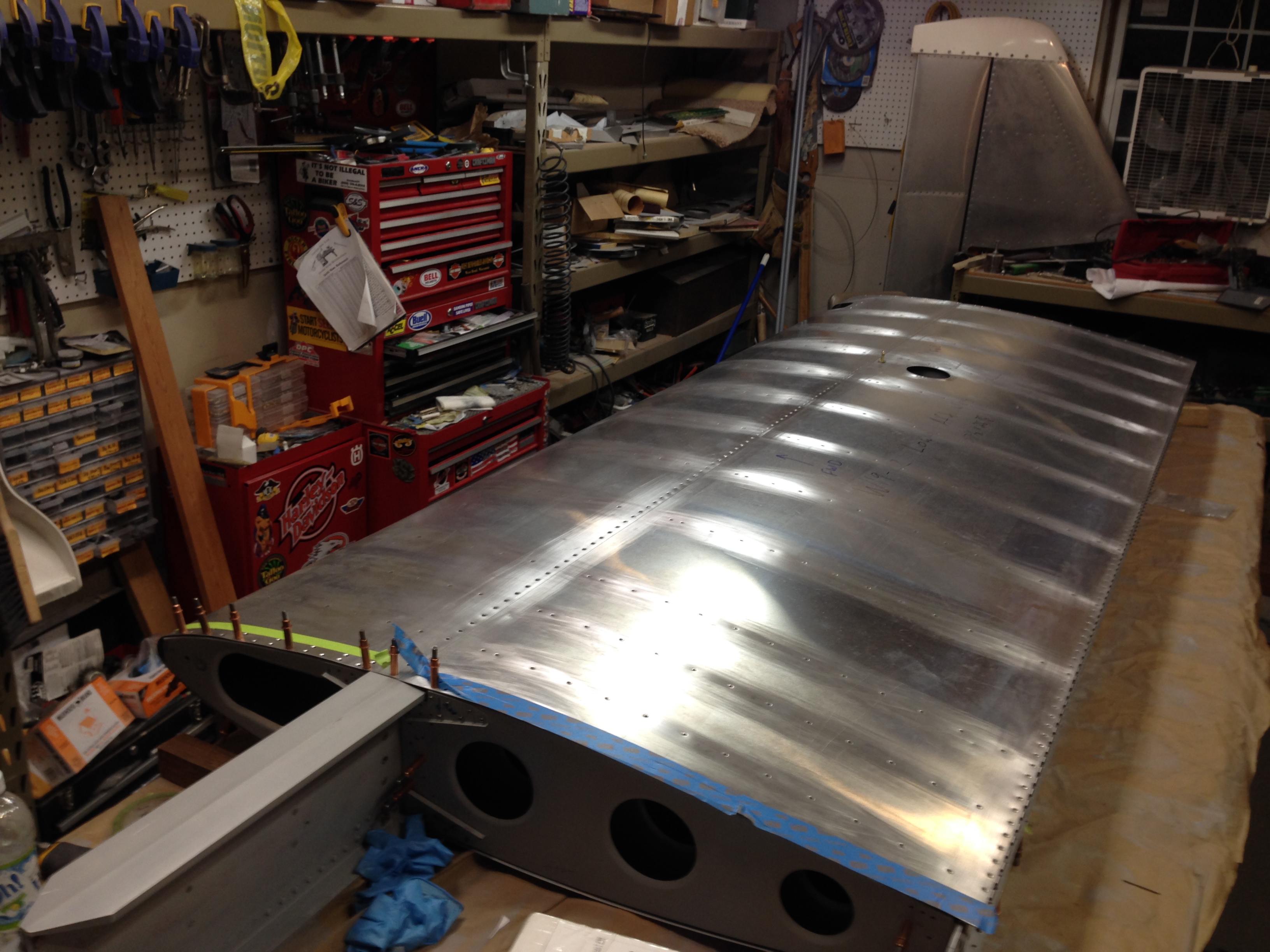
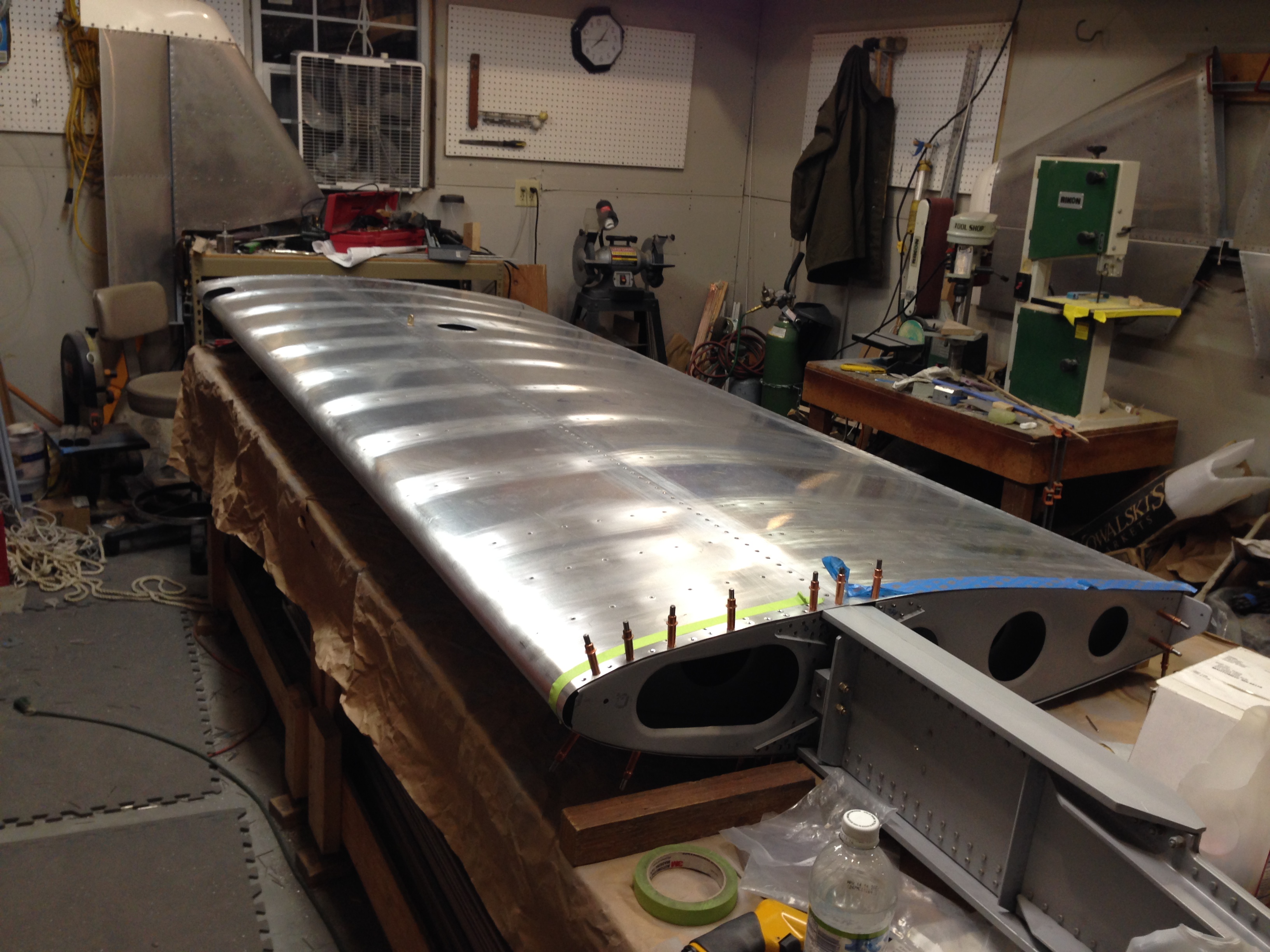
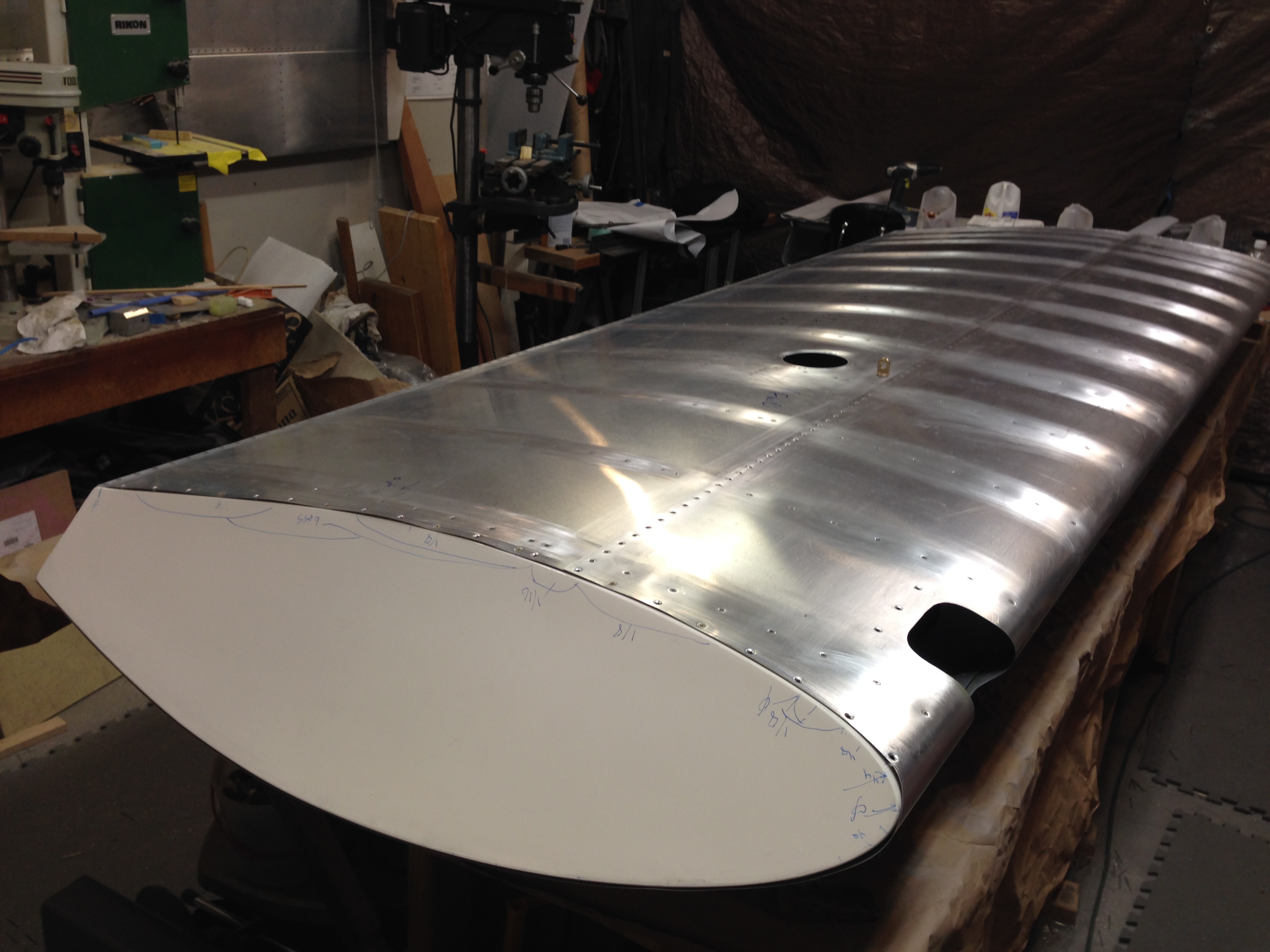
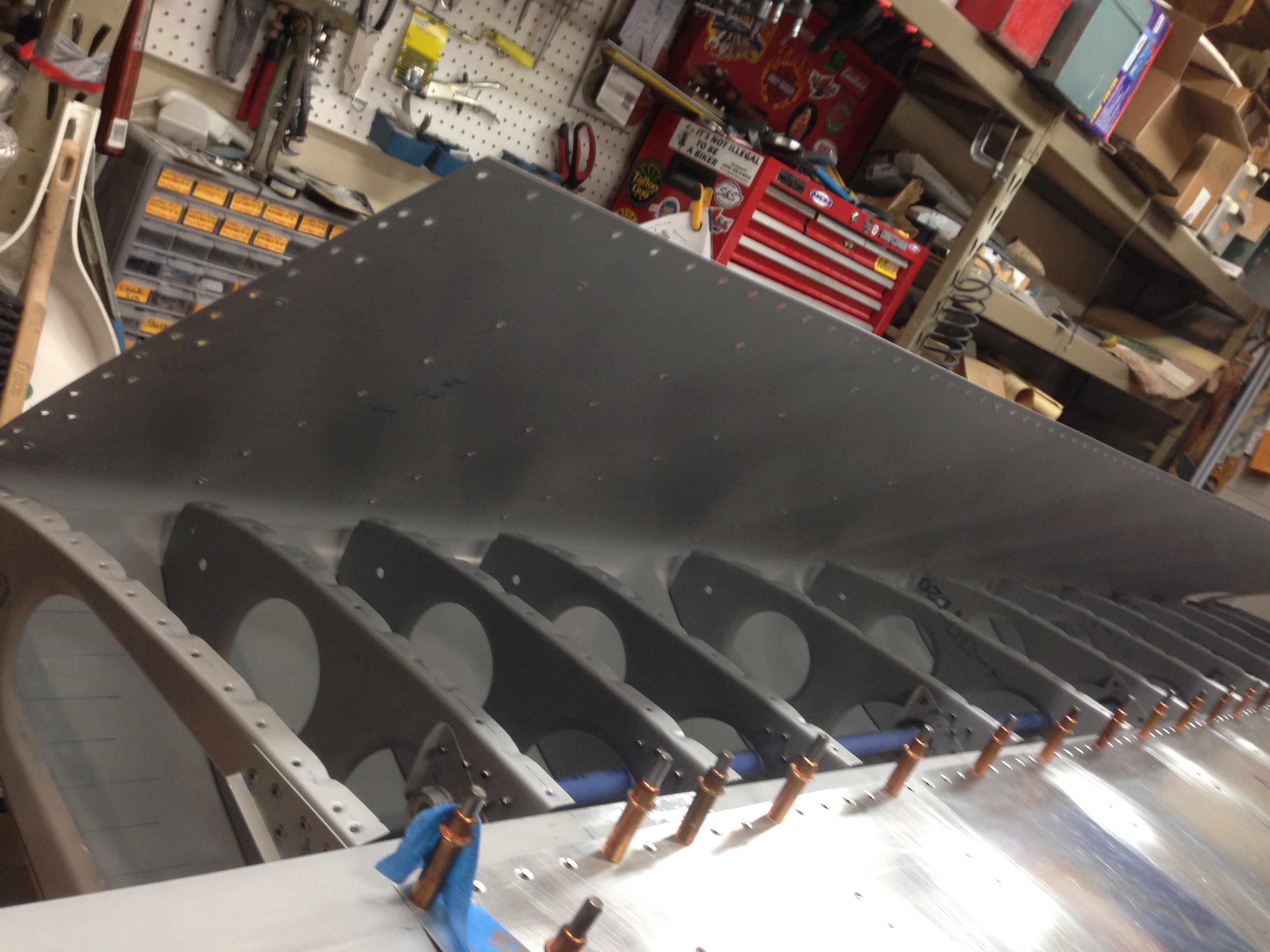
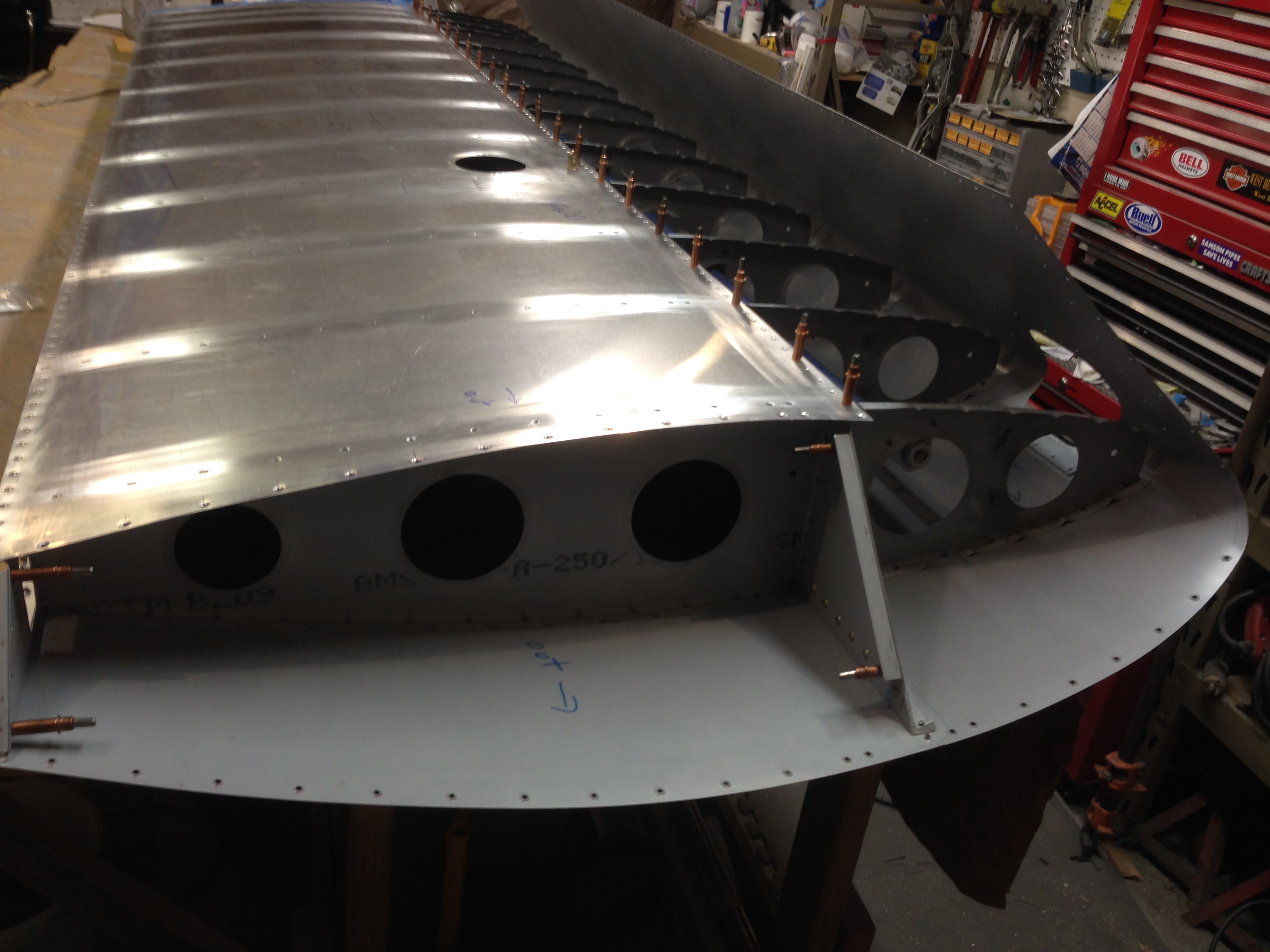
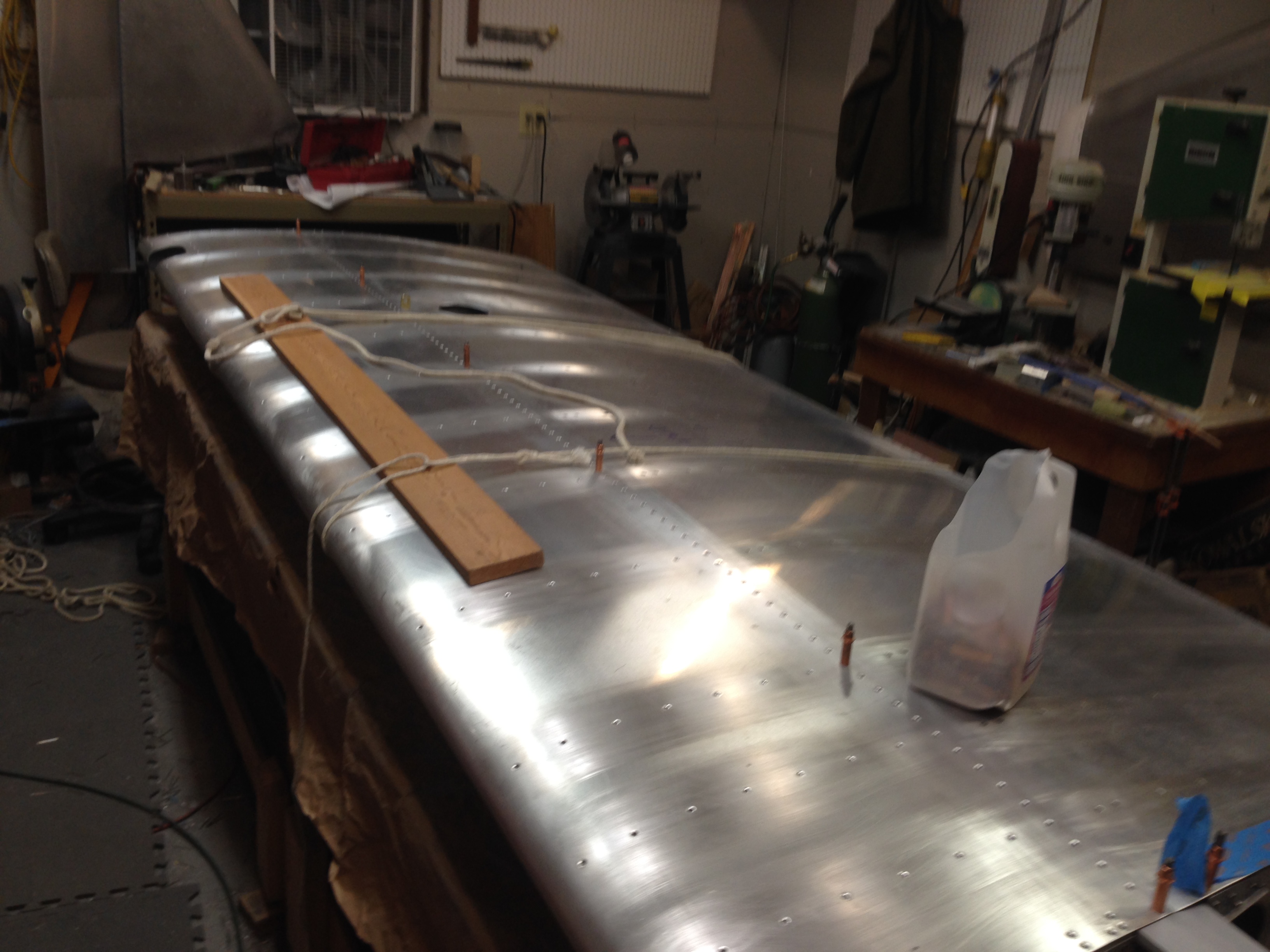
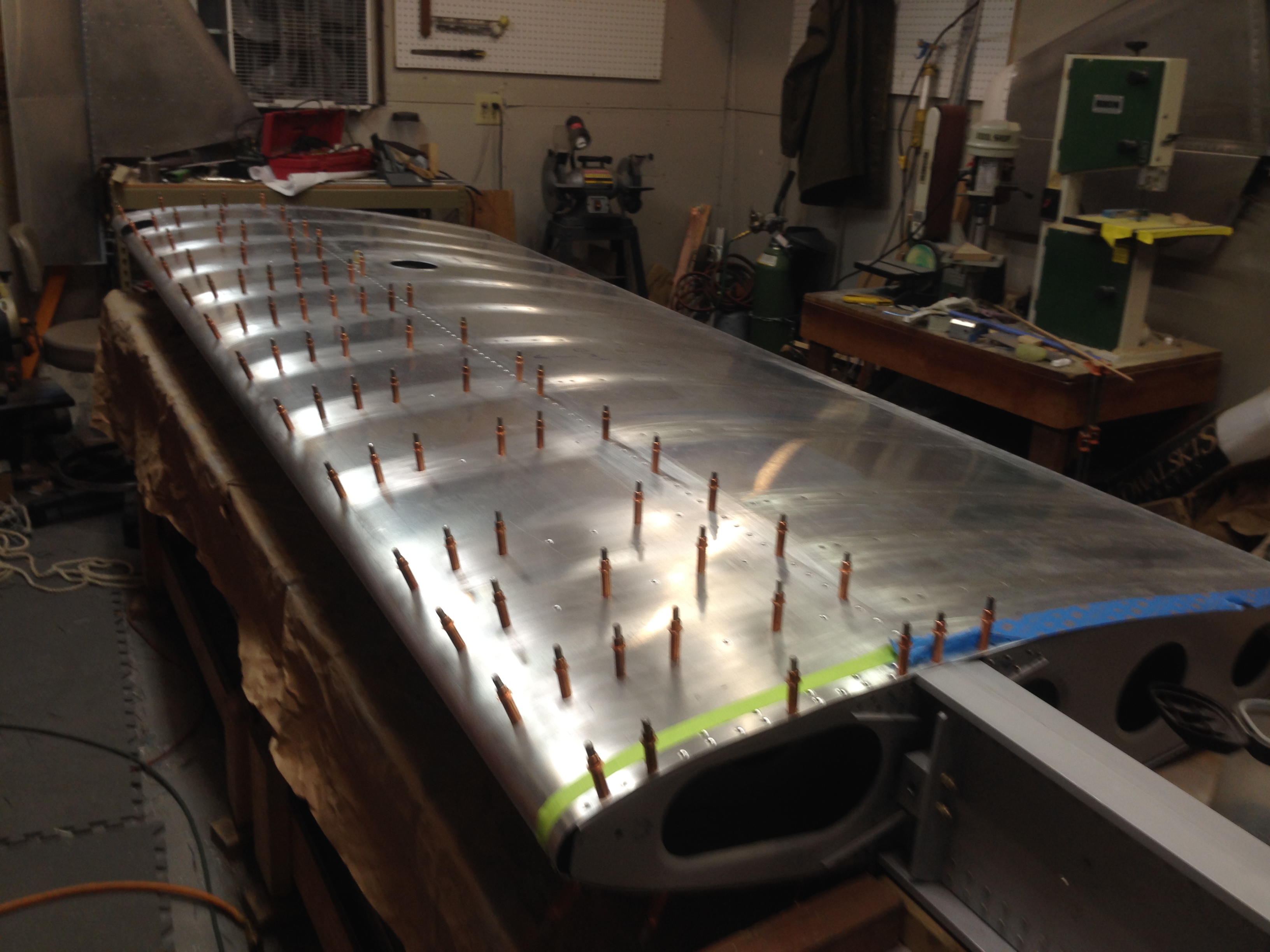
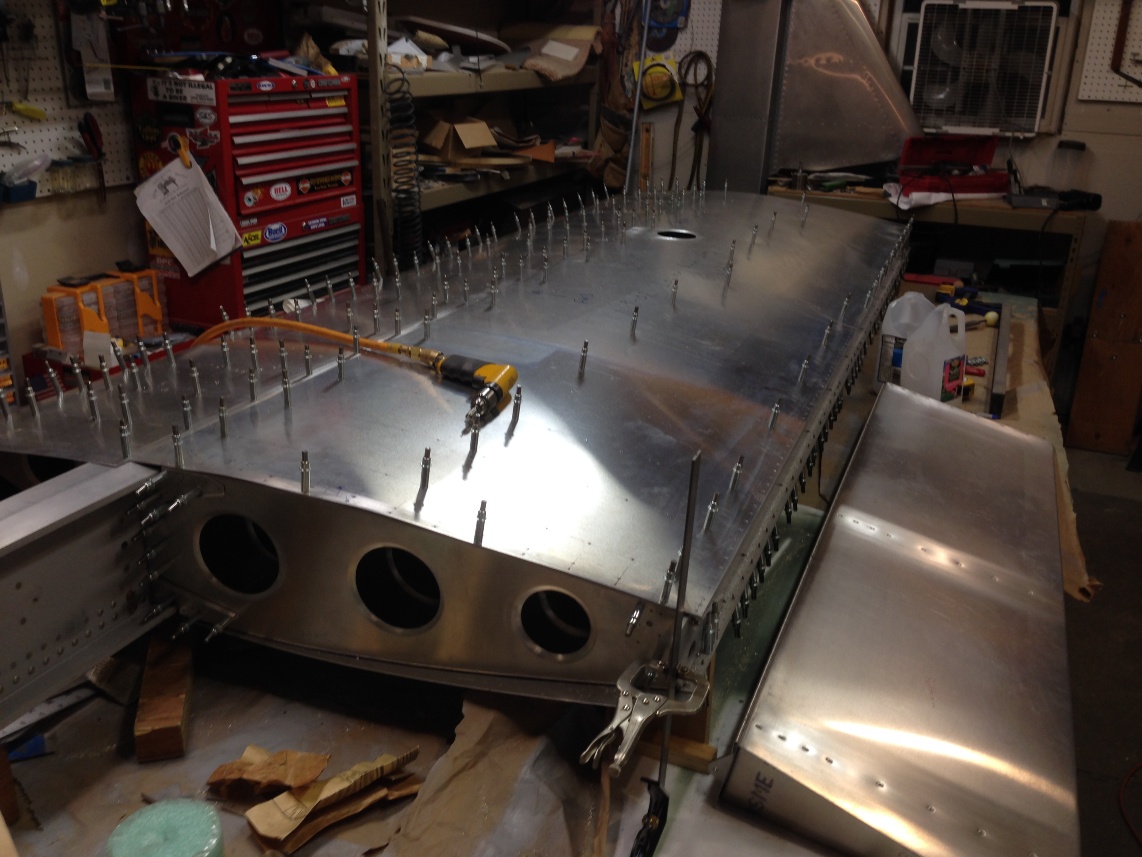
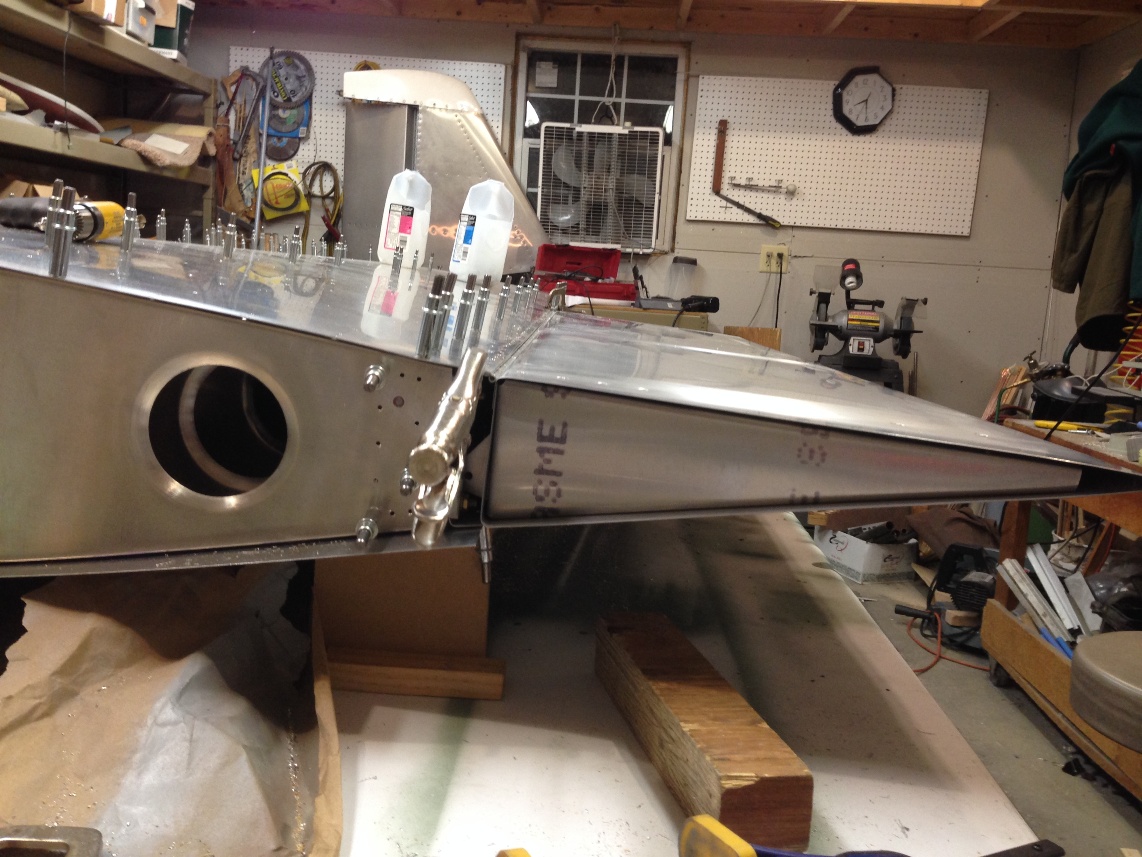
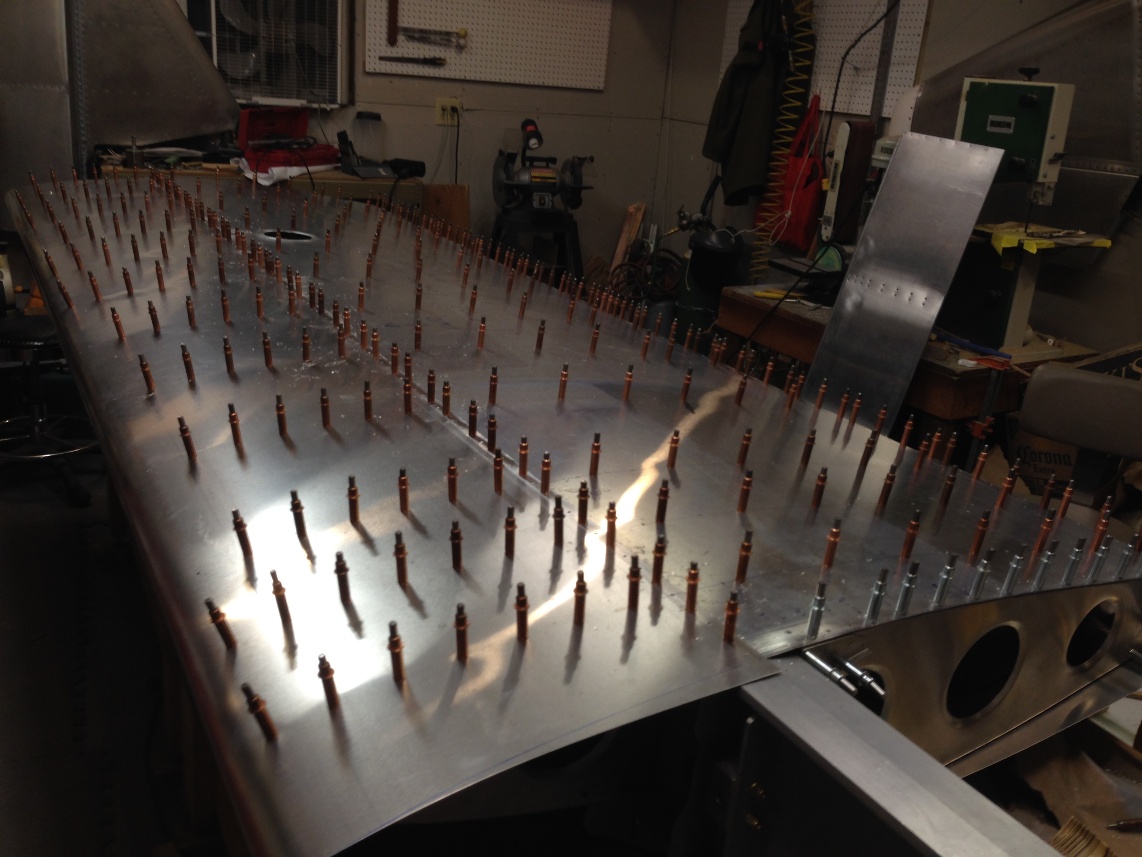
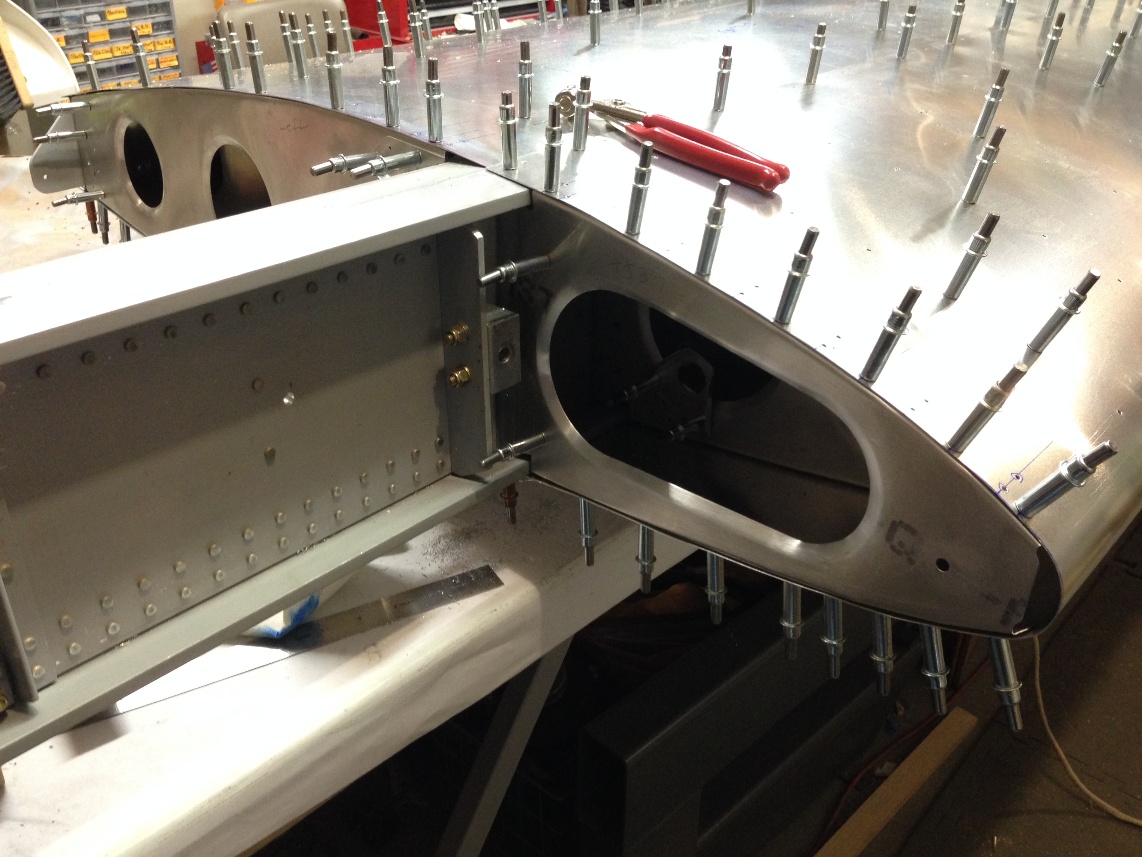
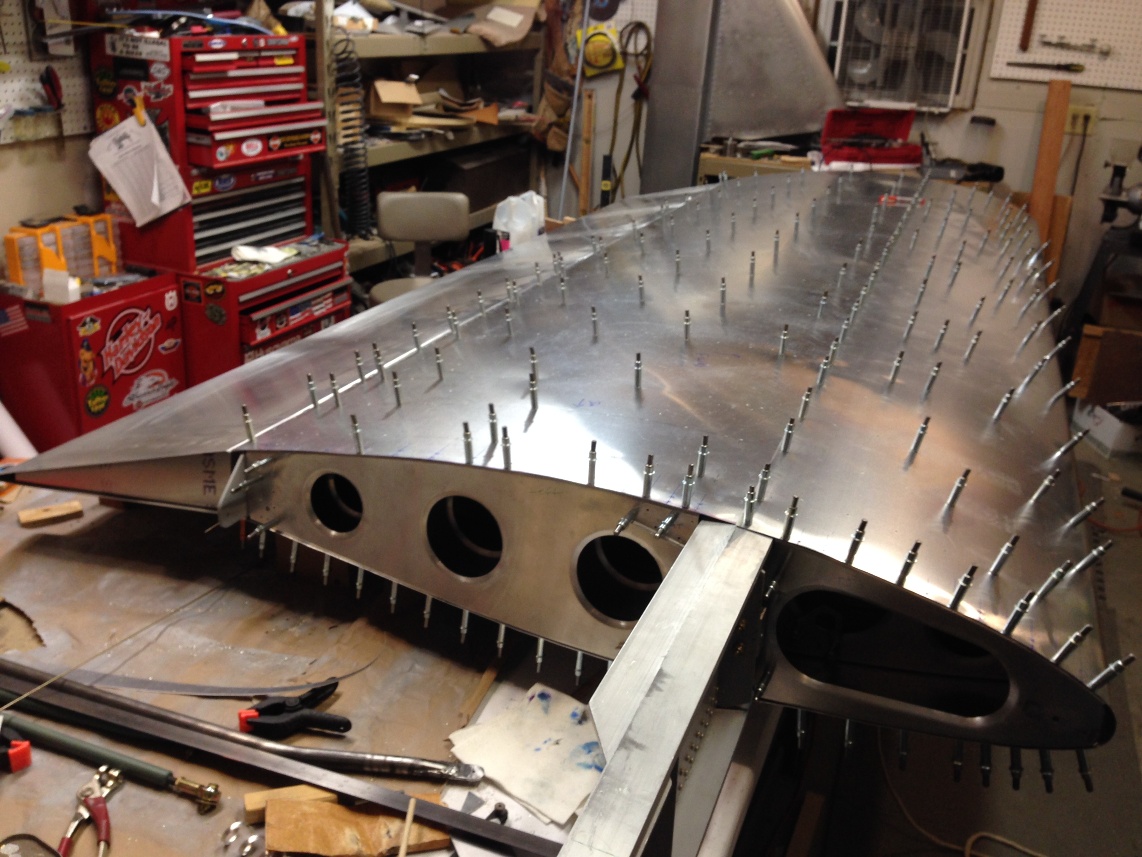
Left Wing Final Assembly 3

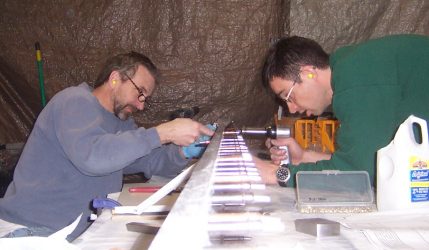
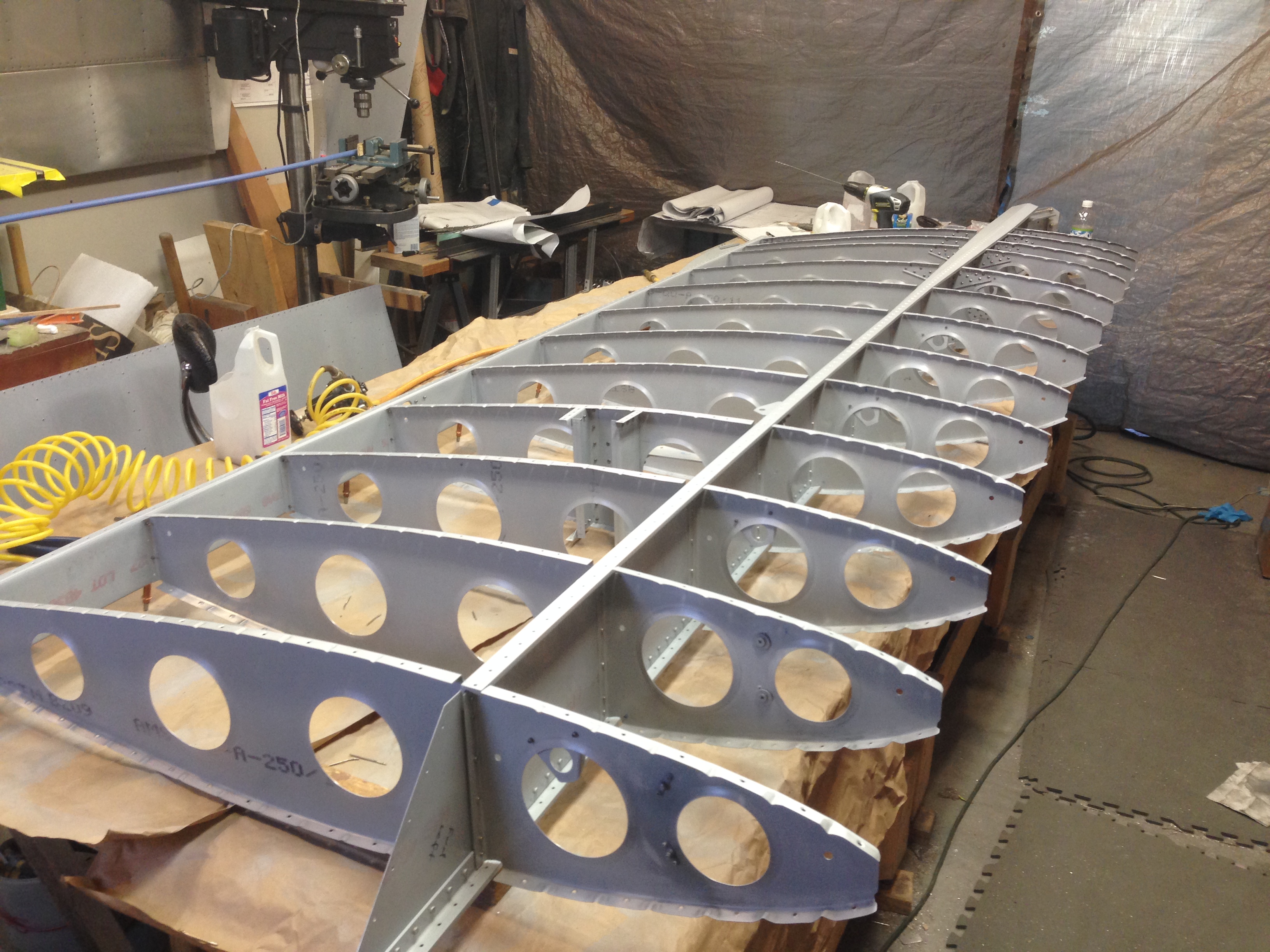
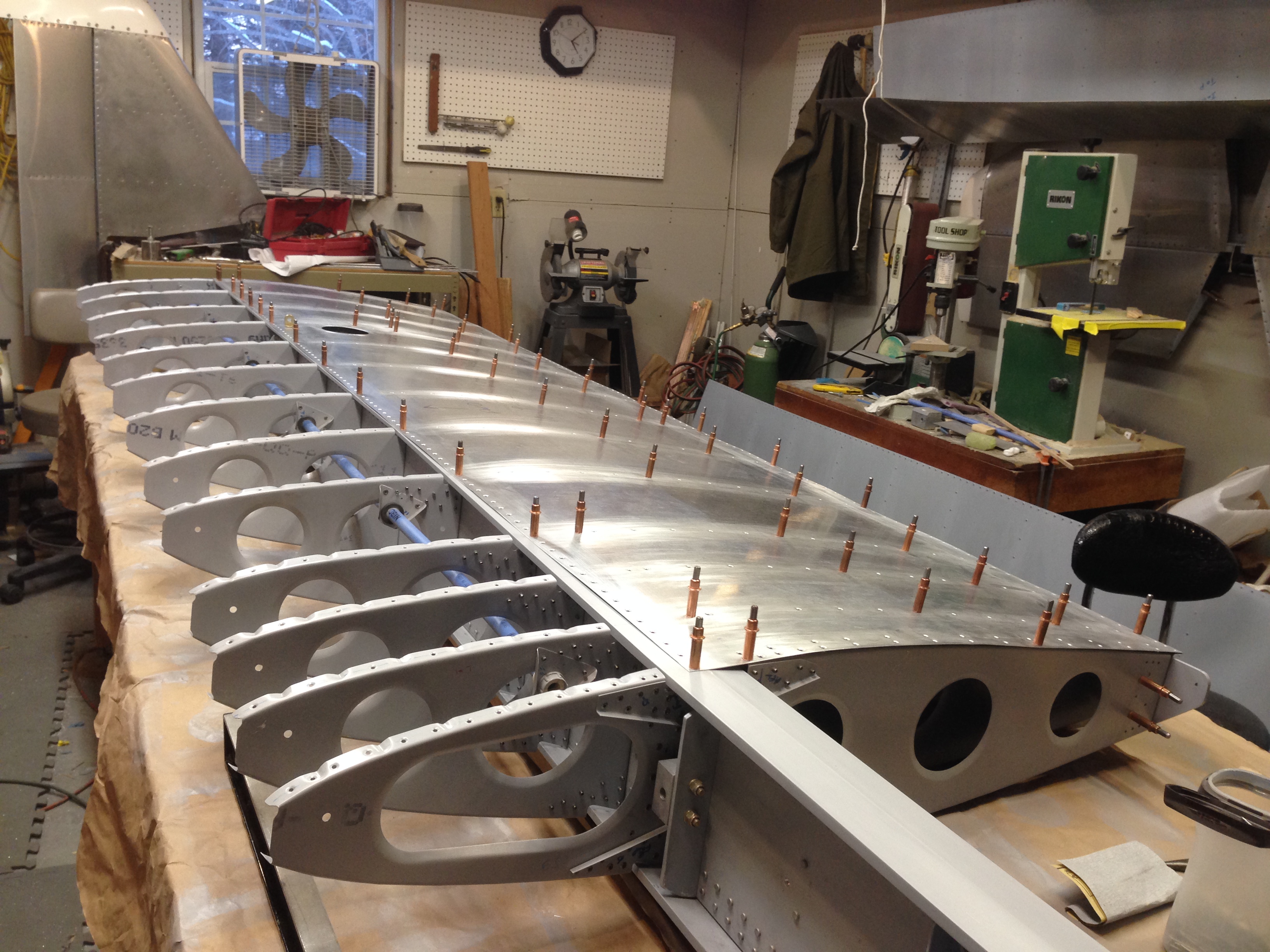
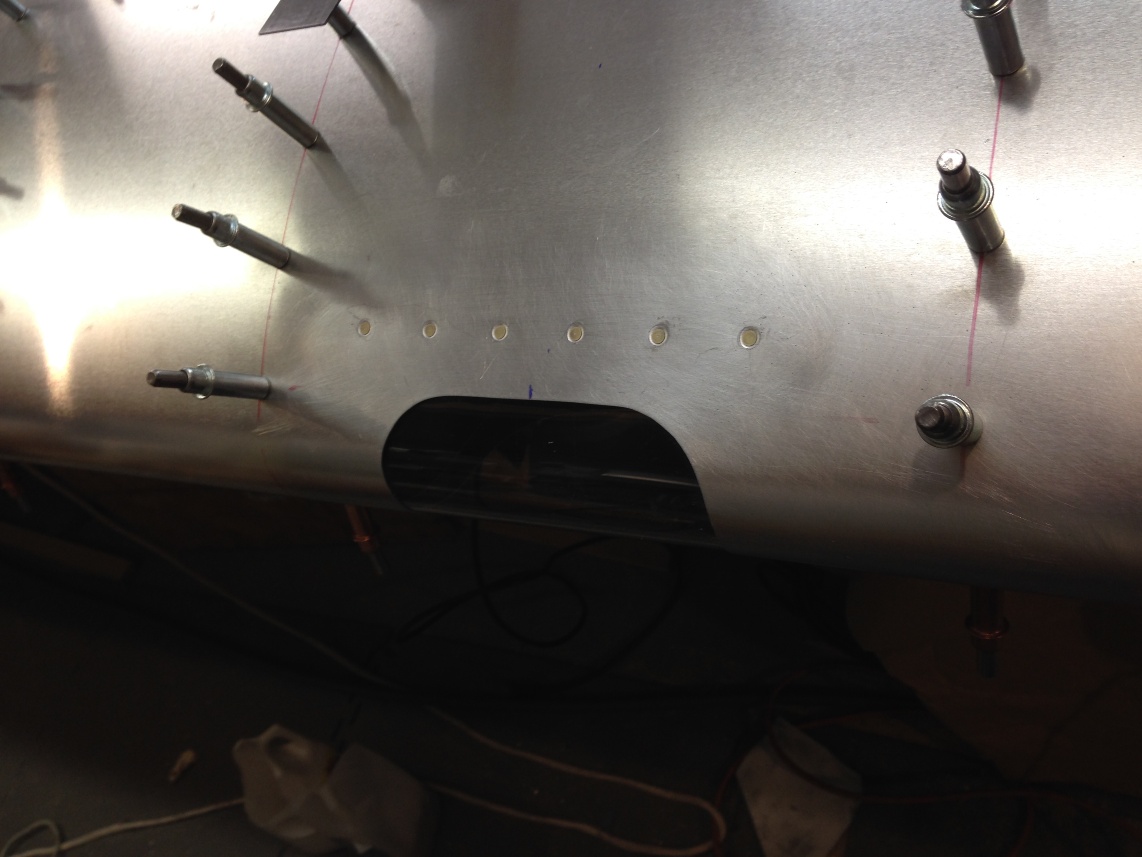
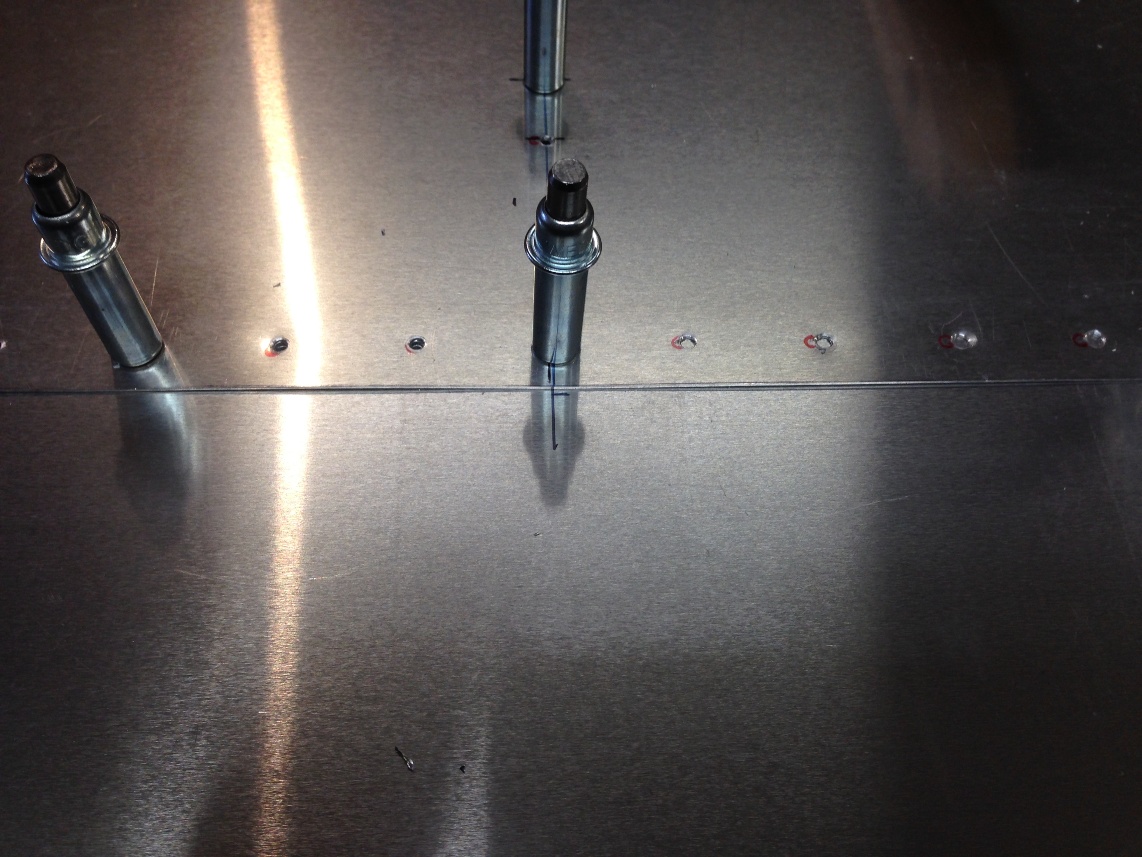
Final riveting of the left wing.  Funny side note: When you set a pull rivet the stem comes off and you have to make sure it comes out of the rivet gun.  When doing a wing skin there are lots and lots of rivets. So we would set one, tilt the rivet gun, the stem will fall on the skin and roll down the skin onto the work table.  If you are not careful a stem will roll into the open structure of the wing and they can be tricky to see.  As you are probably thinking, we checked and double checked but once the wing was finished and we flipped it around on the bench, sure enough we heard the rattle of a stem in there.  Dan and looked at each and had to laugh.  We will have to fish it out later.   Another side note: we forgot to torque the tie down bolt with the structure open.  We will have to get the torque wrench in there somehow.  We are really happy to have the wings finished.


Now onto the fuselage!

Return To Left Wing Assembly

Left Wing Priming 2

2014_1_2

Tonight I was able to squeeze in a couple hours priming before my 9:00 call in meeting for work and another half hour or so after the meeting.  I was able to finish all the major components and only noticed after I had cleaned up that I did not touch up prime the main spar (it was hanging out of site near the ceiling).

I would guess that I have no more than 45 minutes of work to finish priming the spar and then however many hours it will take to assemble the wing.  I think I guessed 4 to 6 hours to assemble it and that is probably about right.

It would be nice if I had another couple days to assemble the wing without being rushed.  Whatever I get done before I leave I am expecting that I will be excited to return and get back to work on finishing the wing.

Return To Left Wing Assembly

Left Wing Priming 1

2014_1_1

I finished all the deburring this afternoon just as Tim made it over. We spent the afternoon dimpling and by the time Tim left at about 5:00 all that was remaining was the inner areas of the skins and the fwd ribs ( I had used the squeezer to dimple the perimeters) and the leading edge. Just as I thought I was done with the fwd ribs and skins, the hinges caught my eye but in any case, be 8:30 all of the dimpling was done.

I cleaned up and decided to put a coat of primer on the inner surface of the skins only and leave the ribs for tomorrow. It’s 10:30 as I write this and the skin priming is done. I will let the fan run for a little while and then go out and turn down the heat and the fan off for the night. It’s easy to just let the exhaust fan run in the summer but in the winter, especially when it is as cold as it has been ( well below zero every night and just barely above zero if at all in the day) it will get equally cold in the shop if I run the exhaust fan without heat and it seems so wasteful to run the heat at night. So the plan is no exhaust and low heat to help the primer dry.

If I can prime the ribs tomorrow night I will be able to work on riveting the wing on Friday night and maybe finish assembly on Saturday if there are no interruptions. Realistically I am thinking there is a rather slim chance of having either Friday night or Saturday open to work on the plane as it is getting perilously close to my departure Singapore. I expect that I will have loads to do without spending any time on the plane. It will just have to wait until I return.

IMG_0774 IMG_0777 IMG_0778

Return To Left Wing Assembly

Left Wing Deburring

12/30/2013

Deburring left wing

I spent the remainder of last night with mind numbing deburring of the left wing components. I would like to say I am done but I only spent a couple/three hours at it and part of the time was spent with final trimming of the root doubler. The total time I have spent deburring ( which is mostly sanding the drilled holes with 150, 220 and then Scotch Brite ) is not trivial. I’m not sure if I am over doing the process. Part of the work is in preparation for a thin coat of self etch primer and the alternative is to simply use a deburring tool for holes and edges. I find the deburring tools still require sanding to smooth the edges and the end result is that, as noted, sanding is the preparatory step for priming. I have used a lot of sand paper….


This entry is really just a stalling effort as I wait for the shop area to warm up. The outside temperature dropped to -16 overnight and so while it is certainly warmer in the garage shop it is not near any temperature that would be considered comfortable without a coat and gloves.

My plans for today are to get as close as possible to priming the skins. As I think about that statement it is really deburring and dimpling. Some of the gussets need to be updrilled and riveted and the bell crank needs to be disassembled oiled and reassembled. Compared to the debur and dimple tasks these little side tracks are hardly worth mentioning.

So, the outside temperature just ticked up to -15F and the shop is probably starting to warm a bit and it’s time to think about the tasks ahead (the air temp is no doubt warm but everything in the room sucks the heat out of you as you touch it or even stand next to it until the heater has time to warm it all up).

My guess at timing:

Deburring ribs 10 min each x 26 gussets = 260 min

Deburring skins (leading edge is done) 45 min x 2 = 90 min

C.S. and debur main spar 120 min

Dimple all parts 120 min

Priming all parts 90 min

Bell crank assembly 30 min

Final assembly and riveting wing 240 min

Total time~ 16 hours

It is close but I can finish before we leave for our planned New Year’s Eve festivities. I need to try to accelerate the process so I can begin priming by tonight as even with the exhaust fan running the room is uninhabitable without a mask as the primer dries. It is a good idea to prime at the end of the day to let it sit overnight.

Update at the end of the day.

I overlooked a handful of small things with my list above. I have no pictures for today as taking things apart and deburring just does not justify any. I think I’ve put in about 10 solid hours in the plane today, nearly all of it sanding aluminum to debur and I am probably only 1/4 the way to finishing ( that would mean assembling and riveting the wing). So at this rate I will finish before Sunday but that is about all I can hope for.  I will have to settle for that and just be satisfied with two well built wings hanging in my garage while I am away in Singapore beginning next week.

Return To Left Wing Assembly

Left Wing Root Doubler

12/29/2013

Root Doubler and up drilling

I had rough cut the root doubler skin by making a mirror image of the right doubler (we are installing a wing walk on both right and left wings in hopes of finding an elegant method to modify the canopy for entry from both sides).  Much of today was spent match drilling the root doubler and the up drilling the top of the left wing.

When I did the right wing root doubler I sort of puzzled through a method to Match drill the top skin by removing the root rib and drilling the edge of the second (top) skin from inside the wing .  This worked pretty well on the right so I stuck to the plan on the second wing.  The idea being that once enough holes are drill around the perimeter or edge of the skin that, when the wing is disassembled for deburring that the main field of the doubler can be match drilled by laying the skins on top of each other and skip the step drilling and just match drill the skins with a #31 drill bit (#31 because we are using flush rivets. I think I read recently in a note from Sonex that they advocate #32 bits for the leading edge, flush, rivets. The only way this would work is if a silver cleco was used with the #32 bit).

At the end of the day all the match drilling is complete and I finished deburring the leading edge skin and finished prepping and deburring the wing walk (root doubler).

Not much of a write up for today and just a few pics of the steps showing the process to fit the doubler.

IMG_0762_small IMG_0763_small IMG_0764_small IMG_0766_small IMG_0767_small IMG_0768_small

IMG_0769_small

Return To Wings

Left Wing Tip

12/28/2013

The entire day was consumed with fitting and then mounting the left wing tip. I have been getting started no sooner than about 11:00 and the evening often is consumed with the dinner meal and guests (Chele’s sister and husband  often but all three boys are home for Christmas break so a break for dinner is a guarantee). If we have company (which is usually restricted to Fridays and Saturdays) then my day is over  by 5:30.


Nut plates on fiberglass wing tips;

I have the procedure for installing nut plates for flush screws down pretty well. With the fiberglass (f.g.) tip parts there is a need to counter sink (c.s.) the f.g. To accept the dimple of the skin for the flush screws. This dimple, even for the small #6 screws, is pretty a deep c.s., considering the f.g. is only 0.100″ to 0.140″ thick. I was thinking of using solid rivets to anchor the nut plates but after the first few showed consistent cracking of the gel coat, regardless of how I set the squeezer. Pull rivets are more expensive and a little fast due to the time needed for cutting the rivets (all I have are -35  solid rivets and they need to be cut to around. 0.280″ ). I have a few photos to show the cracking and the overall process.

A large portion of the fitting time for the tip is spent trimming, checking and re-trimming the skin to the right length and contour. Once the skinned is trimmed for an acceptable fit, the 1/4″ and 3/8″ setback for the screw holes is marked from the edge. I actually moved the screw centers away from these dimensions (which are what the Sonex plans denote for rivets) by about 1/16″.

Once the screw holes are marked an drilled, the rest of the process is defined and routine. The tip requires 42 nut plates ( not including the face) and so there a lot of holes to drill and c.s.

The first rough cut of the skin is done with my ( invaluable ) electric shear. I bought the shear on sale for $39 at Menards (Tool Shop) and have seen nearly the identical tool with other vendors under other names such as “Klutch” for as much as $89. Quality tools of this design are closer to $200 but after using it to cut ribs and skins on the project I would not want to tackle a “plans built” metal plane without it.

After the rough cutting the rest of the cutting is done with a vixen file. I still need to add a little fiberglass to the tip near the leading edge but I will wait and mess with both wing tips at the same time.

Next, it is time to finish the root doubler and updrill the top skin.

IMG_0758_small IMG_0743_small IMG_0745_small IMG_0746_small IMG_0747_small IMG_0748_small IMG_0749_small IMG_0750_small IMG_0751_small IMG_0752_small IMG_0753_small IMG_0754_small IMG_0755_small IMG_0756_small IMG_0757_small

Return To Left Wing Assembly

Left Wing Landing Light

12/24/2013

After working on and off through the day with a large break for Christmas Eve dinner with the in-laws.  I am about half done with the list I generated yesterday and started the landing light but was confused by the notes from the right wing landing light installation.  The right light appears to be outboard of the design depicted in the Ductworks installation manual.


12/25/2013

Merry Christmas!

I must have been adversely affected by the Christmas Eve dinner last night.  By the time all the guests left last night and I was back in the garage working, it was at least 11:00 before I finished the aileron and got to the light.  My Father-in-law and Brother-in -law lent a hand to close the fwd skin.  This skin was very tight compared to the left wing fwd skin (as I remember).  I think the difference may be partly due to a little more overlap of the trailing edge of the skin over the spar cap, or it could be the fact that when I match drilled the ribs I had the left the fwd skin under the  aft skin (necessary to match drill the trailing edge of the fwd skin).  As mentioned, I managed to finish attaching the aileron after C’eve dinner.  The aileron required that the counter weight bolts be reversed so the nuts did not risk scraping on the 312 rib flair.


Landing light:

The landing light on the right wing appeared to be mounted very close to the outside rib. At least that is what it looked like last night when I was trying to review the installation in the dark garage corner where the wing was hanging.  The Ductworks manual shows the hole biased 1/2″ inboard from being centered between the ribs.  The manual makes a note that the left and right wing have the mounting offset because all the ribs on the plane are oriented the same way (the rib flange is directed inboard on the right wing and directed outboard on the left wing).  This difference between the left and right wing will shift the relative mounting of the reflector by 1/2″ outboard on the right wing. The manual says you “might” want to shift the location of the hole to compensate but then suggests the difference  is not likely to be noticeable.  My thought is that I would move the hole but it’s unclear which wing (right or left) should be moved from the dimensions shown on the plans.  It would be useful to understand what (if any) target distance the light is ideally best to be aimed at.  Understanding this would make it easier to make an adjustment to the hole.

As I understand it, the angle for the right light and the left light are different as on is to be directed for taxi and the other is aligned for the AOA (Angle of attack) during the landing process.  While much of the angle adjustment is vertical, the horizontal angle of the light will change slightly, with the landing approach angle being directed closer to the plane and the taxi light being directed further down the runway (of course, this angle difference may  not be correct for a tail wheel plane as the taxi angle would be roughly the same as a 3 point landing angle and a two point landing or take off roll on a tail wheel would be similar to the taxi angle on a tricycle gear).

I have spent twice as much time thinking about the subject (and writing about it)j as it deserves and I will be installing both wings with the landing lights in the same location.  As it turns out, my initial measurement of the right wing hole (that I installed months ago) was not offset but followed the Ductworks manual so I will do the same with the left wing.

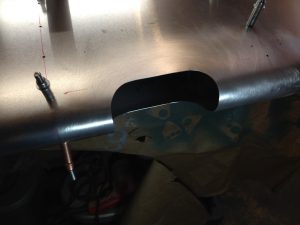
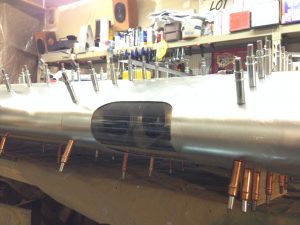
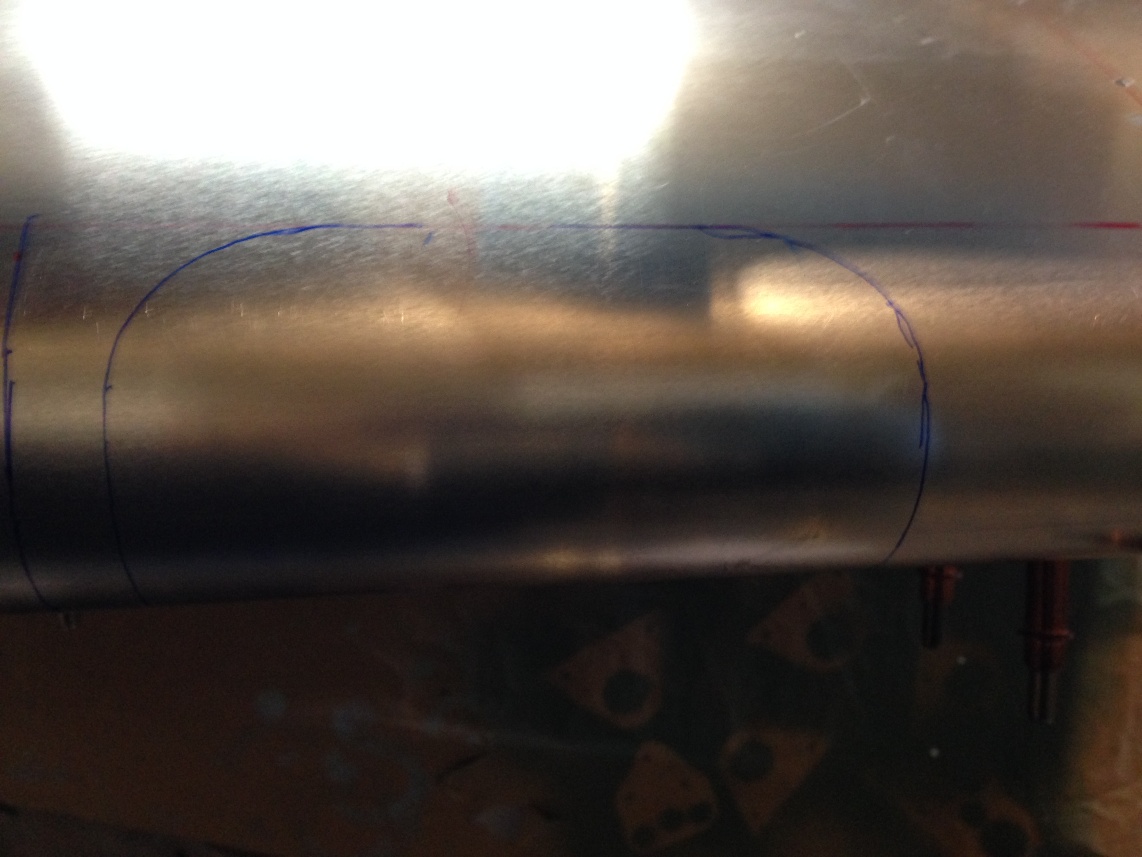
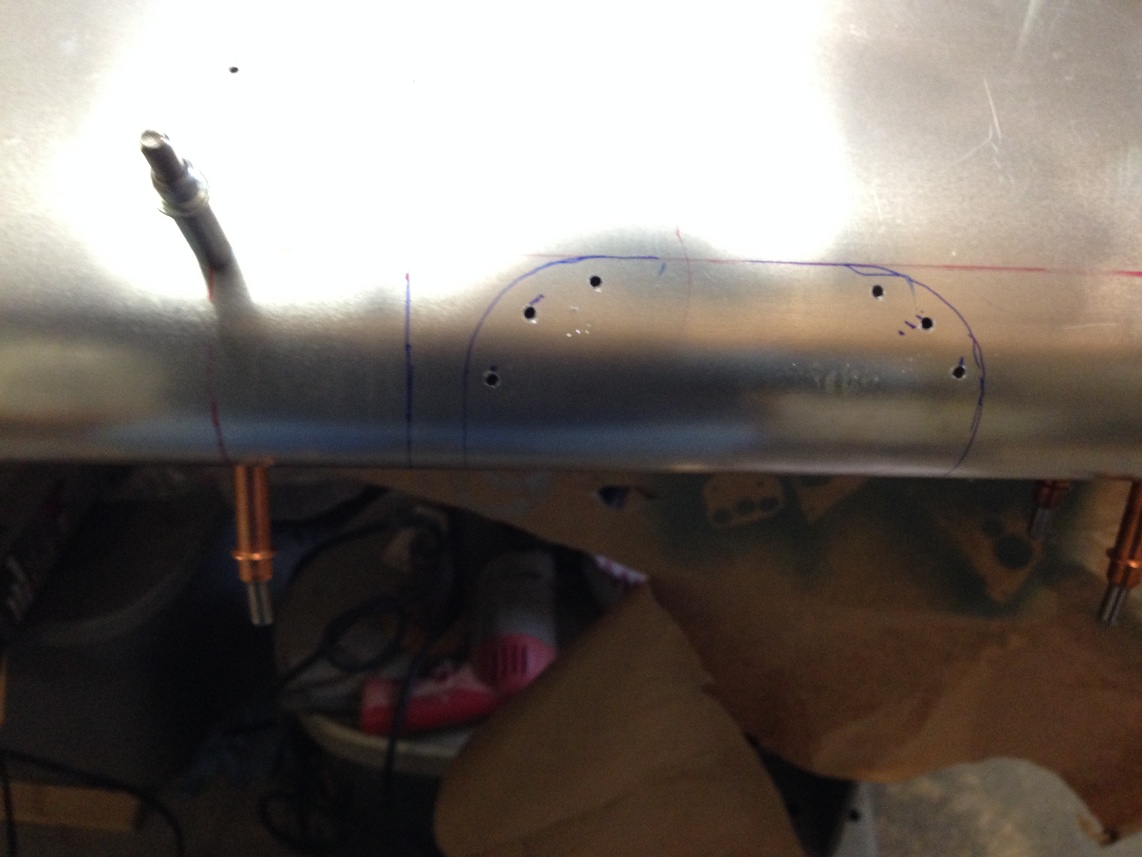
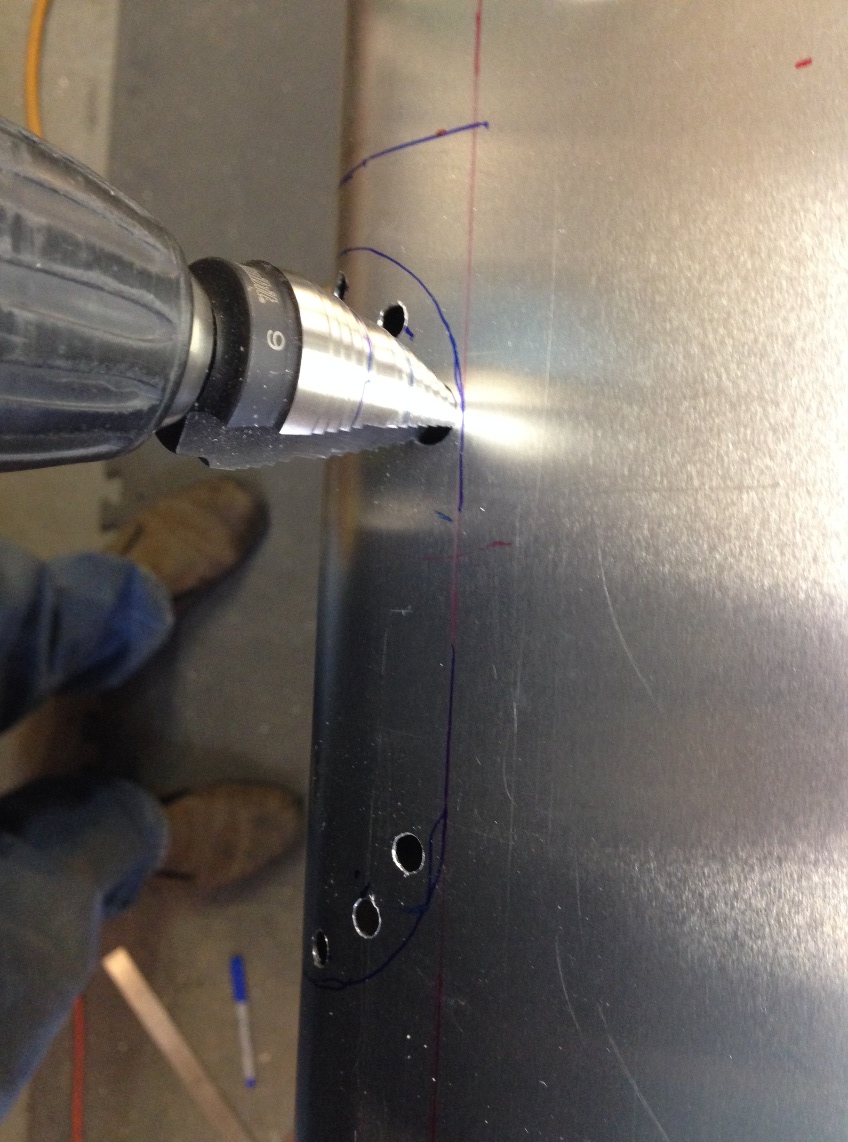
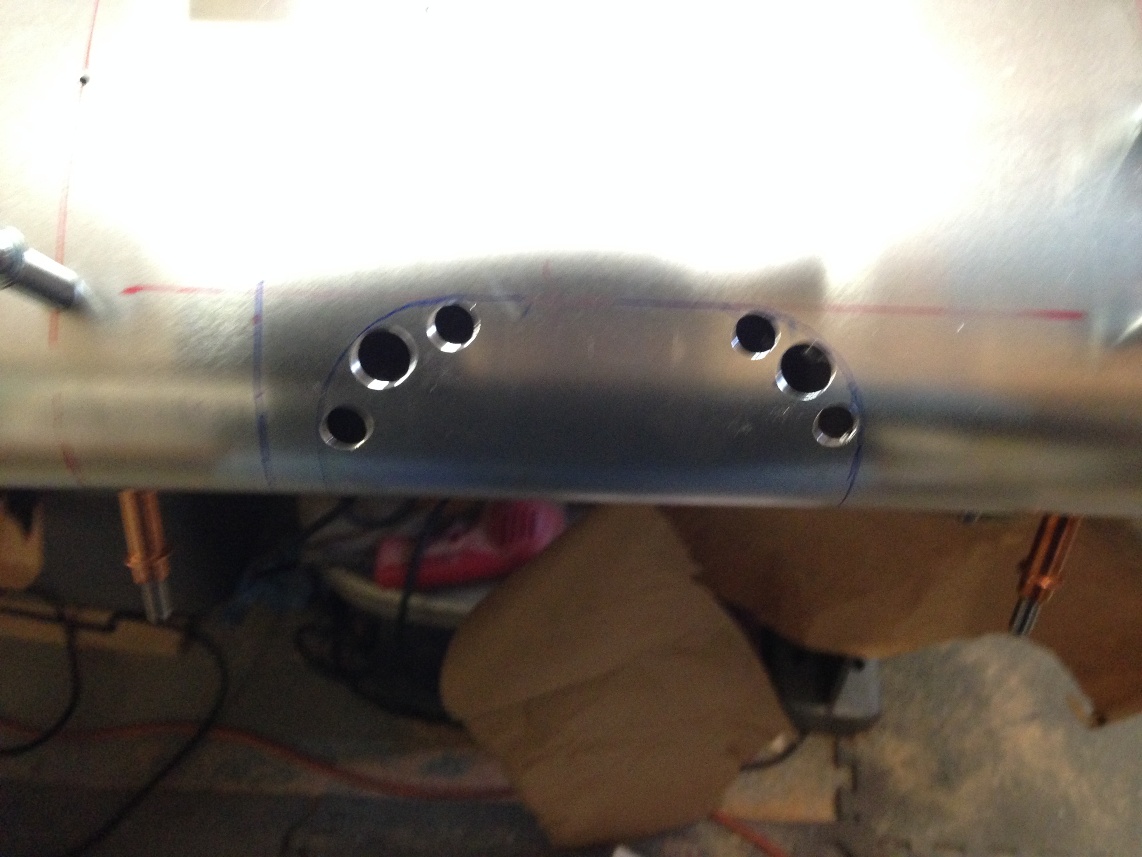
I was able to mark and drill the corner holes for the light and decided to use the nibbler to do most of the cutting for the hole.  I used an abrasive wheel with my Dremel tool on the right wing and it was very unnerving trying to hold the tool steady with visions of having it jump across the leading edge of the wing if it caught the edge of leading edge.  The nibbler may be a bit slower but more relaxing for most of the cutting.  I may end up cutting the actual leading edge with the Dremel but that is about it.

My goal (last year) was to finish the wings by Christmas and a year later I still have not succeeded but I am very close and will likely finish the second wing before the end of the year.  I have to travel to Singapore through most of January for work so not much will get done after the Christmas Holiday so finishing the second wing and having them both hanging by January would be a nice place to finish the year.


12/26/2013

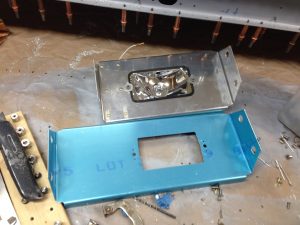
It looks like I might finish the wing if things keep going as they have been.  The landing light installation is completed with the exception of 4 nut plates that need to be install once the skin is off for dimpling. The Ductworks manual suggests that you can install the landing light on a finished wing. I think this is true with the exception of pulling the rivets on the nut plates on the ribs. I’m sure with the right tool it could be done but I tried on the right wing and managed to get the rivet puller stuck and had to remove the rib with the rivet puller stuck to the rivet. On the left wing I will just remove the ribs. Maybe a different puller that did not have such a large open handle requirement when pulling a rivet.

So the second landing light is cut and installed. I would say that all went well except for cutting the plexiglass. I do not look forward to installing the canopy when I have managed to crack both of these little landing light covers while trying to cut them on the band saw.  Yikes !


I started to set up for the wing tip next and the only things left after the tip are up drilling the top side, demurring, dimpling, priming and assembly.  Oh ya, there is the root doubler to finish.  That should not be too bad so I will still predict the wing will be done before New Years!

Return To Wings


Left Wing Forward Skin and Flap

Today, December 23rd, I was able to fit the aft root rib, ( I may have done this yesterday), remount the fwd ribs, drill the fwd skin, match drill the fwd skin and then updrill the entire lower skin area as well as mount the flap.

The wing is ready to flip over and finish the fwd skin and then match drilling and up drilling.

A couple other things to do before breaking it down for deburring, dimpleing and priming the ribs and skins as well as CS the spar caps.

I have to fit the fiberglass tip put the 40 nut plate for the  tip. (3 hours)

Fit the aileron (match drill the hinge and updrill) (15 minutes)

CUT THE LANDING LIGHT!!   (6 hours)This is one of those white knuckle jobs that require plenty of care as soooo much time has been invested in the skin and ribs that I do not want to mess them up.

Speaking of messing up.  The one thing I did today, that I caught before going too far, is not realizing that I did not trim 3/4″ off the leading edge skin and proceeded to match drill the skin to the spar.   Some explanation is needed here; the skin is formed with the top and bottom sections cut to 15-7/8″ so the vacuum forming will bend them symmetrically.  After the leading edge is formed, the lower section (half) of the skin needs to be trimmed by about 3/4″.  I marked the line where the trailing 3/4″ needed to be trimmed after it was formed (last spring) but I did not trim it off at that time.  Although I did mark the drill holes and it was these marks that led me to realize that something was amiss.  Fortunately I did not drill any of the field holesIt all turned out well and I only had to redo the match drilling to the spar after trimming the lower section to proper length.

A close call that would have been a real pain to correct. Lucky me.

Return To Left Wing Assembly